Interior House Painting
Walls, ceilings and trim in occupied homes, with furniture moved, floors covered and rooms handed back each evening.
DetailsInterior painting
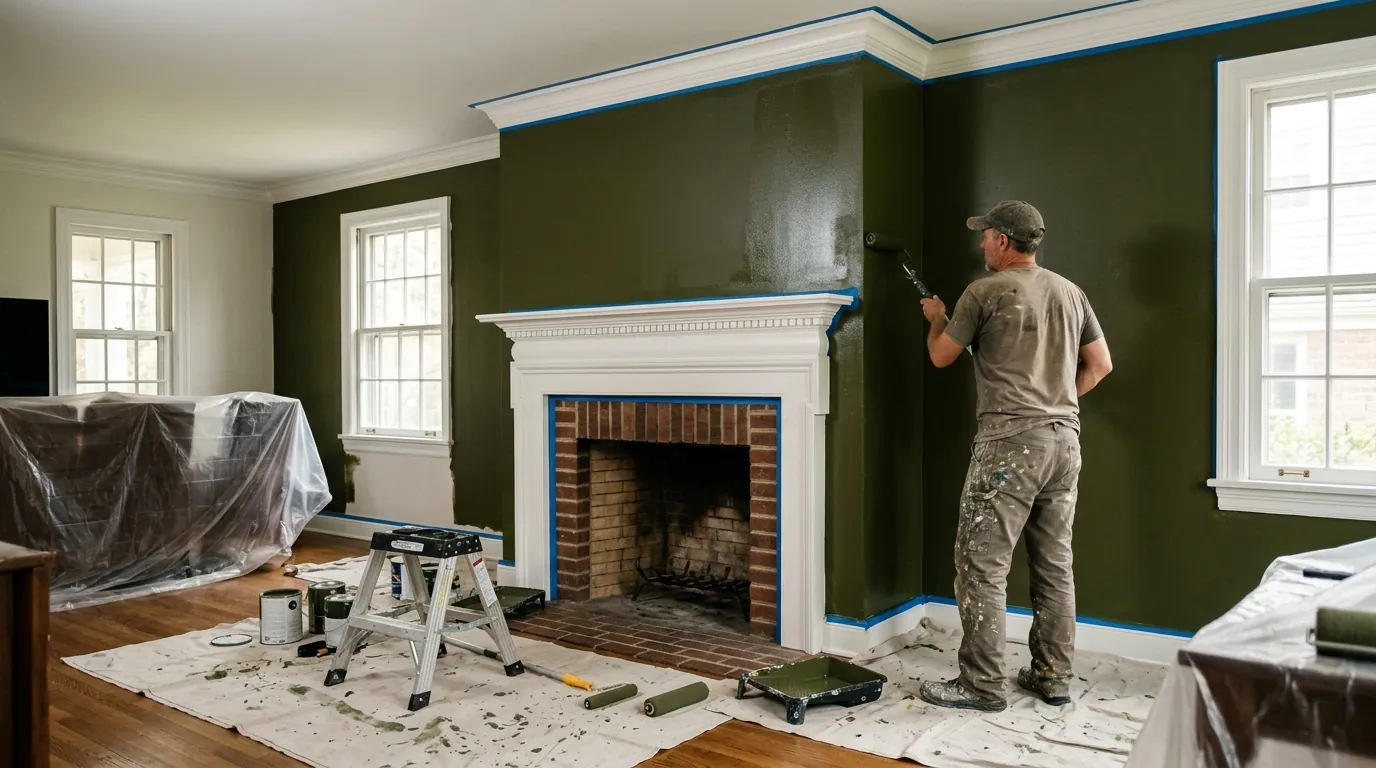
A deep green wall behind the bed, a painted arch in a nursery, a two-tone dining room split at the picture rail. We lay the lines out with a laser level, seal the tape and brush the edges so they hold up when you stand close.
Short answer
An accent wall or decorative finish is one feature surface painted differently from the rest of the room: a darker color, a color block, stripes, a painted arch, or a glazed or limewash look. In Park Ridge and the nearby suburbs a single solid accent wall usually runs $285 to $640, depending on wall size, how dark the color is, plaster or drywall, and how many edges the layout has.
Paint lines we use most, matched to the surface: Benjamin Moore, Sherwin-Williams and PPG for walls and trim, Romabio for limewash, Cabot and Sikkens for wood stain.
A feature wall gives a room a focal point without repainting everything. In a postwar Georgian living room with a fireplace on the short wall, a darker color around the firebox anchors the furniture and makes the room feel finished. In a split-level, the tall wall beside the half-flight stairs is often the first thing you see from the front door, and it is a natural place for a stronger color.
It is also the low-risk way to try a bold color. A charcoal, deep olive or oxblood that would feel heavy on four walls often looks right on one. If you change your mind after a year, repainting one wall is a small job, not a project.
Most requests fall into a handful of finishes. Each one has its own layout and prep, and some need two or three visits because each layer has to dry before the next goes on.
Glazed and limewash looks get a sample board first. The look depends on how the brush moves, so we make a two-foot board in your colors and you approve the board, not a photo from a magazine. Products like Romabio interior limewash or a glaze over an eggshell base each read differently in north light and south light.
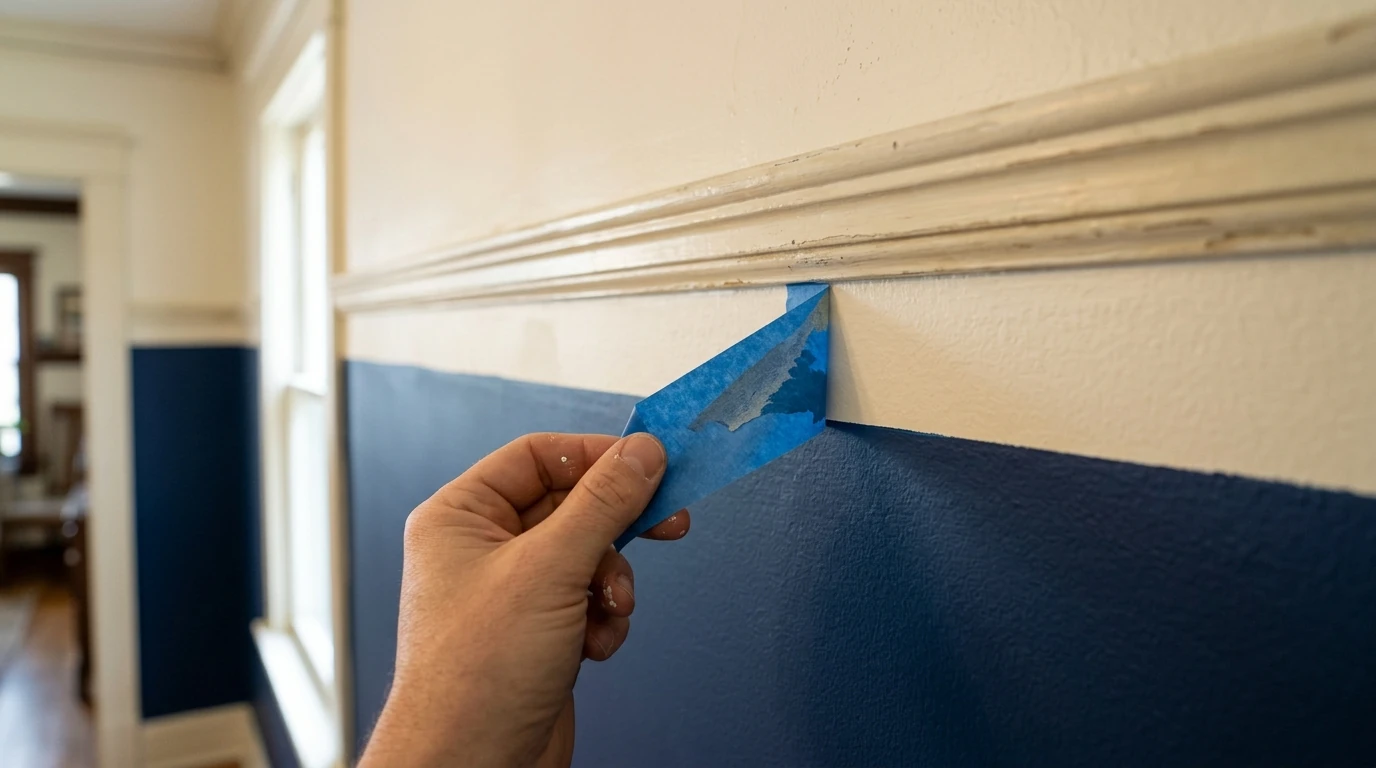
Bungalows and 1920s homes in Park Ridge, Berwyn and Villa Park, and the older houses in Wilmette and Winnetka, often have original plaster walls, and old plaster is rarely flat. A perfectly level tape line on a wavy wall can look crooked, because your eye reads the line against the bumps around it. We check the wall with a straightedge and a work light held low before we pick a line, and sometimes we move a stripe or block edge a few inches so it lands on a flatter stretch.
Where a room still has its picture rail, that rail is a ready-made break. Painting the band above it a different color from the wall below gives you a two-tone room with no tape line to fight.
Newer drywall homes, like the builds on teardown lots in Elmhurst and Hinsdale, have the opposite issue: walls are flat, but tall open rooms make long lines hard to keep straight by eye. That is where the laser level earns its keep. We also fill nail pops first, because a deep color shows every flaw that white hid.
Dark and saturated colors cover poorly straight out of the can. We roll a gray or color-matched tinted primer first, then two finish coats. Skip the tinted primer and you can end up with three or four coats and still see thin spots when the afternoon sun rakes across the wall.
Sheen matters more on a dark wall. A flat or matte finish hides bumps in old plaster and roller texture; eggshell wipes clean more easily but shows touch-ups. In a family room or hallway that gets scuffed, we often suggest a scrubbable matte from Benjamin Moore or Sherwin-Williams as the middle ground, and we tell you which one we would pick for that wall and why.
These are the situations where a single painted feature does the most work.
Nothing draws the eye in a newer home or a flipped ranch. One deeper wall gives the room a center.
Color blocking can mark off a dining corner, a reading nook or a desk area without building a wall.
A painted arch or color block behind the bed does the job of a headboard for the price of paint.
The two-story wall beside the stairs is a natural feature wall and is hard to paint safely from a household ladder.
One wall lets you live with a strong color before you commit a whole room to it.
Fuzzy edges and drips along the ceiling line from an earlier attempt are worth redoing properly.
We look at the room in its normal light, check the wall for flatness and agree where edges and heights fall.
Cracks, nail holes and old anchors are filled and sanded. Patches get spot primed so they do not flash through the color.
A laser level marks every horizontal and vertical edge. Arches are drawn with a pencil on a string pinned at the center point.
We press the tape down and brush a thin coat of the base wall color over its edge, so any bleed is base color and the final line stays clean.
Deep colors go over a tinted primer, then two finish coats with full drying time between them.
Tape comes off while the last coat is still slightly soft so it does not tear the film, and we touch up any edge by brush.
A single solid wall is the simplest price. Stripes, arches and glazed finishes take more labor and sometimes a second visit.
| What is priced | Typical range | Unit |
|---|---|---|
| Solid accent wall, one wall | $285 to $640 | per wall |
| Full room repaint with walls in two coats | $465 to $890 | per room |
| Color consultation with large painted samples | $165 to $345 | per session |
These ranges are typical for jobs around Park Ridge, and the walk-through sets the real number for your wall.
Full painting price guidePark Ridge streets mix Colonials, Georgians, Tudors, brick ranches and bungalows, and the right feature wall changes with the house. In a Tudor with arched doorways, we often follow the arch instead of fighting it. In a brick ranch with a long living room and a picture window, the short end wall usually works best. In bungalows with oak trim, a deeper wall color makes the stained wood stand out, and we tape off the woodwork carefully so no paint lands on the finish.
Townhome owners in communities from Wheeling to Palatine should check their association rules for interior work hours and parking, and renters should check the lease, since many ask for walls returned to the original color. A single accent wall is often a half-day job, so it fits easily inside those limits. If the wall has paint from before 1978 and we need to sand it, we follow EPA lead-safe work practices for the prep.
We take accent walls & decorative finishes jobs in Park Ridge and the suburbs around it. A few of the places we work most:
We press the tape down, brush a thin coat of the surrounding wall color over the tape edge and let it dry. That seals the gap, so any bleed is the base color and the accent line comes out sharp. On very rough plaster we sometimes cut the line freehand with a brush instead.
Usually the short end wall farthest from the entry, because a deeper color there makes a long room feel more balanced. A side wall broken up by the picture window and heat registers is a poor choice. We look at the room with you before deciding.
Yes. We set up planks or a stair ladder system so we can reach the full height safely, and we lay out any edges with a laser so they stay level across the long run. It is usually a one-day job.
We plan on a tinted primer plus two finish coats for deep navy, charcoal, green or red. Without the tinted primer, saturated colors can take three or four coats and still look patchy in side light.
Yes. The result depends on brush movement and layering, so we make a sample board in your colors and you approve it before we start the wall. It is the only reliable way to see the finish before it is on the wall.
Walls, ceilings and trim in occupied homes, with furniture moved, floors covered and rooms handed back each evening.
DetailsLarge painted samples on your actual walls, checked in morning and evening light before a single gallon is ordered.
DetailsCracked and bulging plaster on vintage walls reattached, patched and skimmed with materials that move like the original.
DetailsBaseboards, casings and crown molding caulked, sanded and brushed to a clean line against the wall color.
DetailsTraditional and peel-and-stick papers hung plumb with matched seams, booked after the walls are smoothed and primed.
DetailsCall any hour. Someone picks up, takes the details and books a time to walk the job with you.