Lead-Safe Painting
Painting in pre-1978 homes using EPA lead-safe work practices: containment, wet methods and HEPA cleanup.
DetailsExterior painting
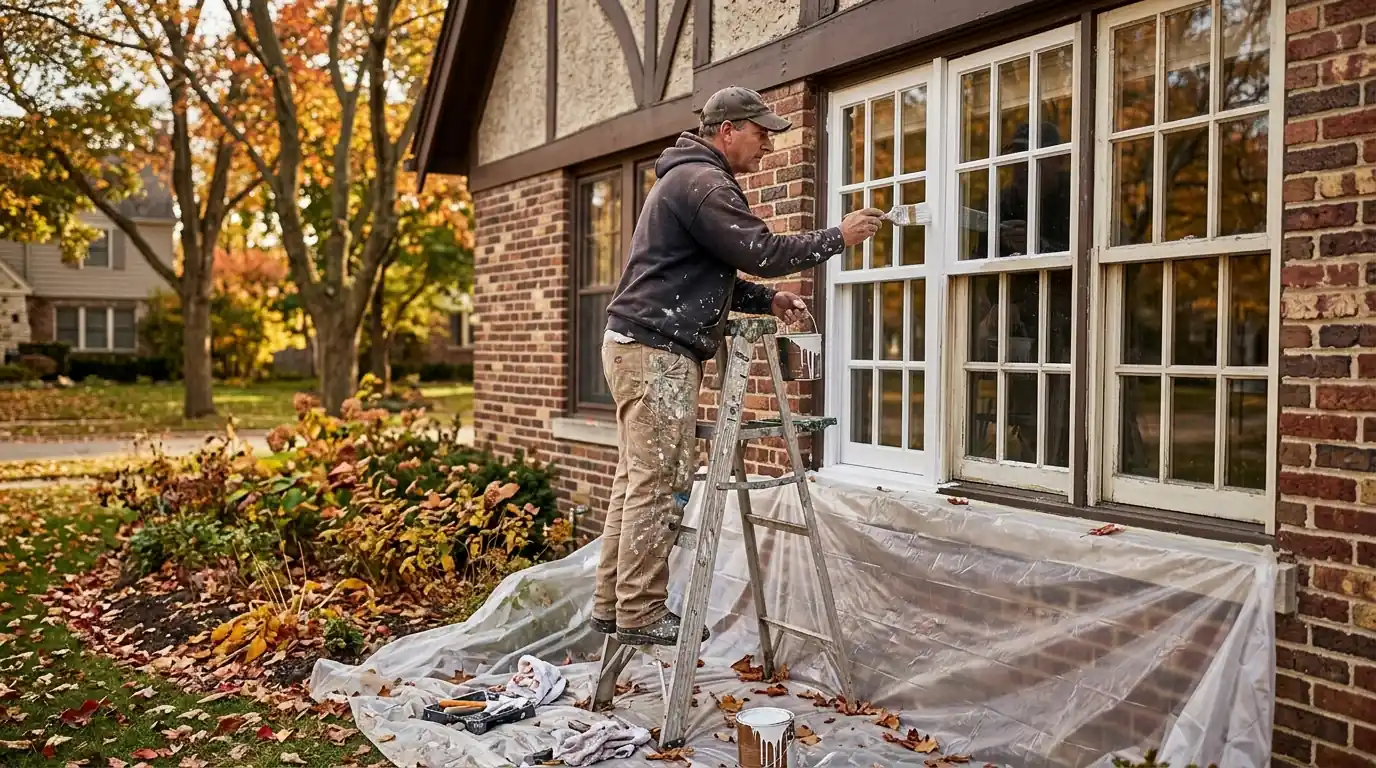
Original wood windows on older homes in Park Ridge, Evanston, Oak Park and the North Shore can last another lifetime if the paint and glazing keep water out. We scrape, reglaze, prime and paint sashes, frames and sills, and the windows still open when we leave.
Short answer
Window sash and frame painting is scraping loose paint from wood windows, replacing failed glazing putty, repairing soft sills, priming bare wood and painting the sash, frame, sill and stops with the paint lapped slightly onto the glass to seal it. In Park Ridge and the nearby suburbs it usually costs $185 to $465 per window, depending on size, divided lites, glazing and rot.
Paint lines we use most, matched to the surface: Benjamin Moore, Sherwin-Williams and PPG for walls and trim, Romabio for limewash, Cabot and Sikkens for wood stain.
Many Park Ridge Colonials and Tudors, the 1920s bungalows in Berwyn and Villa Park, and the older homes in Evanston, Wilmette, Winnetka and Glen Ellyn still have their original wood windows. Old-growth window wood is dense and rot resistant in a way new lumber is not. When the paint and glazing are kept up, those sashes keep working for decades.
What ruins them is water. Once paint cracks at the sill or glazing putty falls out, rain and melt water sit in the joints, the wood swells and freezes, and the bottom rail starts to rot. Painting at the first signs of failure is much cheaper than rebuilding sashes later.
We also paint wood windows on newer homes: wood casements and double-hungs on 1960s to 1990s houses in Northbrook, Glenview and Arlington Heights, where the factory finish is wearing through on the south and west sides. Clad windows with aluminum or vinyl exteriors are a different job, and we tell you if yours are clad.
Glazing putty seals the glass into the sash. On old windows it dries, cracks and falls out in chunks, leaving the glass loose and the wood exposed. We remove the failed putty, check that the glazing points still hold the glass, prime the bare rabbet and lay in new glazing compound.
New glazing has to skin over before paint goes on. Depending on the product and the weather, that can take days, so glazing work often means a second visit to paint. Painting too soon traps the oils and the paint wrinkles.
Most of these windows are in pre-1978 homes, which means the old paint likely contains lead. We follow EPA lead-safe work practices on windows: plastic sheeting under the work, wet scraping, no open-flame burning or dry power sanding, HEPA vacuuming and a cleaning check at the end.
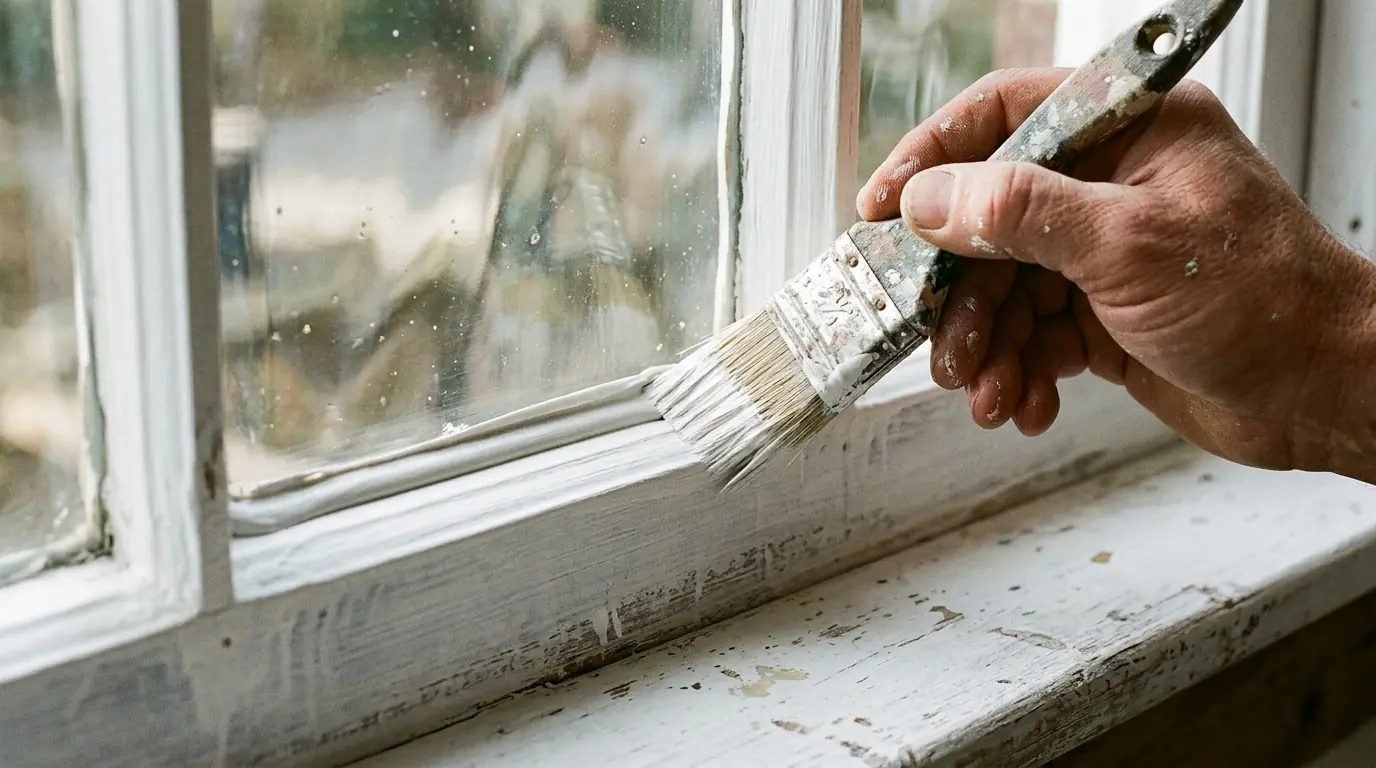
A properly painted sash has paint lapped onto the glass about a sixteenth of an inch. That small overlap seals the joint between glass and putty so water cannot get behind it. A clean line on the glass is a sign of correct work, not a sloppy edge, and we scrape the rest of the glass clean with a razor.
We move double-hung sashes during the job so they do not dry stuck, and we leave the sash channels, parting beads and weatherstrip unpainted. Windows painted shut years ago can usually be freed by cutting the paint line and working the sash loose, which we price per window.
Sills get the most attention. They take standing water and snow, so we fill checks, consolidate soft spots with epoxy or replace badly rotted sections, prime and give them an extra coat.
Park Ridge has blocks of 1920s and 1930s Colonials, Tudors and bungalows with original double-hung windows, and the North Shore towns from Evanston to Lake Forest have even more. Oak Park and River Forest Prairie School homes often have casement windows with many small lites, which take far longer per window. All of these are pre-1978, so lead-safe practice is standard on every one.
If your home is in a local historic district in Oak Park, Evanston or Hinsdale, painting existing windows in kind is usually routine, while replacing them can need review. Check with the village or city first if you are weighing replacement against repair.
Exterior window work needs warm, dry days because glazing compound and primer both have temperature minimums. Late spring through early fall works best, with O'Hare highs averaging 70 to 84 degrees from May to August. Interior sash painting can be done in colder months.
Window paint fails at the bottom first, where water sits.
Glazing that has fallen out leaves glass loose and wood open to rain.
Paint lifting on the sill or bottom rail means water is getting under it.
Exposed wood absorbs moisture and starts to check and rot.
Glass that moves in the sash needs new points and glazing.
Windows stuck closed with paint often need cutting free before painting.
Wood that gives under a screwdriver at the sill corners needs repair.
We check paint, glazing, sills and sash movement and list what each window needs.
Plastic sheeting goes under the work and on the ground outside on pre-1978 homes.
Loose paint is wet scraped and failed putty removed by hand.
Soft wood is consolidated, filled or replaced and sanded smooth.
Bare wood is primed, new glazing laid in and allowed to skin over.
Sash, frame and sill are painted with a seal line on the glass, then the glass is razor cleaned.
Windows are priced individually because size, glazing and rot change the labor so much.
| What is priced | Typical range | Unit |
|---|---|---|
| Window sash and frame painting | $185 to $465 | per window |
| Sill or bottom rail rot repair | $235 to $860 | per spot |
| Lead-safe setup for interior window work | $145 to $385 | per room |
These ranges are typical for wood windows in Park Ridge and the nearby suburbs, and the walk-through sets the real number for your windows.
Full painting price guideWe take window sash & frame painting jobs in Park Ridge and the suburbs around it. A few of the places we work most:
Often it is. Original sashes are usually made of dense, old-growth wood, and with sound glazing and paint they keep working for decades. Replacement makes more sense when sashes are badly rotted or broken. We tell you which windows are worth keeping.
It depends on the product and the weather, often several days to a couple of weeks. The surface has to skin over first. That is why glazing jobs usually take two visits.
Usually, yes. We cut the paint seal along the stops and sash, work the sash loose and clean up the channels. Sashes with broken cords or swollen wood may need more repair, which we price per window.
That thin line seals the joint between the glazing and the glass so water cannot get in behind the putty. It is about a sixteenth of an inch wide. We razor clean the rest of the glass.
We can. Interior sash and stops are often done with the exterior so the whole window is sealed. In pre-1978 homes that means lead-safe containment inside the room as well.
Painting in pre-1978 homes using EPA lead-safe work practices: containment, wet methods and HEPA cleanup.
DetailsSoft sills, trim and porch parts cut back to sound wood, rebuilt with epoxy or new stock and primed before painting.
DetailsFull exterior repaints with scraping, priming of bare wood, caulking and two finish coats, timed to the local paint season.
DetailsBaseboards, casings and crown molding caulked, sanded and brushed to a clean line against the wall color.
DetailsEaves, soffits, fascia boards and frieze trim painted from ladders and lifts, with soft spots flagged before coating.
DetailsCall any hour. Someone picks up, takes the details and books a time to walk the job with you.