Lead-Safe Painting
Painting in pre-1978 homes using EPA lead-safe work practices: containment, wet methods and HEPA cleanup.
DetailsInterior painting
Chipped, rusty and yellowed radiators come with a lot of 1920s bungalows and older North Shore and Oak Park homes. We take off what is loose, treat the rust and coat them with an enamel rated for the heat, so the finish lasts through heating season.
Short answer
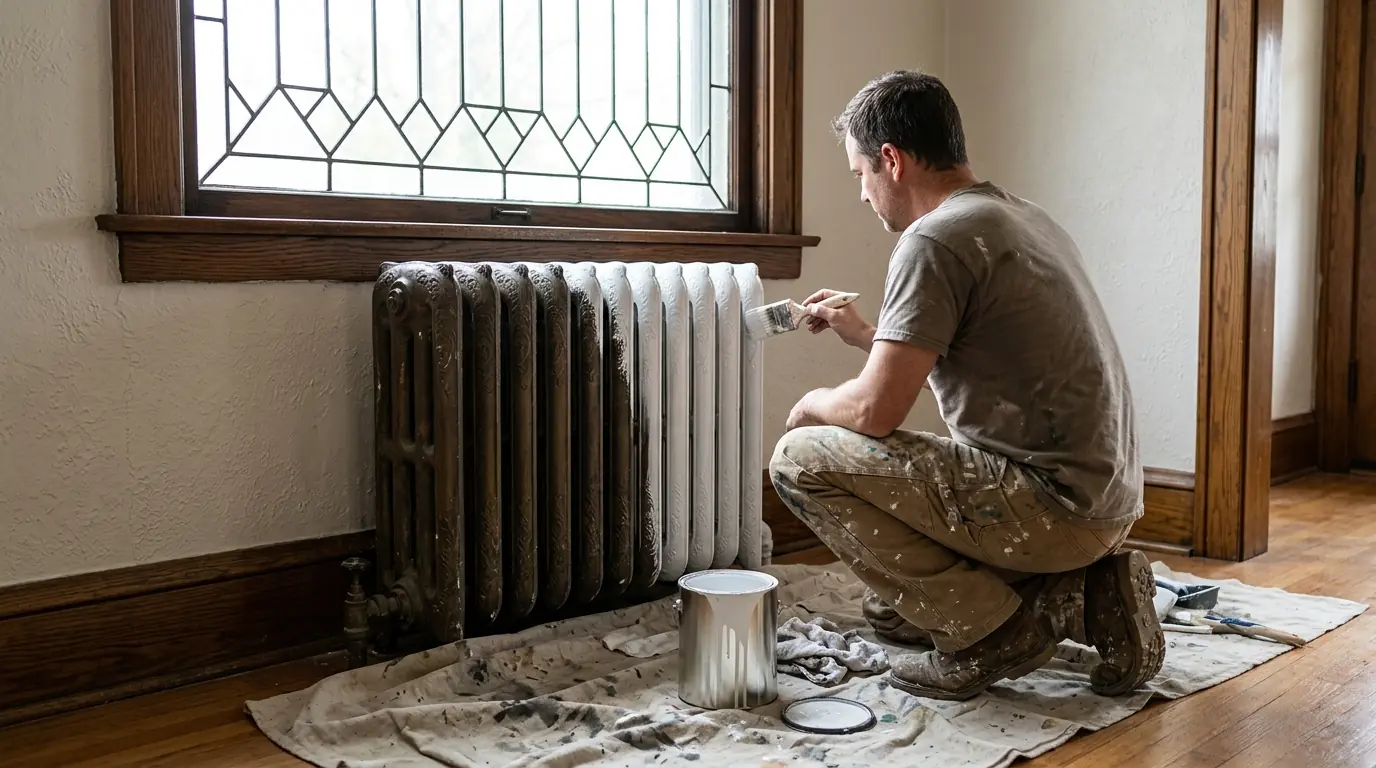
Radiator painting means cleaning a cast iron steam or hot water radiator, scraping loose paint and rust, priming bare metal and coating it with a heat-rated enamel, usually by brush and small spray tip in place. Around Park Ridge it typically costs $165 to $385 per radiator, depending on size, column style, how much old paint has to come off and whether lead-safe prep is needed.
Paint lines we use most, matched to the surface: Benjamin Moore, Sherwin-Williams and PPG for walls and trim, Romabio for limewash, Cabot and Sikkens for wood stain.
A steam radiator in an older Evanston or Wilmette house can run hot enough that you cannot keep your hand on it. Standard latex wall paint softens, yellows and starts to lift after a season or two of that heat, and it often smells the first few times the boiler fires in October. That is why so many radiators in older homes look like a stack of peeling layers.
We use primers and enamels labeled for radiators or heated metal, and we read the can for the temperature rating. A direct-to-metal or high-heat enamel from Rust-Oleum or a similar maker holds its color and stays attached through the heating cycle, so you are not repainting every other fall.
Color matters less for heat output than most people expect. Ordinary non-metallic enamel in any color makes little difference to how a radiator heats. Metallic paints, like the old aluminum or bronze radiator paint, are the exception: they can cut the heat a radiator gives off, so we usually suggest a non-metallic finish.
Steam radiators rust where water sits: at the feet, at the bottom of each column, around the inlet valve and under an air vent that spits. We wire brush and scrape those areas to sound metal, wipe them down, treat any leftover surface rust with a rust converting primer and then prime the whole unit.
Plenty of radiators in Berwyn, Oak Park and River Forest are still wearing silver or bronze paint from decades ago. Painting over it can work if it is stuck down well, but if it flakes when we scrape, it has to come off first or the new coat will lift with it.
A dripping air vent or a weeping valve should be fixed by a plumber or heating tech before we paint. Otherwise the drip will rust the new finish within a season, and you will be looking at an orange streak down a fresh white column by spring.
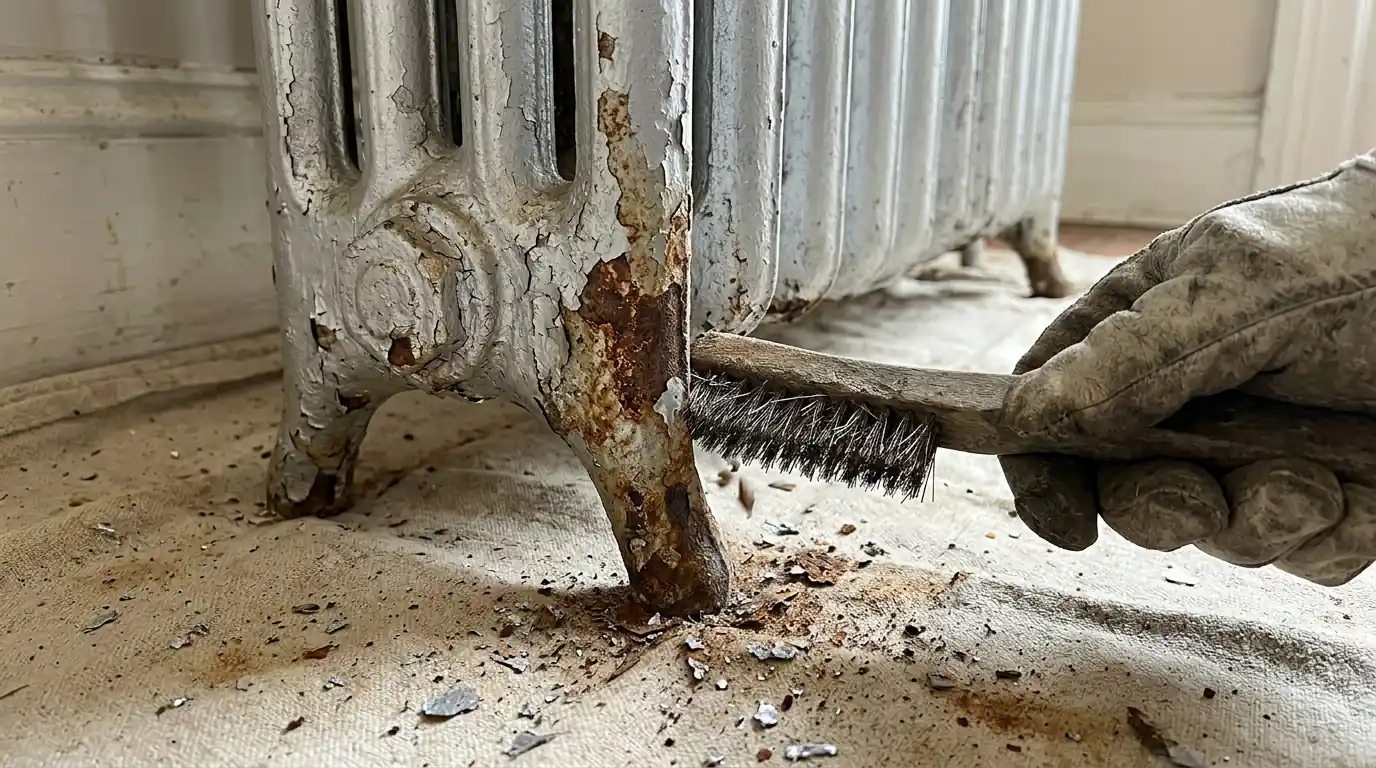
Most radiators are painted in place. We disconnect nothing; we work with the heat off, cover the floor and the wall behind the unit, and use angled radiator brushes and a small spray tip to reach between the columns. It is the least disruptive way and fits most homes.
A full restoration, with media blasting to bare iron, means a plumber disconnects the radiator and it leaves the house. That gives the best finish, but it costs far more, a cast iron unit is very heavy to move, and the room goes without heat while it is gone. It usually only makes sense during a larger renovation.
If the wall behind the radiator is being painted too, we plan the order so the wall gets done first while we can reach it. A thin roller and a long-handled brush let us paint behind most units without moving them.
These are the conditions we see most often on radiators that are ready for new paint.
Layers peeling off the columns usually mean the wrong paint was used before or the bond has failed.
Orange bloom at the base or the bottom of the columns shows where water has been sitting.
Wall paint that browned from heat looks dingy next to fresh trim and walls.
Old metallic radiator paint looks dated and can reduce the heat the unit gives off.
A strong odor every fall can come from paint that was never meant for hot metal.
A dingy radiator stands out against new wall color, so doing both together makes sense.
We schedule the work when the radiator can stay off and cold until the paint cures, ideally outside heating season.
Floors get drop cloths and rosin paper, and the wall behind the radiator is masked with plastic.
In pre-1978 homes we treat old radiator paint as possibly containing lead and follow EPA lead-safe work practices for scraping.
Loose paint and rust come off with scrapers and wire brushes, then the iron is cleaned of dust and grease.
Bare spots get a rust converting or direct-to-metal primer, then the whole unit is primed.
We brush and spray two coats into every column face and edge, with valves and vents masked.
We leave the cure time from the can so nobody turns the valve or fires the boiler before the enamel has hardened.
Radiators are priced each, and size and condition make the biggest difference. Several in one visit costs less per unit than one at a time.
| What is priced | Typical range | Unit |
|---|---|---|
| Cast iron radiator, painted in place | $165 to $385 | each |
| Lead-safe setup when old radiator paint is disturbed | $145 to $385 | per room |
| Trim and baseboard around the radiator | $1.85 to $4.40 | per linear ft |
These are typical ranges for Park Ridge and nearby suburbs, and the walk-through sets the real number once we see the radiators.
Full painting price guideCast iron radiators are still common in the area's older housing: 1920s bungalows in Park Ridge, Berwyn, Villa Park and Elmhurst, Victorian and Prairie homes in Oak Park, River Forest and Evanston, and the Tudors and Georgians of Wilmette and Winnetka. Many of those radiators carry decades of paint. Nearly all of these homes were built before 1978, so we assume old radiator paint may contain lead and follow EPA lead-safe work practices whenever we scrape or sand it.
Timing matters here. Average lows at O'Hare drop to about 45F in October and 34F in November, so most boilers are running by mid-fall. The easiest window is late spring through early fall, roughly May to September. In winter we can work one room at a time if that radiator can be shut off at its valve and left cold long enough for the enamel to cure.
Evanston courtyard apartment buildings from the 1920s usually run on one shared boiler, so a single unit cannot stay cold while the building heats. Owners and associations there tend to book radiator work for the summer, unit by unit, along with hallway painting.
We take radiator painting jobs in Park Ridge and the suburbs around it. A few of the places we work most:
Ordinary non-metallic enamel in any color has very little effect on heat output. Metallic aluminum or bronze radiator paint can reduce it, which is one reason we usually recommend replacing that finish with a regular heat-rated enamel.
Only if the radiator can be shut off at its valve and left cold until the enamel cures. With a shared boiler that is often not possible, so the easiest time is between about May and September.
It might, especially in homes from before 1978, and radiators often carry many layers from many decades. We treat it as possibly containing lead and use EPA lead-safe work practices: containment, wet scraping and HEPA cleanup.
A direct-to-metal or rust converting primer on bare spots, then a heat-rated enamel made for radiators or heated metal. We check the temperature rating on the can so it suits how hot your system runs.
No. Nearly all the radiator painting we do is in place, with the unit cold and the floor and wall protected. Removal for blasting to bare iron needs a plumber and is usually only worth it during a renovation.
Yes. A dripping valve or spitting vent will rust the new finish quickly, so we ask that a plumber or heating tech fix leaks first. We can schedule the painting for right after the repair.
Painting in pre-1978 homes using EPA lead-safe work practices: containment, wet methods and HEPA cleanup.
DetailsWalls, ceilings and trim in occupied homes, with furniture moved, floors covered and rooms handed back each evening.
DetailsBaseboards, casings and crown molding caulked, sanded and brushed to a clean line against the wall color.
DetailsCracked and bulging plaster on vintage walls reattached, patched and skimmed with materials that move like the original.
DetailsOriginal oak and pine woodwork cleaned, touched up and recoated so the grain stays visible instead of hidden under paint.
DetailsCall any hour. Someone picks up, takes the details and books a time to walk the job with you.