Limewash & Mineral Paint
Breathable lime and mineral silicate finishes for brick and stone that soften the color without sealing moisture in.
DetailsExterior painting
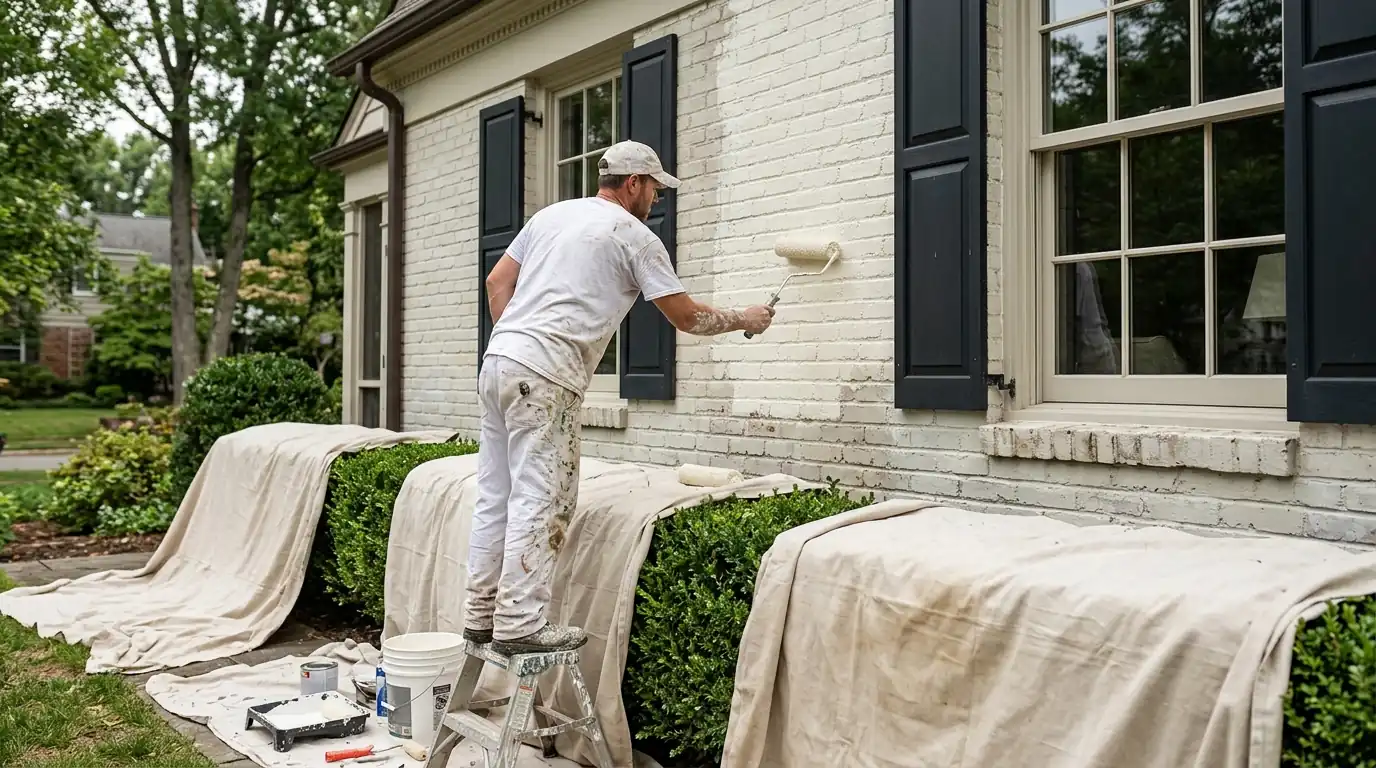
We repaint previously painted brick on ranches, Georgians and bungalows around Park Ridge with breathable masonry coatings. Before we paint brick that has never been painted, we talk through limewash, mineral paint and historic district rules.
Short answer
Brick painting means washing the masonry, removing loose coating, treating efflorescence, checking mortar joints, priming with a masonry primer and applying two coats of a breathable masonry paint. It suits brick that is already painted; unpainted brick deserves a slower decision. Around Park Ridge and nearby suburbs, brick painting typically costs $2.65 to $5.40 per square foot, depending on the old coating, mortar condition and wall height.
Paint lines we use most, matched to the surface: Benjamin Moore, Sherwin-Williams and PPG for walls and trim, Romabio for limewash, Cabot and Sikkens for wood stain.
This is the first question on every brick job. If your brick is already painted, the decision was made years ago, often to hide mismatched patching or an addition that never matched. The job is to repaint it well: clean the old coating, take off what is loose, and apply a coat that is compatible with what is under it and breathable enough to let the wall dry.
If your brick has never been painted, we slow down. Face brick on postwar ranches and Georgians was made to shed water and release moisture on its own. Painting it is close to permanent, since stripping paint from brick later is slow and expensive. We talk through whether limewash or mineral paint would give you the color change you want while keeping the wall breathable, and whether your house sits in a district that may need review first.
We do not refuse to paint unpainted brick, but we make sure you know what you are signing up for before the first coat.
Brick walls take on moisture from rain, snow, ground water and the house itself. In a healthy wall that moisture moves out through the brick face and the mortar. A coating that forms a tight plastic film can trap it, and when trapped water freezes, it can push the paint off and break the face of the brick, which is called spalling.
So we use paints made for masonry: breathable acrylic masonry paints or mineral silicate paints that bond into the surface, and elastomeric products only where a wall really needs them. We check each product's data for vapor permeability and choose to suit the wall.
We also look at where water is coming from. Overflowing gutters, downspouts dumping against the foundation, sprinkler heads aimed at the wall and open joints at window sills cause more brick paint failure than the paint itself.
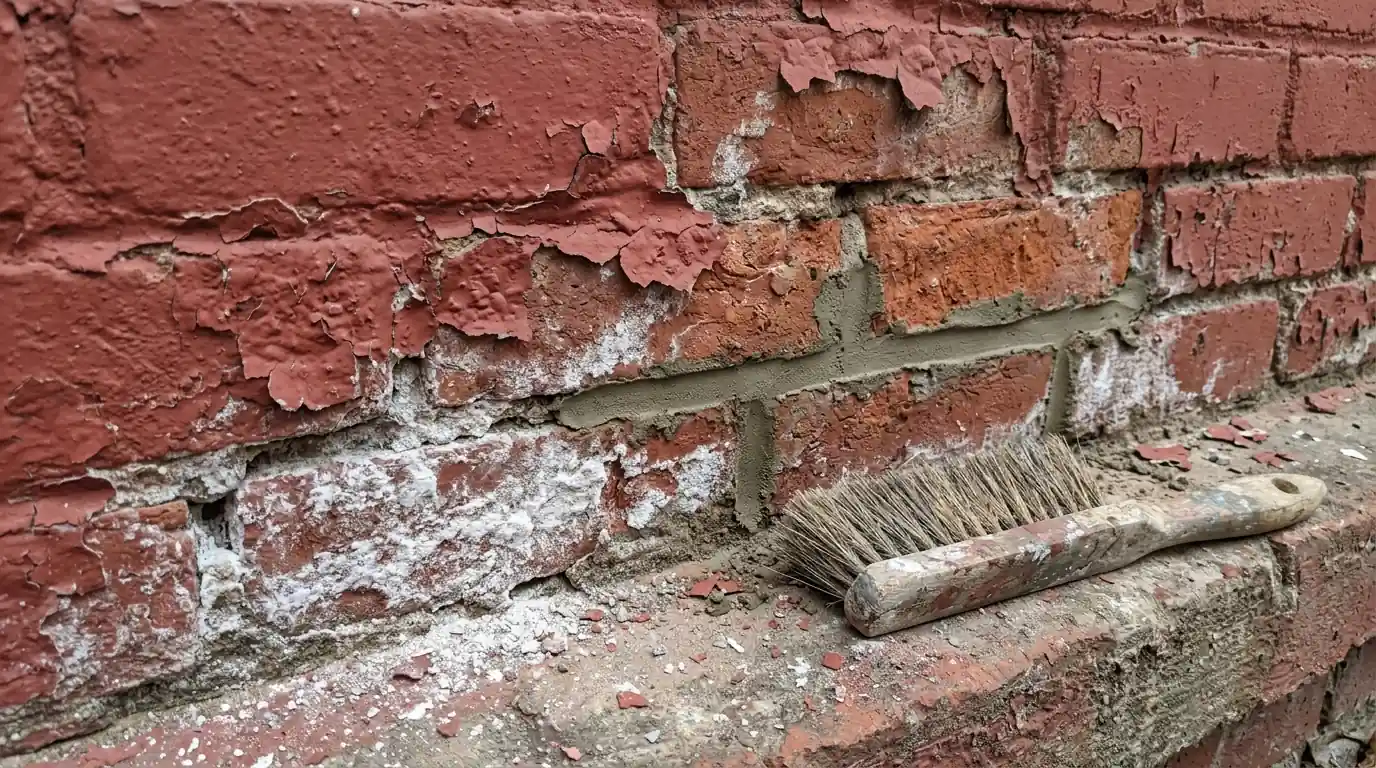
Paint on brick is only as good as the mortar under it. We check joints for cracks, loose mortar and gaps. Small spots can be pointed before painting; larger failing areas need a mason, and we tell you so rather than coat over it.
White, powdery deposits on brick, called efflorescence, are salts carried out by moisture. They have to be brushed and washed off and the moisture source addressed, because paint over efflorescence lets go. On pre-1978 homes, old coatings on brick may contain lead, so scraping follows EPA lead-safe work practices: containment, misting, hand tools and HEPA cleanup.
Painted brick fails in predictable places, and these are the ones we check.
Paint lifting along the bottom few courses usually comes from splash-back, snow and salt. It is the first area to fail.
Blisters on painted brick mean moisture is pushing out from behind a coating that cannot breathe.
Efflorescence under or through the paint means salts are moving with water. The source needs attention first.
If you can scratch mortar out with a key, the joints need pointing before any coating will last.
A painted brick wall that leaves color on your hand has a worn binder and is ready for a clean and recoat.
Brick faces breaking off under the paint point to trapped moisture and freezing, a sign the old coating was too tight.
We check old paint, mortar, efflorescence and drainage, and confirm whether any part of the brick has never been painted.
The brick is washed at a pressure that will not damage mortar, then left to dry fully, which can take a few days.
Failing paint is scraped and brushed off, with lead-safe setup on pre-1978 homes.
Efflorescence is brushed and washed off, and small mortar gaps are pointed or flagged for a mason.
A primer made for masonry goes on bare and patched areas so the finish bonds evenly.
Two coats of masonry paint are brushed and rolled into the texture and mortar lines, then trim is cut in.
Brick is priced by wall area, and the condition of the old paint and mortar moves it most.
| What is priced | Typical range | Unit |
|---|---|---|
| Brick painting with masonry coatings | $2.65 to $5.40 | per sq ft |
| Limewash as an alternative on unpainted brick | $3.10 to $6.95 | per sq ft |
| Pressure washing before painting | $345 to $890 | per house |
These ranges are typical for suburban brick, and the walk-through of your walls sets the final number.
Full painting price guideBrick is everywhere in Park Ridge, Niles, Morton Grove and Franklin Park: postwar ranches, Georgians with painted trim and black shutters, and 1920s bungalows in Berwyn and Melrose Park. Most of that brick has never been painted, and on those homes the paint work is usually trim, soffits, shutters and the garage door. Where a ranch or Georgian was painted decades ago, keeping it painted is the practical answer.
Oak Park, Evanston and Hinsdale have local historic districts where exterior changes can need review. Painting previously unpainted brick or stone is the change most likely to draw attention, so check with the village or city first if your house is in one. Repainting brick that is already painted is usually a simpler conversation. Townhome associations often set masonry colors too, so check your association's approved colors.
Freeze-thaw cycles and road salt are the main enemies of painted brick here. The base of the wall, front steps and the areas next to the driveway take the worst of it, so that is where we focus prep and where we look first on follow-up visits.
We take brick painting jobs in Park Ridge and the suburbs around it. A few of the places we work most:
It can be done, but it is close to permanent and adds a repaint cycle the house never had. Limewash or mineral paint gives a softer color change and keeps the brick breathable. We talk through both options and show samples before you decide.
We use breathable acrylic masonry paint or mineral silicate paint over a masonry primer, and elastomeric coatings only where a wall truly needs them. The goal is a coating that lets moisture out so freeze-thaw cycles do not push it off.
Sometimes, but it is slow and costly, and results depend on the brick and how many coats are on it. Chemical strippers and careful washing can work on some walls. In most cases, recoating with a breathable masonry paint is the practical choice.
We brush and wash the salts off, then find the moisture source, such as a gutter, downspout or grading problem. Painting over efflorescence without fixing the cause leads to peeling within a season or two.
If your house sits in a local historic district, painting unpainted brick may need review, so check with the village first. Repainting brick that is already painted is usually simpler. We can wait on your answer before scheduling.
Breathable lime and mineral silicate finishes for brick and stone that soften the color without sealing moisture in.
DetailsFull exterior repaints with scraping, priming of bare wood, caulking and two finish coats, timed to the local paint season.
DetailsSiding, brick, decks and walkways washed at the right pressure for the surface, as prep or as yearly upkeep.
DetailsEaves, soffits, fascia boards and frieze trim painted from ladders and lifts, with soft spots flagged before coating.
DetailsCall any hour. Someone picks up, takes the details and books a time to walk the job with you.