Exterior House Painting
Full exterior repaints with scraping, priming of bare wood, caulking and two finish coats, timed to the local paint season.
DetailsExterior painting
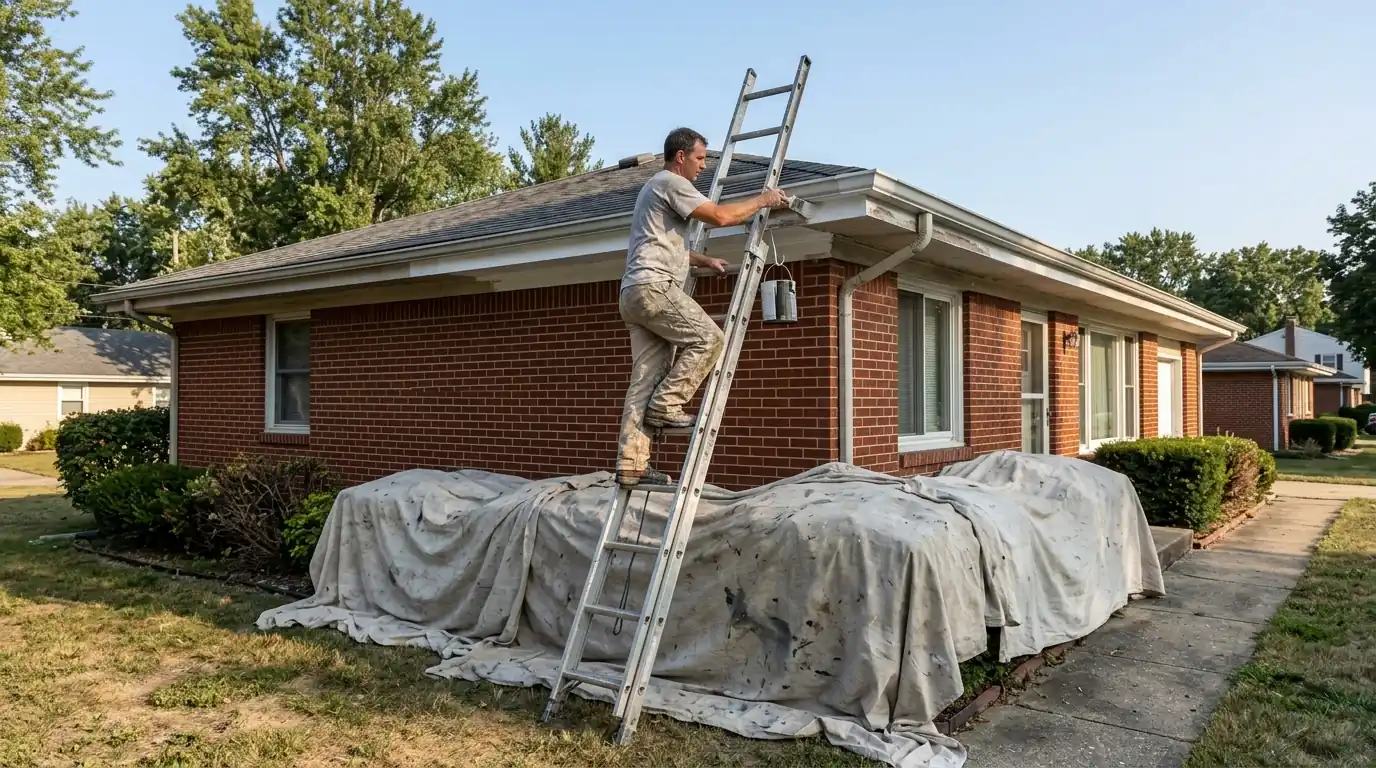
On a brick ranch or raised ranch, the soffits and fascia are most of what gets painted outside, and they are the first place paint fails. We scrape, repair, prime and paint eaves from ladders and lifts, and keep the attic vents breathing.
Short answer
Soffit and fascia painting covers the boards along the roof edge: the fascia behind the gutter, the soffit underneath the overhang and the frieze trim where it meets the wall. The work is scraping, checking for rot, priming bare wood or treating aluminum, caulking joints and two finish coats. Around Park Ridge it usually costs $4.35 to $9.80 per linear foot, depending on height, material and repairs.
Paint lines we use most, matched to the surface: Benjamin Moore, Sherwin-Williams and PPG for walls and trim, Romabio for limewash, Cabot and Sikkens for wood stain.
Fascia boards sit right behind the gutter. When a gutter overflows with leaves from the big parkway trees in Park Ridge, Des Plaines or Glenview, water spills over the back of it and runs down the fascia. Ice dams do the same thing in winter. The fascia stays wet, the paint lifts and the bottom edge of the board starts to rot.
Soffits fail from the other side. Warm, moist air from the house and attic pushes out through the overhang, and in winter it condenses on the cold soffit boards. That moisture pushes paint off from behind, which is why soffit paint often peels in long strips even when the surface was prepped well.
On brick ranches, Georgians and bi-levels in Niles, Morton Grove and Elk Grove Village, the eaves, garage door and window trim are often the only painted wood on the house. That makes soffits and fascia the main exterior painting job on thousands of suburban homes, and one worth doing carefully.
We probe the fascia, the soffit and the rafter tails for soft wood, especially at corners and below gutter downspouts. Small soft areas can be dug out and filled with epoxy. Boards rotted through are replaced with primed stock, and we show you any rot that reaches the roof sheathing or rafters so you can decide what comes next.
We look at the gutters too. Gutters that pitch the wrong way or overflow will keep wetting new paint. Cleaning or adjusting them is gutter work, not painting, so we point out the problem and you decide how to handle it.
Vented soffits are checked for blocked vents and screens. Paint must not fill the vent openings, because the attic needs that airflow to stay dry. Painting over vents is one of the most common reasons soffit paint keeps peeling.
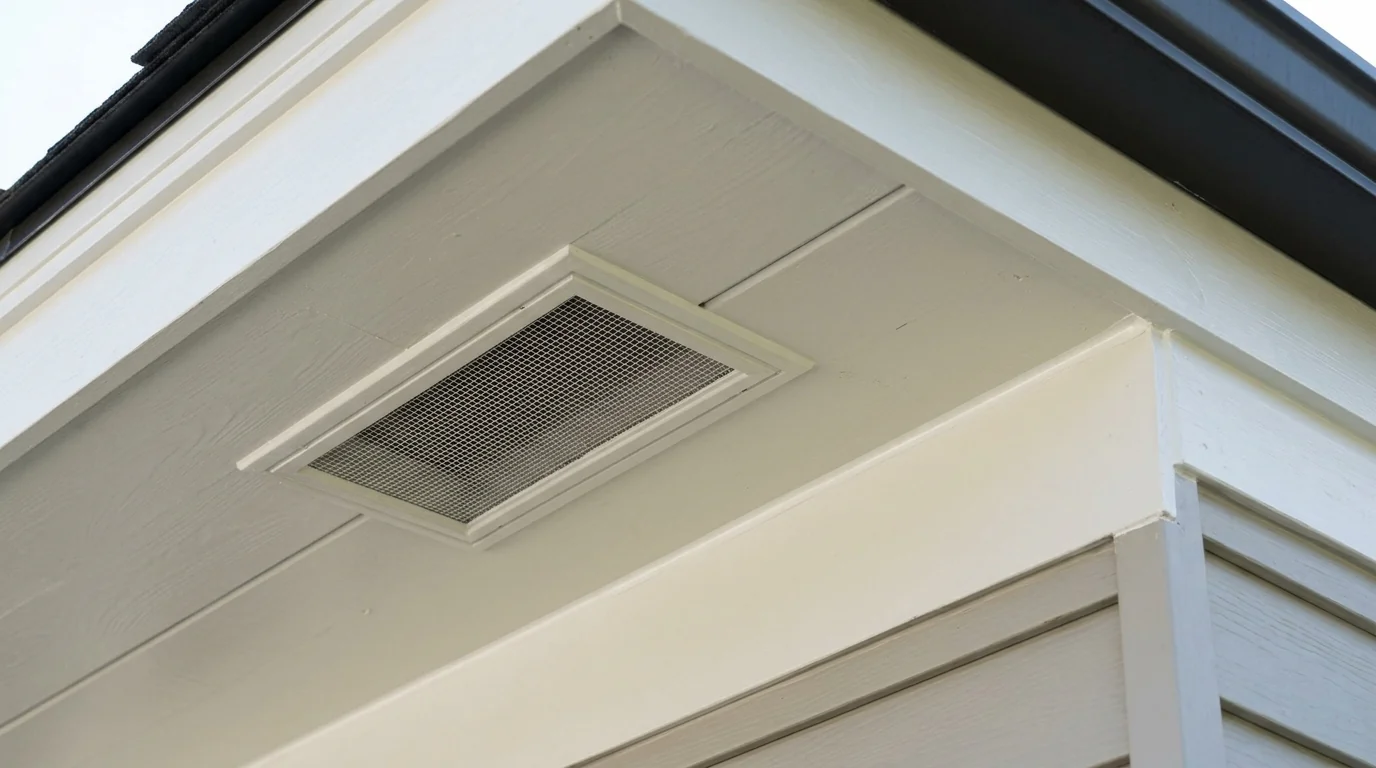
Wood soffits and fascia are scraped to a sound edge, sanded, spot primed on bare wood with an exterior primer and caulked at joints before two coats of exterior acrylic. On pre-1978 homes we follow EPA lead-safe work practices, with sheeting on the ground and wet scraping.
Many 1960s to 1980s homes in Arlington Heights, Palatine, Schaumburg and Hoffman Estates had their fascia wrapped in aluminum and their soffits replaced with aluminum or vinyl panels. Aluminum can be painted once its chalky oxidation is washed off and it is primed with a product made for aluminum. Vinyl soffit can be painted with a vinyl-safe color, but dark colors can warp it, so check the panel maker's guidance.
Raised ranches in Des Plaines, Streamwood and Hanover Park have tall eaves on the back side where the lower level is exposed. Those often need a lift or long extension ladders, which affects scheduling and cost.
The postwar ranches, Cape Cods and raised ranches that fill Des Plaines, Niles, Mount Prospect and Elk Grove Village were built with wide overhangs and long runs of fascia. Mature trees planted when those subdivisions went in now drop leaves into the gutters every fall, which keeps the fascia wet. Ice dams after heavy snow make it worse.
Older homes in Park Ridge, Evanston and the North Shore often have deeper eaves with decorative brackets, crown molding at the frieze and exposed rafter tails, which take more time per foot. In townhome communities in Palatine or Wheeling, soffit and fascia painting is usually scheduled by building through the association, so check your association's approved trim color first.
Eave work runs from May through mid October, when O'Hare highs average between 62 and 84 degrees. On cool fall mornings we start with the sunny side so the boards are dry and warm enough for the paint.
You can usually spot these from the driveway with a careful look.
Long peeling strips on soffits often point to moisture pushing out from the attic.
Streaks on the fascia mean water is going behind or over the gutter.
Exposed wood on the fascia soaks up rain and starts to rot quickly.
Boards that droop have usually lost their fastening or rotted at the ends.
White powder on aluminum fascia means the factory finish is breaking down.
Gaps from rot or missing boards let birds and wasps in.
We inspect the roof edge all around and note rot, vents and gutter problems.
Ladders or a lift are set, and plants, decks and patios below are covered.
Loose paint is removed, soft wood repaired or replaced and joints opened for caulk.
Bare wood and aluminum get the right primer, then joints are caulked.
Soffits, fascia and frieze boards are painted with vents kept clear.
We walk the eaves with you, touch up and clear paint chips from the beds.
Eave work is priced by the linear foot of roof edge, plus repairs.
| What is priced | Typical range | Unit |
|---|---|---|
| Soffit and fascia painting | $4.35 to $9.80 | per linear ft |
| Brick ranch trim, soffits and garage door package | $2,940 to $6,480 | per house |
| Rotted fascia or soffit section repair | $235 to $860 | per spot |
These ranges are typical for eaves in Park Ridge and the nearby suburbs, and the walk-through sets the real number for your house.
Full painting price guideWe take soffit & fascia painting jobs in Park Ridge and the suburbs around it. A few of the places we work most:
Usually moisture is pushing out from behind. Warm attic air condenses on the cold soffit boards in winter, especially when vents are blocked or there are not enough of them. We clear the vents during painting and point out ventilation problems that need fixing.
Yes. The aluminum has to be washed thoroughly to remove the chalky oxidation, then primed with a product made for aluminum. After that it takes exterior acrylic well and looks much better than faded factory finish.
Usually not. We paint around and behind the gutter as far as we can reach. If a fascia board is rotted and has to be replaced, the gutter section comes down for that part and goes back up after.
It should not. We keep paint out of the vent openings and screens, and we clear vents that previous paint jobs filled in. Blocked soffit vents trap moisture and cause the peeling you are trying to fix.
Yes. On brick ranches and many vinyl-sided homes, the eaves are the main painted surface anyway. We match the existing trim color or change it, and often paint the garage door and window trim in the same visit.
Full exterior repaints with scraping, priming of bare wood, caulking and two finish coats, timed to the local paint season.
DetailsSoft sills, trim and porch parts cut back to sound wood, rebuilt with epoxy or new stock and primed before painting.
DetailsSteel and wood garage doors cleaned, scuffed, primed where needed and painted in a finish that handles sun and salt.
DetailsSashes, frames and sills scraped, reglazed where loose and painted so windows still open and shed water.
DetailsPainting in pre-1978 homes using EPA lead-safe work practices: containment, wet methods and HEPA cleanup.
DetailsCall any hour. Someone picks up, takes the details and books a time to walk the job with you.