Wallpaper Removal
Paper and old adhesive taken off without gouging the wall, then the surface is washed, repaired and sealed for paint.
DetailsWall repair & prep
Good wallpaper starts with a flat, sealed wall. We repair and prime first, then hang traditional, grasscloth, mural and peel-and-stick papers plumb, with the pattern matched and edges trimmed tight to trim that is rarely square.
Short answer
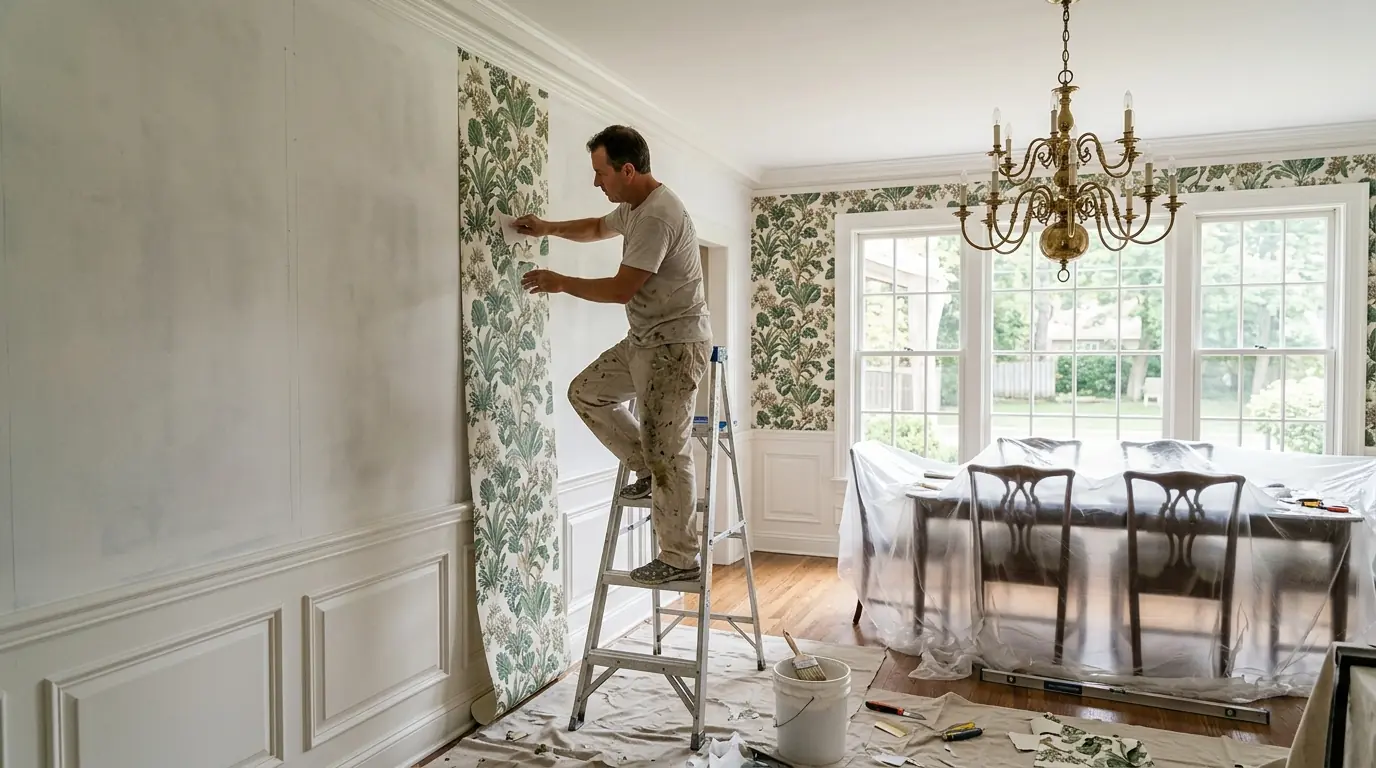
Wallpaper installation means preparing the wall, sealing it with a wallpaper primer, then measuring, cutting and hanging each strip plumb with the pattern matched at every seam. Around Park Ridge and the nearby suburbs, labor usually runs $680 to $1,940 per room. The price moves with the paper type, the pattern repeat, the wall condition, ceiling height and how many cuts fall around windows and trim.
Paint lines we use most, matched to the surface: Benjamin Moore, Sherwin-Williams and PPG for walls and trim, Romabio for limewash, Cabot and Sikkens for wood stain.
Wallpaper shows every bump and dip behind it, especially thin papers and anything with a sheen. On older plaster, past patches and paint ridges read straight through. On drywall in a newer house, settling cracks and nail pops do the same. We patch or skim the wall until it is flat and sand it smooth.
Then the whole wall gets a wallpaper primer. It seals the surface so paste does not soak in too fast, gives the paper something to grip and lets the paper strip off cleanly years from now without tearing the wall. Skipping it is the most common reason paper fails or becomes almost impossible to remove.
If old paper is still up, we take it off first. New paper hung over old tends to bubble and lift at the seams once the paste wets the layer underneath.
Non-woven papers are the easiest to live with. They are usually pasted on the wall rather than the back of the strip, barely expand when wet and come off in one piece later. Traditional and paper-backed papers are pasted on the back and booked, folded on themselves for a few minutes so they relax before hanging.
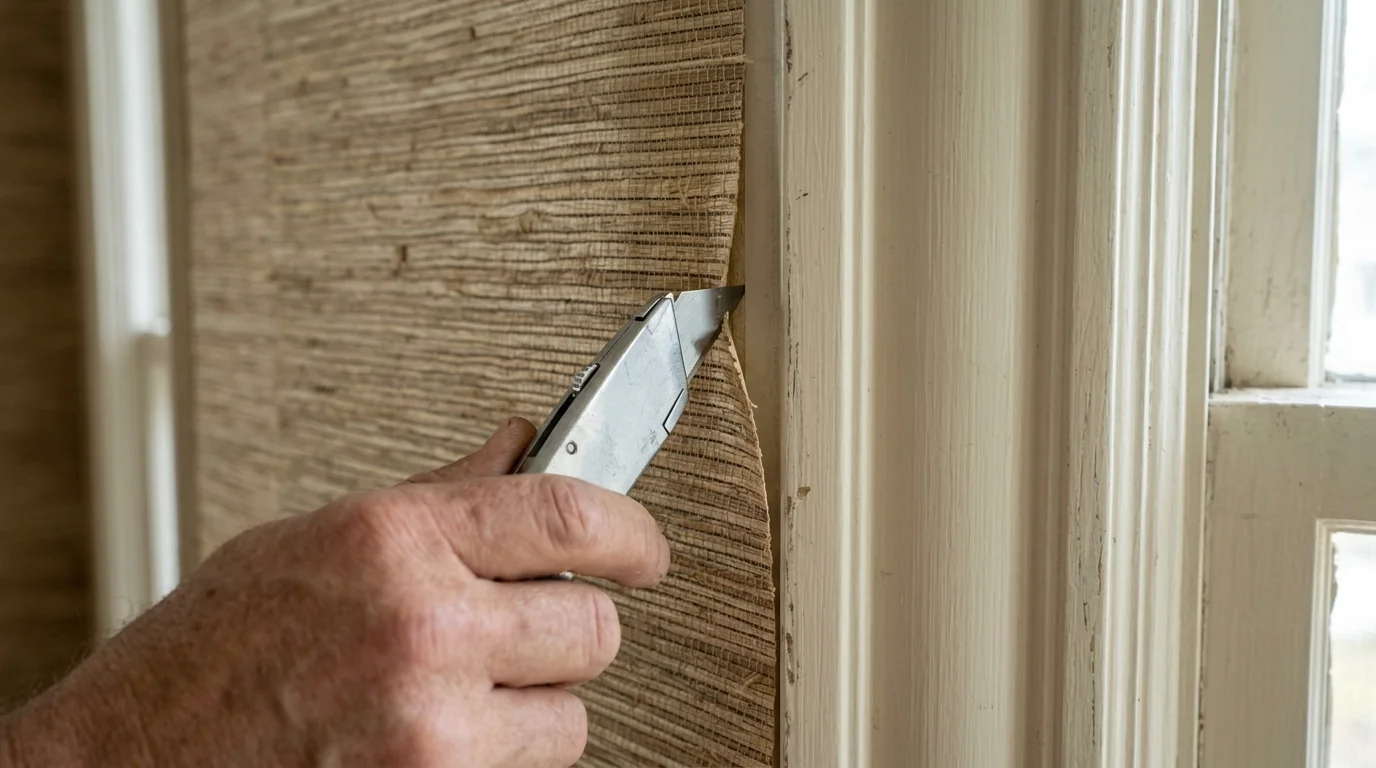
Grasscloth, sisal and other natural fibers look rich but are less forgiving. Seams always show a little, color shifts from roll to roll and paste on the face can stain. We check and sequence the rolls before cutting, hang with clean water and handle every strip by the edges.
Peel-and-stick suits small rooms and rentals, but it needs a very smooth, fully cured, primed wall. On a rough wall, or in a bath that runs humid in summer, it lifts at corners and seams.
Few rooms are truly square. Floors settle, corners lean and ceilings dip, even in a 1990s house. If the first strip goes up against a corner, the pattern runs downhill across the wall. We set a laser or plumb line for the first strip and again at every corner.
We decide where the pattern breaks before anything is cut. The last strip in a room never matches the first, so we put that seam in a quiet spot, often behind a door or over a closet. On a feature wall, the pattern is centered on the wall, the bed or the fireplace so it reads balanced.
Cuts around casings, outlets and windows are made with fresh blades, changed often. A dull blade tears wet paper and leaves ragged edges against the trim, where they show most.
Some rooms and walls hold wallpaper better and longer than others.
Rooms with low traffic and little steam keep paper looking good for the longest time.
A papered wall behind a bed, a sofa or a fireplace adds pattern without committing a whole room.
A flat white room in a newer house gains character fast with a textured or patterned paper.
Traditional patterns suit bungalow and Tudor dining rooms with oak or painted woodwork.
Papering the ceiling of a small entry, a powder room or a reading nook gives a strong look in a small space.
Peel-and-stick can work in a rental when the owner allows it and the wall is prepared first.
We measure the room, account for the pattern repeat and waste, and confirm every roll comes from the same print run before starting.
Old paper comes off, plaster and drywall are repaired, and the wall is sanded flat.
Primer goes on the whole wall and dries completely before any paper is hung.
We mark a plumb line, plan where the pattern starts and decide where the final seam will fall.
Each strip is pasted, hung, matched to the one before and smoothed out with a brush or plastic smoother.
Edges are trimmed with a fresh blade, paste is wiped from the face and the trim, and the room is cleaned.
Hanging is priced per room for labor, with removal and prep priced separately when a room needs them. The paper itself is a separate cost and varies widely.
| What is priced | Typical range | Unit |
|---|---|---|
| Wallpaper hanging, labor | $680 to $1,940 | per room |
| Old wallpaper removal before hanging | $485 to $1,320 | per room |
| Full room skim coat for smooth walls | $1,380 to $3,460 | per room |
| Accent wall painted beside a papered wall | $285 to $640 | per wall |
These ranges are typical for the area, and the walk-through and your chosen paper set the real number.
Full painting price guideAround Park Ridge, papered dining rooms and powder rooms are back in the Georgians and Colonials, and in the older Tudors and Prairie homes of Wilmette, Winnetka, Oak Park and Glen Ellyn the paper often goes next to original woodwork and plate rails. Those rooms rarely have a straight line in them, so layout and trim cuts get the most time.
Newer houses at The Glen in Glenview, in Buffalo Grove and in the teardown rebuilds of Elmhurst and Hinsdale have drywall that is flat but often never got a good primer. We check for settling cracks along tapered seams, fix them, and prime before paper goes up so the paste does not grab the bare drywall.
Humidity swings matter here too. Paper hung on a muggy July day shrinks a little as it dries, and seams can open in a furnace-dried January room if the paste was thin. We paste to the maker's directions and butt seams tight, never overlapped, so they stay closed through the seasons.
We take wallpaper installation jobs in Park Ridge and the suburbs around it. A few of the places we work most:
It depends on the room's size, the ceiling height and the paper's pattern repeat. We measure and work out the count for you before you order, with a little extra for waste and future repairs.
Yes, and repaired plaster is a good base. Cracks, ridges and old patches have to be fixed and the wall primed first, or they will show through the paper.
On a smooth, primed wall in a bath with a working exhaust fan, it can. In a bath that stays steamy, edges tend to lift. A traditional or non-woven paper with proper paste lasts longer there.
Seams show when the wall was not primed, the paper shrank as it dried, or the paste was too thin. Grasscloth always shows some seam lines. We prime, paste correctly and butt seams tight.
You choose and buy the paper so you get exactly the pattern you want. We confirm the roll count, check that the rolls share a print run, and handle everything from wall prep to the final trim.
Repaired plaster and skim coats need to dry fully and then get a coat of wallpaper primer, usually one to two days after the repair. Call (312) 579-0481 to plan the timing.
Paper and old adhesive taken off without gouging the wall, then the surface is washed, repaired and sealed for paint.
DetailsCracked and bulging plaster on vintage walls reattached, patched and skimmed with materials that move like the original.
DetailsFeature walls, two-tone color blocking, stripes and glazed finishes laid out with a level and taped to a crisp edge.
DetailsWalls, ceilings and trim in occupied homes, with furniture moved, floors covered and rooms handed back each evening.
DetailsLarge painted samples on your actual walls, checked in morning and evening light before a single gallon is ordered.
DetailsCall any hour. Someone picks up, takes the details and books a time to walk the job with you.