Fence Staining & Painting
Wood fences and gates cleaned and stained or painted on both sides, with plants and neighbor yards protected.
DetailsExterior painting
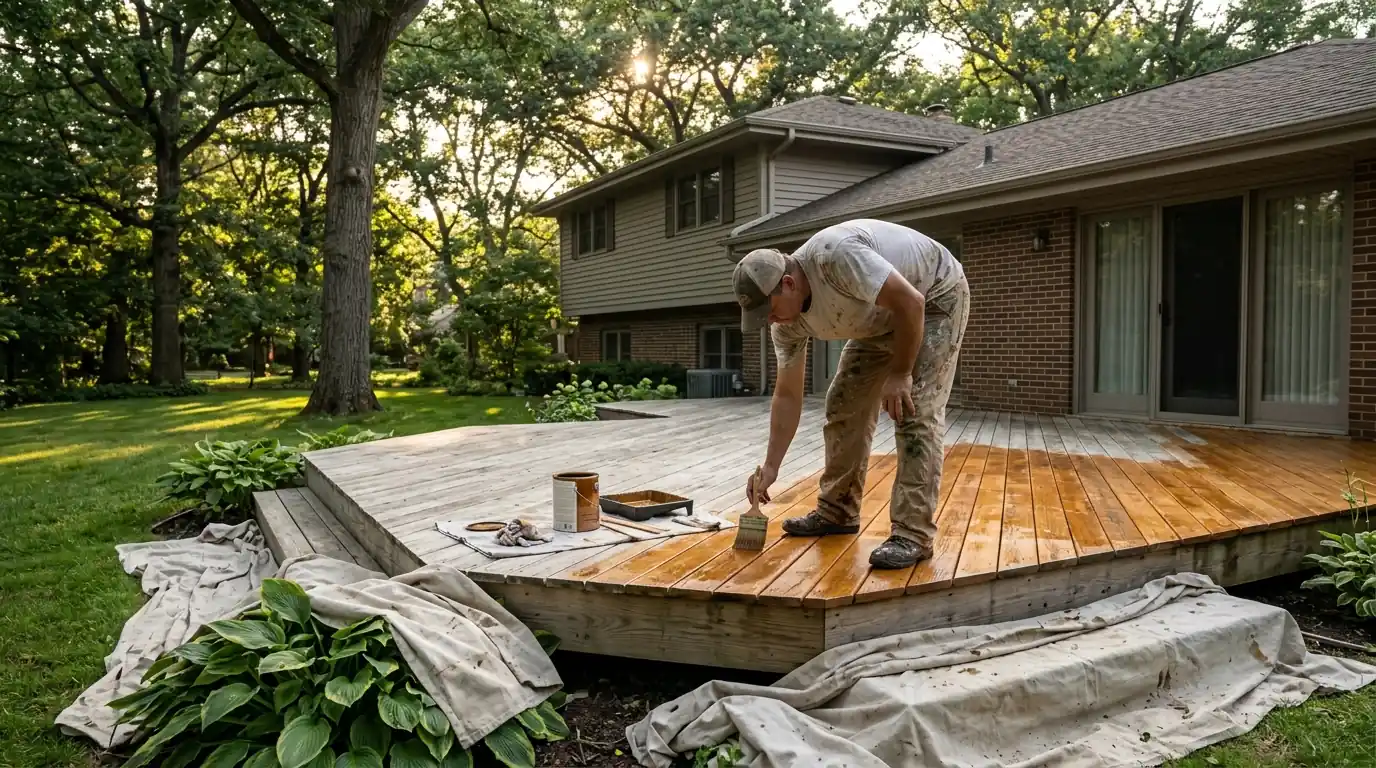
Backyard decks around Park Ridge sit under snow for weeks, then bake in July sun. We wash, brighten and stain them with a penetrating or solid stain picked for the wood you actually have, not the wood the label assumes.
Short answer
Deck staining means cleaning the boards, removing any finish that is failing, brightening the wood and brushing on a penetrating or solid stain that sheds water and blocks sun. Around Park Ridge and the nearby suburbs we do it from late May into September on dry stretches. A 300 to 500 square foot deck usually runs $985 to $2,640, depending on stripping, railings, stairs and the stain type.
Paint lines we use most, matched to the surface: Benjamin Moore, Sherwin-Williams and PPG for walls and trim, Romabio for limewash, Cabot and Sikkens for wood stain.
Most decks we see behind ranches and split-levels in the northwest suburbs are pressure-treated pine, with cedar on a lot of 1970s to 1990s homes in Northbrook, Glenview and Deerfield. Both take stain well, but the right product depends on how much wear the boards already show and what is on them now.
Semi-transparent and toned penetrating stains soak in and leave the grain visible. They do not peel. They fade and wear thin, so the next coat is a cleaning and a fresh application rather than a scraping job. On sound cedar or a treated deck under ten years old, this is usually what we recommend.
Solid stain covers the grain the way paint does. It hides graying, mismatched replacement boards and old stain that never came off evenly, and it blocks more sun. The tradeoff is that it can peel once water gets under the film, so prep and dry wood matter more. On a tired deck with a mix of old and new boards, solid stain is often the honest choice.
We wash the deck with a cleaner suited to whatever coating is already there, at a pressure low enough that it does not raise fuzz on the boards. Peeling or patchy finish gets stripped. After cleaning we apply a brightener, which neutralizes the cleaner and opens the grain so the new stain absorbs evenly across old and new boards.
Then the deck has to dry. That is usually one to two dry days, longer on a deck shaded by mature oaks or maples, which a lot of Park Ridge and Glenview yards have. We check board moisture with a meter instead of guessing. Stain on damp wood blotches and lets go within a season.
Before staining we drive down popped nails and screws, sand splintered handrails and stair nosings, and mark any boards that flex or feel soft. Small rot spots can be cut out and replaced, and we show you anything structural, such as a soft ledger or a post rotting at grade, before we coat over it.
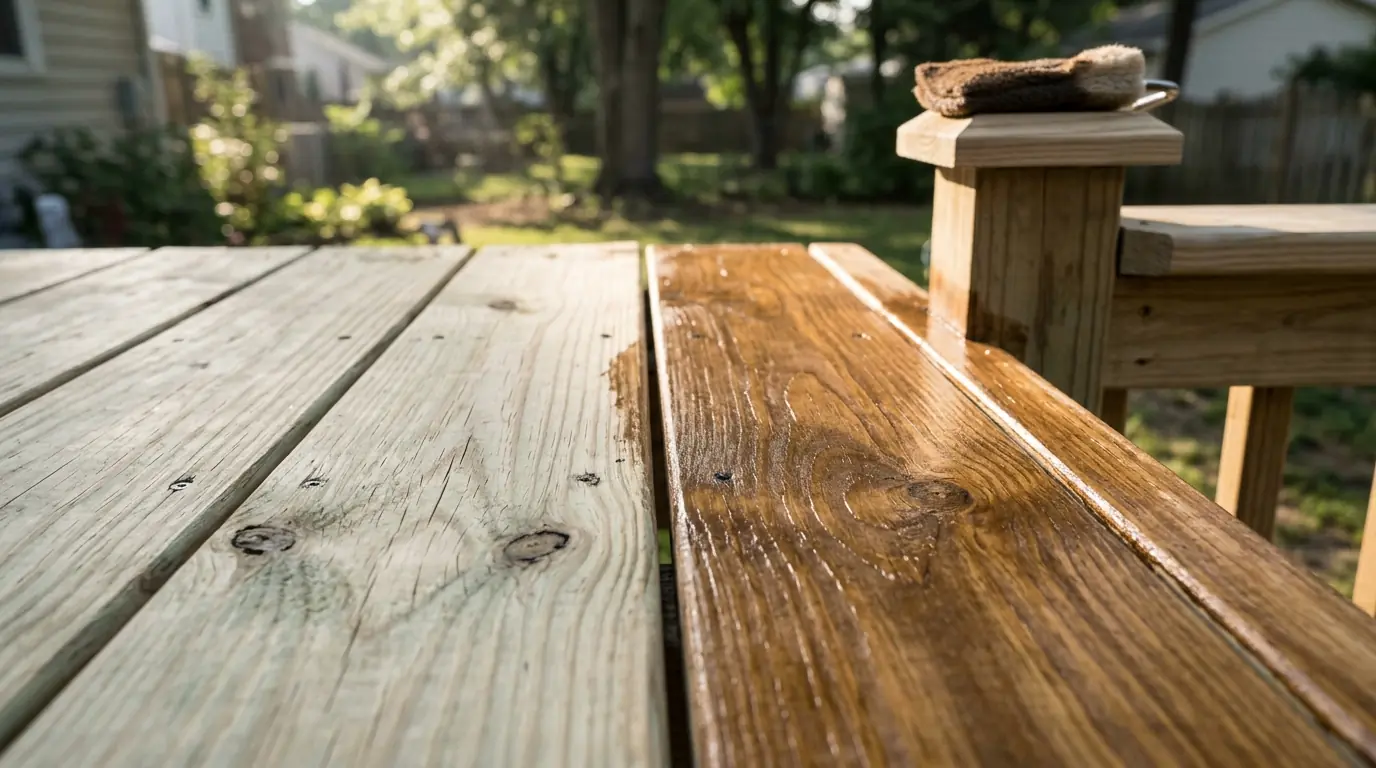
Decking is stained a few boards at a time, end to end, so there are no lap marks across the middle of a run. Railings, balusters and stair stringers are brushed by hand, because a sprayer drifts onto siding and the neighbor's fence. Board ends and cut ends get a heavy coat, since that is where winter melt water soaks in first.
Penetrating stain goes on thin, and anything that does not soak in is wiped off so it cannot dry into a tacky film. Solid stain gets two coats for even color. Siding, patio pavers, the air conditioner and the plants below are covered before we open a can.
You keep the deck clear until the product's dry time has passed, usually a day for light use and longer for furniture and grills. We leave the leftover stain labeled in your garage, so a worn stair tread can be touched up next summer without matching a color from memory.
The weather station at O'Hare, a few miles from our Park Ridge headquarters, averages highs near 84.5 degrees in July with plenty of humidity, and winters that freeze and thaw over and over. Snow piled on a deck melts into board ends every sunny afternoon and refreezes at night. Summer brings strong sun on open yards and mildew on decks under big trees. A stain here has to handle both.
Some of our busiest deck streets are in Northbrook, Glenview and Deerfield, where many 1950s to 1990s homes were built with cedar decks and siding. Raised ranches in Des Plaines, Streamwood and Elk Grove Village often have an upper deck off the kitchen with long stairs, which adds railing work. In townhome communities in Palatine or Buffalo Grove, check your association's approved stain colors before we order.
Late May through September gives the most reliable dry stretches, with average lows around 51 degrees in May climbing from there. We plan around the forecast, and if rain is due within the product's cure time, we wait.
Decks show they need coating well before boards start to rot.
If a splash darkens the wood instead of beading up, the protection is gone.
Graying is sun breaking down the surface fibers, which needs cleaning and brightening before stain.
Patches of peeling stain let water get under the film and speed up decay.
Splinters on handrails and stair edges mean the finish has worn through.
Shaded corners under trees grow mildew and algae that must come off first.
Boards that curl or crack are wetting and drying with nothing slowing it down.
We look at boards, rails, stairs and the current coating, then recommend a stain type and color direction.
Siding, pavers, plants, the AC unit and anything near the property line are protected.
The deck is cleaned, or stripped where old stain is failing, at a pressure the wood can take.
Brightener goes on, then we wait and meter the boards until they are dry enough.
Fasteners are reset, rough spots sanded and soft boards replaced or flagged.
Decking, rails and stairs get the number of coats the product calls for, and we walk it with you at the end.
Deck staining is priced by size and condition. Prep and railings carry most of the labor.
| What is priced | Typical range | Unit |
|---|---|---|
| Deck staining, 300 to 500 sq ft | $985 to $2,640 | per deck |
| Washing the house siding at the same visit | $345 to $890 | per house |
| Rotted board, stair tread or post repair | $235 to $860 | per spot |
These ranges are typical for decks in Park Ridge and the nearby suburbs, and the walk-through sets the real number for yours.
Full painting price guideWe take deck staining & sealing jobs in Park Ridge and the suburbs around it. A few of the places we work most:
Semi-transparent stain on the walking surface often needs a refresh every two to three years, while railings last longer because they shed water. Solid stain goes longer between coats but needs more prep when it fails. Decks in full sun and decks under heavy shade both wear faster than average.
New treated lumber usually comes too wet to stain. It needs weeks, sometimes a few months, of drying depending on the season and the shade. We meter the boards and tell you when they will take stain, rather than going by a calendar.
Yes. Composite decking itself is not stained like wood, but many suburban decks have composite boards with wood posts, rails and stairs. We clean the composite and stain or paint the wood parts to match or contrast.
Rain on fresh stain can leave spots or wash some of it out before it cures. We check the forecast before each day and stop early if rain is coming. If a surprise storm marks a fresh coat, we come back and correct the affected boards.
It can, but every bit of solid stain has to be stripped and sanded to bare wood first, which adds time and cost. On an older deck with many replaced boards, staying with a solid stain usually looks better and lasts longer.
Wood fences and gates cleaned and stained or painted on both sides, with plants and neighbor yards protected.
DetailsSiding, brick, decks and walkways washed at the right pressure for the surface, as prep or as yearly upkeep.
DetailsSoft sills, trim and porch parts cut back to sound wood, rebuilt with epoxy or new stock and primed before painting.
DetailsCedar shakes, clapboard and board-and-batten cleaned, brightened and stained in a semi-transparent or solid finish.
DetailsFront porch floors, steps, ceilings, columns and railings scraped, repaired where soft and coated with porch enamel or stain.
DetailsCall any hour. Someone picks up, takes the details and books a time to walk the job with you.