Plaster Wall Repair
Cracked and bulging plaster on vintage walls reattached, patched and skimmed with materials that move like the original.
DetailsWall repair & prep
A leak from an upstairs bathroom, a doorknob through the wall, a crack over a doorway that keeps coming back. We cut out what is damaged, patch and tape it, sand it flat, prime it and paint it so you cannot find the repair.
Short answer
Drywall repair covers holes, cracks, dents, nail pops, loose tape and water-damaged sections, patched with new board or mesh, taped, finished with joint compound, sanded and primed. Around Park Ridge a small patch typically costs $185 to $435, and a water-damaged section cut out and replaced runs $460 to $1,240, depending on size, location and how much painting is needed to blend it in.
Paint lines we use most, matched to the surface: Benjamin Moore, Sherwin-Williams and PPG for walls and trim, Romabio for limewash, Cabot and Sikkens for wood stain.
These are the problems that need fixing before a new coat of paint will look right.
A stain under a bathroom or along an outside wall means a leak, which must be fixed before repair.
Drywall that gives when pressed is wet or broken and needs to be cut out and replaced.
Nail pops along framing lines need to be screwed down and filled.
Cracks at door and window corners that return after filling need tape, not more filler.
Joint tape that lifts or blisters means the original bond failed and the tape must be redone.
TV mounts, shelf anchors and doorknob damage are common when a house changes hands.
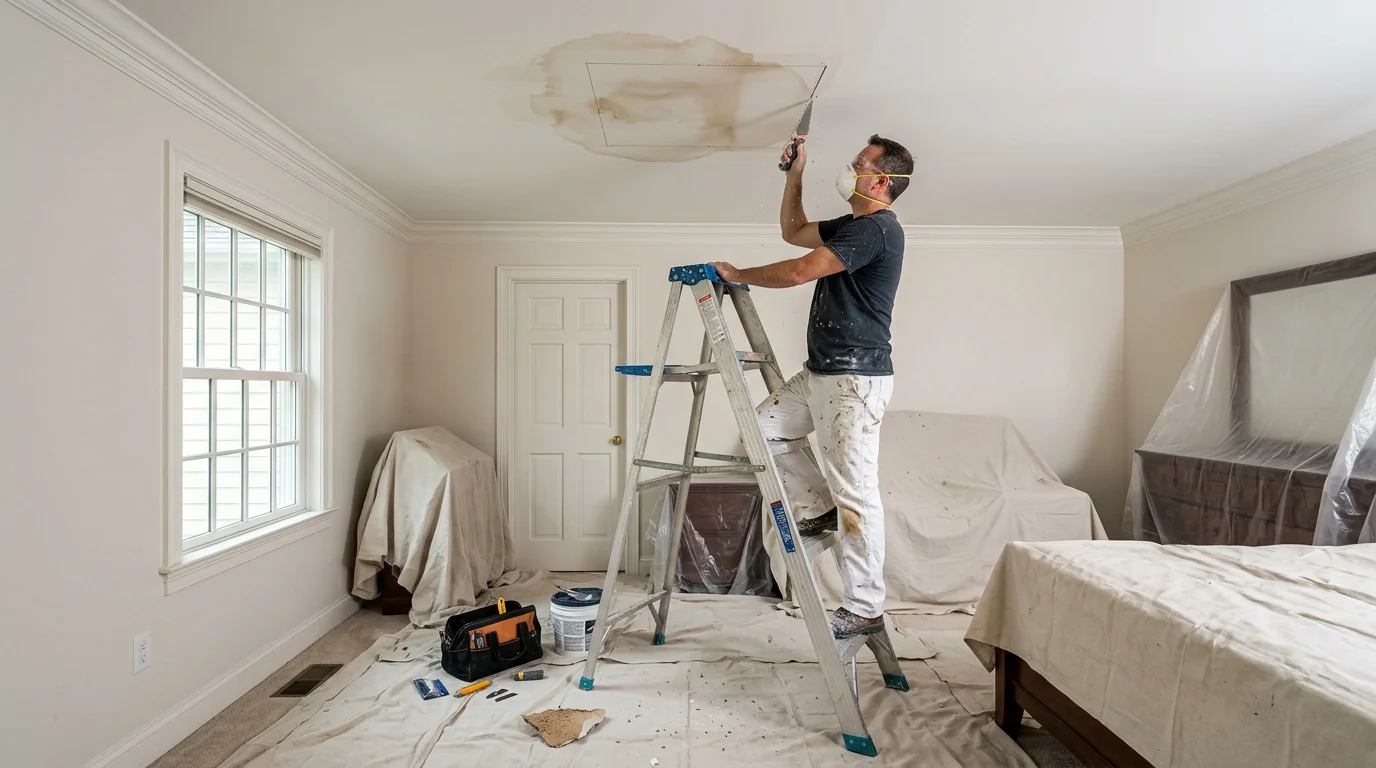
The most common drywall repair we see in suburban homes is a ceiling stain under an upstairs bathroom. A slow leak from a toilet seal, a tub drain or a shower valve soaks into the drywall, leaves a brown ring and sometimes makes the board sag. The second most common is winter related: ice dams on the eaves of Cape Cods and two-story Colonials push meltwater under the shingles, and it shows up as stains along the top of an outside wall or a bedroom ceiling.
The leak has to be fixed first. Painting over a stain while water is still coming through only hides it until it comes back. Once the plumbing or roof is repaired, we check the area with a moisture meter. Drywall that is dry and firm can be sealed with an oil or shellac-based stain blocker and repainted. Board that is soft, sagging or crumbling is cut back to solid material and replaced.
If dark spotty growth shows on the back of wet drywall when it is opened, that section comes out and the cavity is dried before closing it up. Large areas of mold should go to a mold remediation contractor before repair.
Most everyday damage is quick to fix when it is done in the right order. Nail holes and dents get filled and sanded. Doorknob holes and anchor tears get a mesh patch or a piece of new drywall screwed to backing. Bigger openings from plumbing access or a moved outlet get a cut-in patch with tape and three thin coats of compound.
Nail pops are the round bumps in rows along studs and joists as framing dries and shifts. We drive a screw beside each nail, set the nail, then fill and sand. Cracks at the corners of doors and windows come back if they are only filled, so we tape them and finish over the tape. Newer homes on teardown lots in Elmhurst, Hinsdale and Park Ridge often show these settling cracks in the first few years.
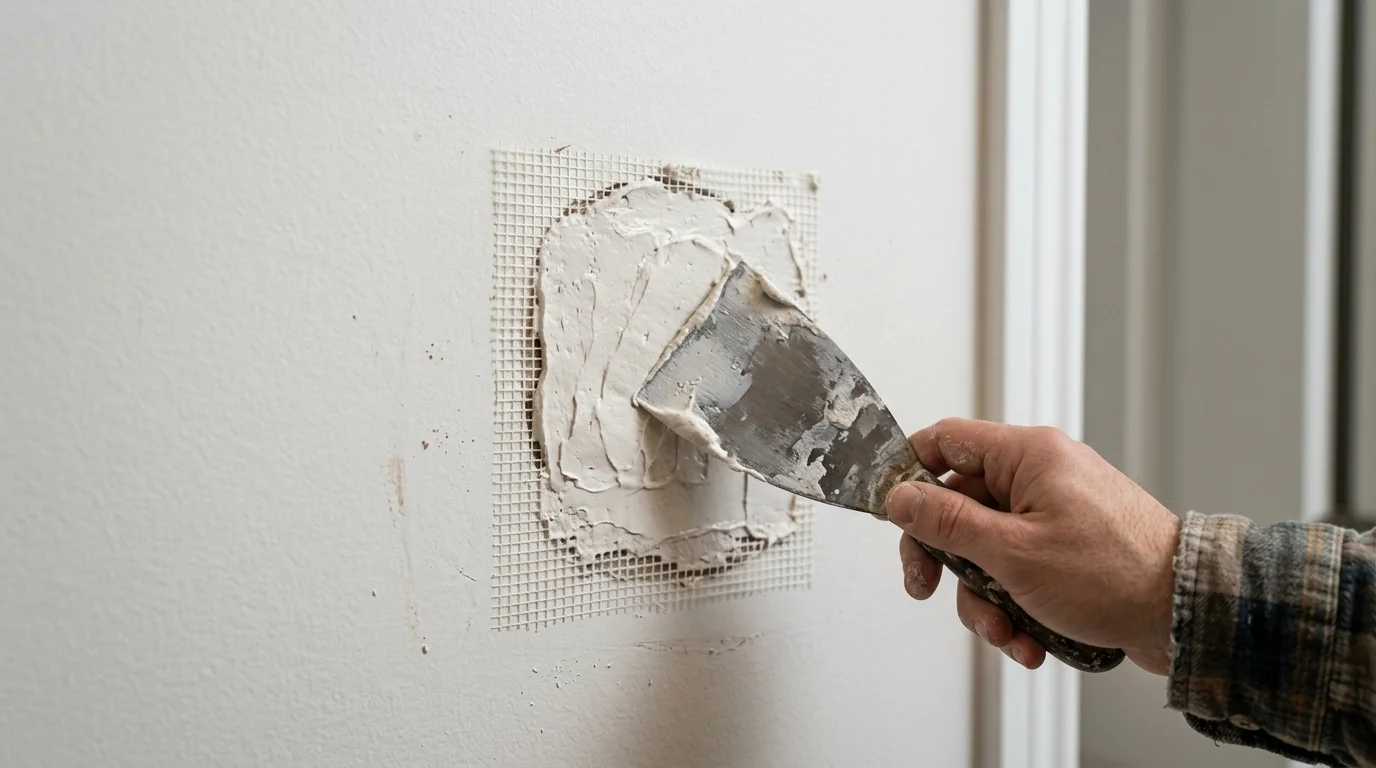
A flat patch is only half the job. Joint compound takes paint differently from the wall around it, so an unprimed patch shows as a dull spot. We prime every patch, and on walls with an eggshell or satin sheen we often roll primer past the patch to even out the surface.
Texture matters too. Many suburban walls are smooth, but plenty of 1970s to 1990s homes and townhomes in Schaumburg, Palatine and Buffalo Grove have orange peel or knockdown texture. We match it with a spray texture or a roller before primer.
To blend, we paint the patch and usually the whole wall from corner to corner. Touching up just the patched area almost always shows, even with leftover paint from the same can, because paint shifts color as it ages on the wall.
We look for leaks, settling or impact damage, and test water stains with a moisture meter.
Floors and furniture are covered, and dust barriers go up for cut-out work.
Wet, soft or broken drywall is cut back to sound material and new backing is added where needed.
New board or mesh goes in, seams are taped, and we apply two or three thin coats of compound.
We sand flat with dust control, check with a low light and match any wall texture.
Patches are primed, stains get a stain-blocking primer, and the wall or ceiling is painted corner to corner.
Small repairs are priced by the patch. Water-damaged sections are priced by area, and painting the full wall or ceiling to blend is often added.
| What is priced | Typical range | Unit |
|---|---|---|
| Small patch, hole or crack | $185 to $435 | per patch |
| Water-damaged section cut out and replaced | $460 to $1,240 | per section |
| Ceiling repainted after repair | $245 to $520 | per room |
| Walls repainted after repair, two coats | $465 to $890 | per room |
These ranges are typical for repairs around Park Ridge, and the walk-through sets the real number once we see the damage.
Full painting price guideFreeze-thaw winters near O'Hare, with average November lows around 34F, bring ice dams and frozen pipes, and spring storms bring basement seepage. That means a lot of our drywall work is water related: ceilings under second-floor baths in Park Ridge Colonials, outside walls below ice-dammed eaves, and finished basement drywall in Des Plaines and Mount Prospect after high water. Our phone is answered 24/7, so call as soon as you see a stain and we will set up a visit once the leak is stopped.
Many older homes mix materials. Bungalows in Park Ridge, Morton Grove and Elmhurst often keep original plaster in the main rooms, with drywall added in remodeled kitchens, baths and basements. Patching drywall into plaster needs shims so the surfaces line up, and when older painted surfaces in a pre-1978 home are disturbed, we follow EPA lead-safe work practices. In townhome communities, we schedule around association work hours and shared walls.
We take drywall repair jobs in Park Ridge and the suburbs around it. A few of the places we work most:
Only if the leak is fixed and the board is dry and firm. Then a stain-blocking primer seals the mark and the ceiling can be repainted. If the drywall is soft or sagging, that section has to be cut out and replaced.
Framing shrinks and shifts as it dries, which pushes nails out of the board, and new homes do this most in the first few years. We fix them by adding a screw next to each nail, setting the nail and finishing over both.
It can if it is not primed or if only the patch is touched up. We prime every patch and usually paint the full wall or ceiling corner to corner, which keeps the repair from showing.
The roof or flashing needs attention first so the water stops. Then we check the board with a moisture meter, seal firm stained areas with a stain blocker, replace soft sections and repaint the wall to blend.
Our phone is answered 24/7, so call as soon as you notice it. The leak needs to be stopped first, and we check the drywall with a moisture meter before deciding whether to seal it or replace it.
Yes, it is common in older homes. Plaster is usually thicker than drywall, so we shim the patch to line up with the wall surface before taping and finishing.
Cracked and bulging plaster on vintage walls reattached, patched and skimmed with materials that move like the original.
DetailsFlat, even ceilings with no lap marks, including high stairwell ceilings and stained ceilings that need a sealing primer first.
DetailsWalls, ceilings and trim in occupied homes, with furniture moved, floors covered and rooms handed back each evening.
DetailsFast repaints between tenants in houses, condos and apartments: patching, stain blocking and a full coat so the unit shows on schedule.
DetailsFoundation walls, block, ceilings and floors coated with products made for damp, cool below-grade rooms.
DetailsCall any hour. Someone picks up, takes the details and books a time to walk the job with you.