Office Painting
Open offices, conference rooms and corridors painted floor by floor in low-odor coatings, after hours when needed.
DetailsCommercial & multi-unit
We paint offices, storefronts, warehouse offices, medical suites and building common areas from Park Ridge out to Schaumburg, Itasca and Elk Grove Village, working in zones on nights and weekends so the space opens on time every morning.
Short answer
Commercial painting covers walls, ceilings, doors, frames, columns and exposed structure in business and multi-tenant spaces, usually done after hours. Around Park Ridge and the nearby suburbs it typically runs $1.45 to $3.85 per square foot of floor area. Ceiling height, patching from old tenants, the coating each surface needs and whether the work must be phased around an occupied building move the price most.
Paint lines we use most, matched to the surface: Benjamin Moore, Sherwin-Williams and PPG for walls and trim, Romabio for limewash, Cabot and Sikkens for wood stain.
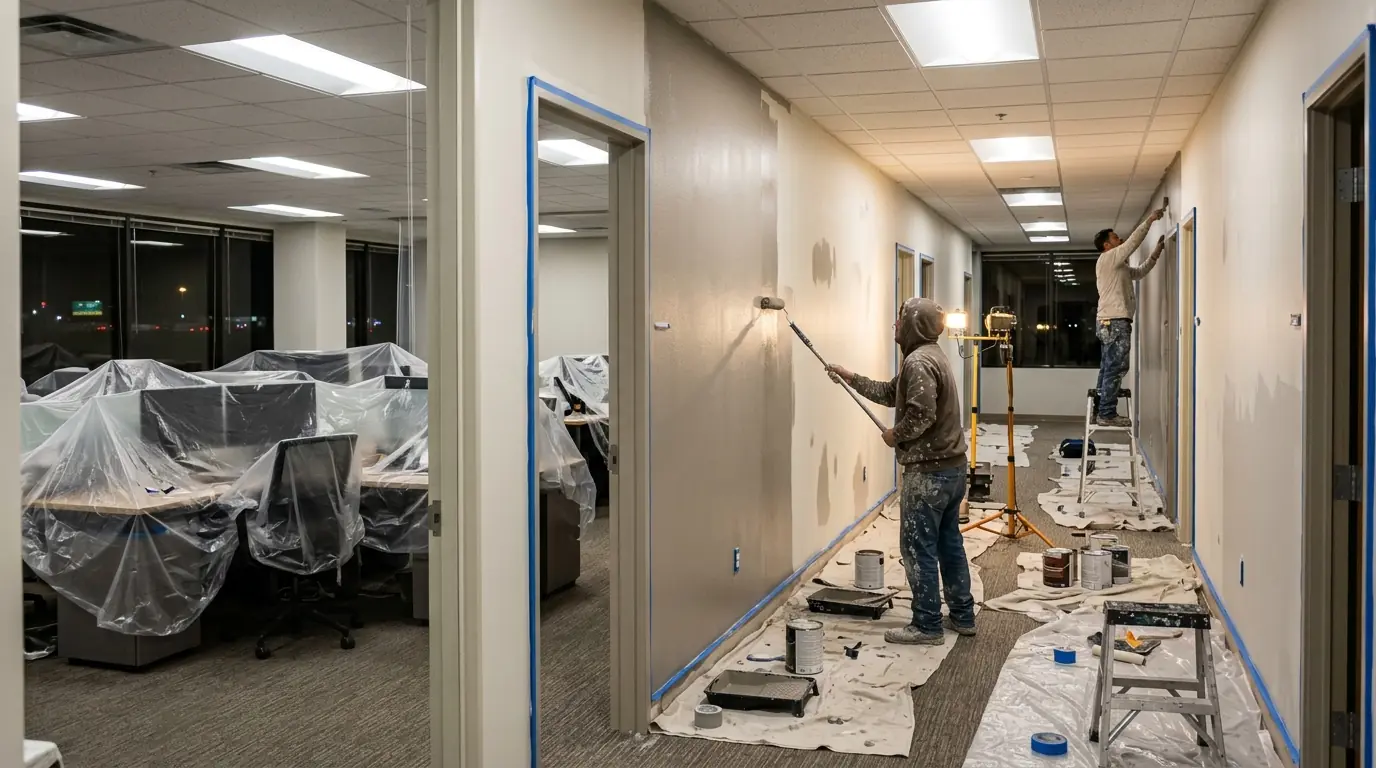
Very few commercial spaces can shut down for a week of painting. A dental office on Northwest Highway sees patients until evening, a warehouse office in Elk Grove Village runs a second shift, and a multi-tenant building in Rolling Meadows has someone in it almost every hour. So the first thing we do is break the space into zones that we can prep, paint, clean and hand back inside a single shift.
On a typical night we cover or move furniture in one zone, patch and sand, cut in and roll, then pull the plastic, reset the room and vacuum. If a second coat needs another night, we leave the zone usable: nothing wet at shoulder height, no tape across doorways and no ladders left standing in a corridor.
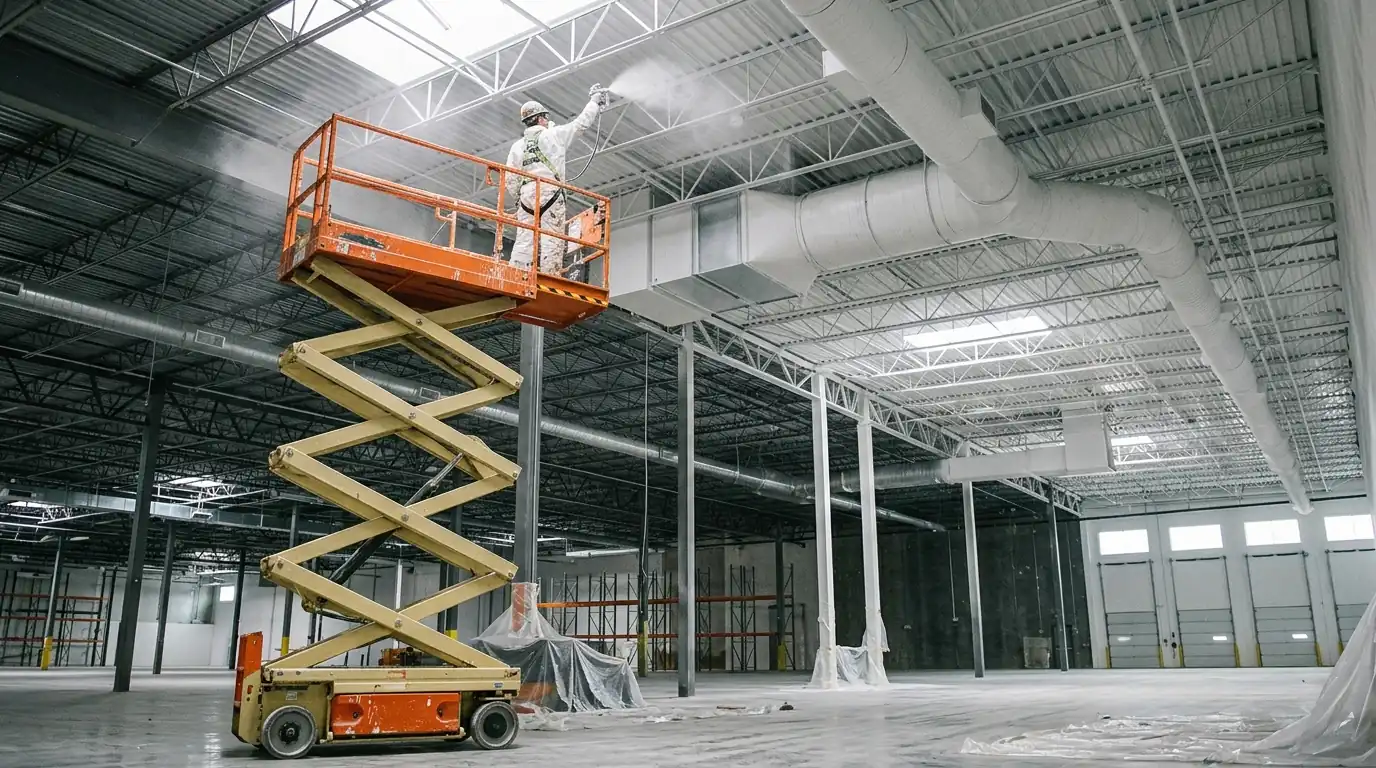
Weekends go to the bigger open areas, such as showrooms, warehouse floors, gyms and lobbies where a lift or rolling scaffold needs room to move. We stage equipment near an exit so it can be cleared quickly if the building needs the floor back early.
Business walls take more abuse than a family room. Carts, chairs and pallet jacks mark corridors at the same height every day, so we usually suggest a scrubbable eggshell or washable matte on walls and a semi-gloss or industrial enamel on doors, frames and corner guards. Restrooms and break rooms get finishes made for frequent wiping.
Many suburban commercial buildings also have surfaces most homes never do: open ceilings with bar joists and ductwork, painted concrete block, hollow metal door frames and steel columns. Dryfall coatings suit open ceilings because the overspray dries before it lands. Block walls generally need block filler on the first coat, and galvanized or bare steel needs a primer made for metal.
Odor matters when staff walk in at eight. We use low or zero VOC products wherever they suit the surface and keep air moving through the shift, so the office smells clean in the morning rather than like fresh paint.
Our commercial jobs include multi-tenant office buildings, single storefronts in suburban downtowns, medical and dental suites, churches and schools, fitness studios, warehouse front offices and the common areas of residential buildings. Sizes run from one suite to several floors or a full flex building.
On larger properties we work with whoever runs the building: the owner, the property manager or the general contractor on a build-out. Many managed buildings hand vendors a list of rules before work starts, covering dock hours, elevator use, quiet hours and where materials can be stored. Have that list ready when you call and we plan the schedule around it from day one.
We also keep a record of the colors, sheens and products used on each property. When a suite turns over two years later and needs touch-up, the match is on file and nobody has to guess from a chip.
These are the problems we see most often when a commercial space has gone too long between coats.
Marks at cart and chair height that no longer wash off mean the finish has worn through to a porous layer.
Filled anchor holes from previous tenants show as dull spots under overhead lights and window glare.
Trim and doors facing south or west fade and chalk first, and customers notice that before you do.
Steel service doors near docks and parking lots rust along the bottom edge, where salt and meltwater sit all winter.
Paint lifting in restrooms and break rooms points to a finish that was never meant for moisture and daily cleaning.
A lease change or new brand colors is the most common reason for a full repaint, and the easiest time to schedule it.
We measure walls and ceilings, note damage, test the existing coatings and learn your hours, building rules and any rooms that can never close.
The job is split into zones that fit one shift and laid out on a written schedule you can share with staff or tenants.
Furniture is moved or covered, floors are masked and walls are patched, sanded and spot primed before any finish goes on.
Walls, ceilings, doors and metal each get the product suited to them, brushed, rolled or sprayed depending on the surface and how occupied the area is.
Plastic comes down, furniture goes back, debris leaves the building and floors are vacuumed so the zone is ready when you open.
We walk the finished space with you or your property manager, mark anything that needs attention and handle it on the next shift.
Commercial work is priced on floor area, ceiling height and the conditions we work under. We price after walking the space, not from a floor plan alone.
| What is priced | Typical range | Unit |
|---|---|---|
| Commercial interior repaint, walls and ceilings | $1.45 to $3.85 | per sq ft of floor |
| Interior door with frame | $135 to $265 | per door |
| Drywall patch at old anchors or fixtures | $185 to $435 | each |
| Steel handrail or stair railing | $14 to $38 | per linear ft |
These ranges are typical for commercial work in the area; the walk-through sets the real number for your space.
Full painting price guideOur headquarters at 7420 Northwest Highway puts us minutes from the business parks that ring O'Hare. Elk Grove Village, Franklin Park, Bensenville, Wood Dale and Addison are full of flex buildings where a warehouse sits behind a block of front offices, and those offices tend to need scrubbable walls, enamel on hollow metal frames and block filler on the shop side. Further out, the office corridor along Golf and Algonquin roads in Rolling Meadows and Schaumburg, and the Hamilton Lakes buildings in Itasca, bring long corridors, tall lobbies and management rules on when work can happen.
Closer to home, storefronts in Uptown Park Ridge, downtown Des Plaines and downtown Arlington Heights are mostly older brick buildings with street-facing trim that takes full sun and back doors that sit in salt and slush every winter. Those exteriors are best painted from late spring into early fall, when O'Hare average highs run from about 70 degrees in May to the mid 70s in September. Interior commercial work runs all year.
We take commercial painting jobs in Park Ridge and the suburbs around it. A few of the places we work most:
Yes. Most of our commercial jobs are scheduled in evening and overnight shifts, split into zones we can finish and clean in one night. The space is reset each morning, and any second coat is planned for the next shift.
We usually suggest a scrubbable eggshell or washable matte on corridor walls and a semi-gloss or industrial enamel on doors and frames. Benjamin Moore, Sherwin-Williams and PPG all make commercial lines that clean well. The best pick depends on how the space is used and how the cleaning crew treats it.
Yes, flex and warehouse buildings near O'Hare are a regular part of our commercial work. We often paint the front offices, restrooms and break rooms on nights, then do the shop walls, block and steel doors on a weekend when forklift traffic is low.
We pick low or zero VOC products for occupied areas and keep air moving during and after each shift, so most people notice little odor. Stronger coatings for metal or floors are booked for weekends or closed days.
Yes. Open ceilings are usually sprayed with a dryfall coating, which dries before the overspray reaches the floor and keeps cleanup manageable. We cover equipment and stock that cannot be moved and use a lift for the height.
We ask for the building's vendor rules up front, including dock times, elevator bookings and quiet hours, and build the schedule around them. Calling (312) 579-0481 with that list in hand makes the first walk-through quicker.
Open offices, conference rooms and corridors painted floor by floor in low-odor coatings, after hours when needed.
DetailsSales floors, dining rooms and kitchens painted between closing and opening with scrubbable, washable finishes.
DetailsHallways, lobbies, stairwells and exterior trim for associations, scheduled around residents with posted notices.
DetailsGarage, basement and shop floors ground, repaired and coated with epoxy or polyaspartic systems with optional flake.
DetailsFast repaints between tenants in houses, condos and apartments: patching, stain blocking and a full coat so the unit shows on schedule.
DetailsCall any hour. Someone picks up, takes the details and books a time to walk the job with you.