Wood Rot Repair
Soft sills, trim and porch parts cut back to sound wood, rebuilt with epoxy or new stock and primed before painting.
DetailsExterior painting
We paint front porches on bungalows, Victorians, Colonials and foursquares around Park Ridge, Oak Park and Evanston: tongue-and-groove floors, steps, beadboard ceilings, columns and railings. Soft wood gets found and fixed before any coating goes on.
Short answer
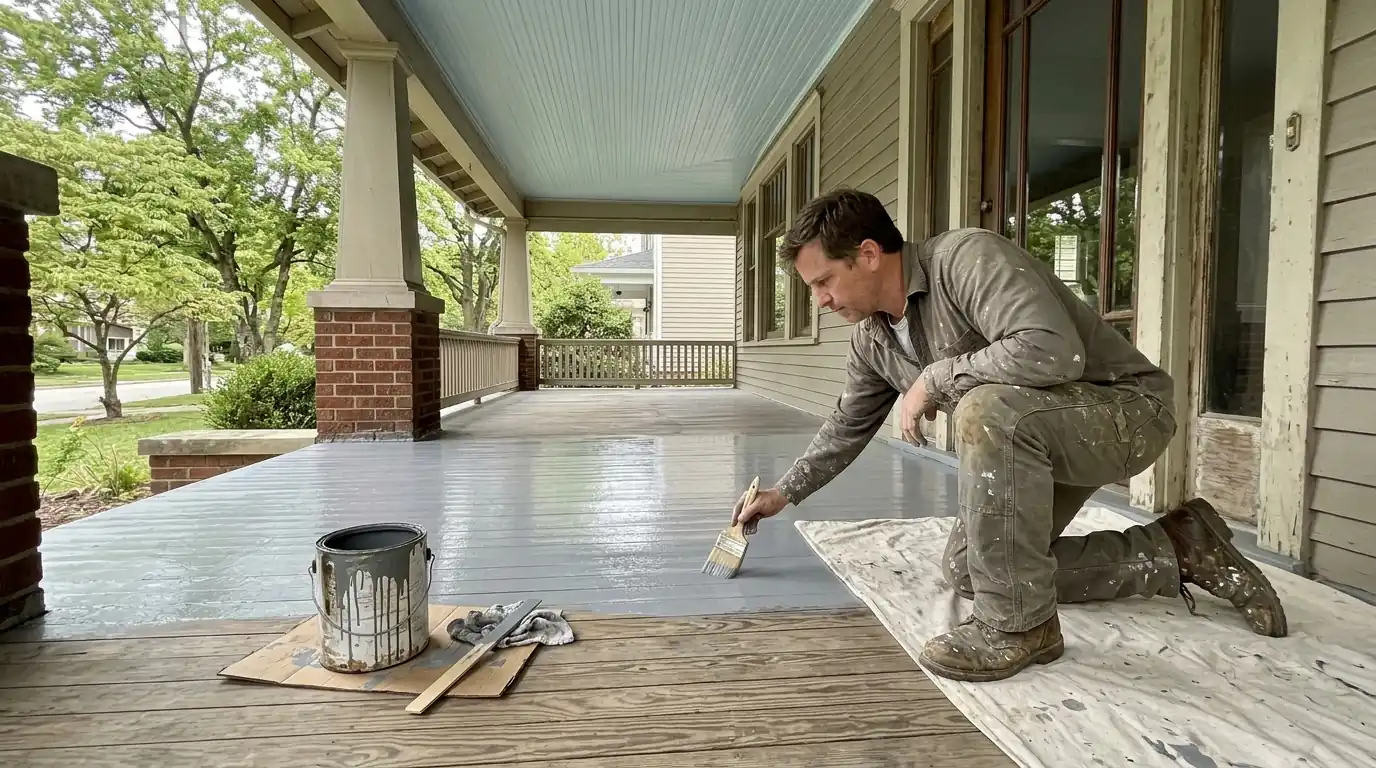
Porch painting covers the floor, steps, risers, railings, spindles, columns, ceiling and skirting: scrape, sand, repair soft wood, prime bare spots and apply porch floor enamel or solid stain on walking surfaces and exterior paint on the rest. Around Park Ridge and nearby suburbs, a front porch floor, steps and railings typically costs $1,180 to $3,960, depending on size, coating condition and repairs.
Paint lines we use most, matched to the surface: Benjamin Moore, Sherwin-Williams and PPG for walls and trim, Romabio for limewash, Cabot and Sikkens for wood stain.
A front porch on a 1920s bungalow or a Victorian in Evanston or Glen Ellyn is a lot of parts: a tongue-and-groove floor, steps and risers, stringers, round or square columns, railings and spindles, a beadboard ceiling and often a lattice or board skirt. Each part wears differently. Floors and treads take boots, snow shovels and standing water. Railings take sun and hands. Column bases and the bottom step sit in snow for weeks.
We coat all of it, including the undersides of handrails and the tops of stringers where water collects. Where floorboards are cupped or splintering we sand them back first. Where wood is soft, we stop and show you.
Porches on Colonials and Cape Cods are often smaller stoops with a few steps, a railing and two columns. The scope is smaller, but the same prep applies, and the steps usually need the most attention.
Older painted porch floors usually stay with a porch and floor enamel. It forms a hard, cleanable film in the classic gray or deep colors seen on bungalow and Victorian porches, but it can peel where water gets underneath. Solid deck stains soak in a little and wear down rather than peeling in sheets, which suits newer pressure-treated or composite-trimmed porches.
Switching a long-painted porch to a clear or semi-transparent finish would mean stripping everything to bare wood, which rarely makes sense. On treads, we can add a fine grit to the final coat for better footing in rain and frost.
Porch ceilings get an exterior paint. Many owners keep a pale blue ceiling, a long-standing porch tradition, and we match whatever color is up there now or the new one you choose.
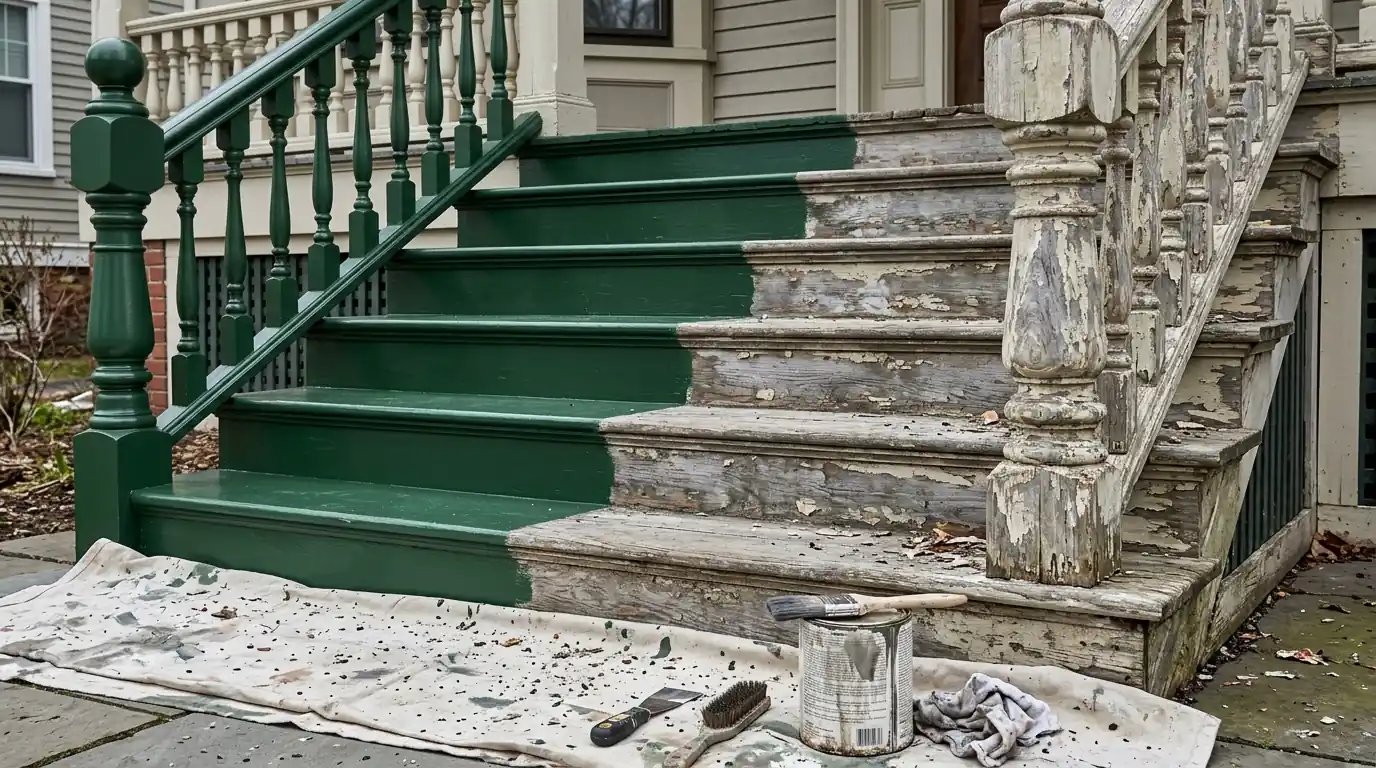
Paint protects sound wood. It does not fix rotten wood, and it can hide it. We probe the stringers, the bottom of columns, floorboard ends at the front edge and the bottom step, where snow and salt sit longest. If a tread is soft or a column base is spongy, we tell you before we coat it.
We replace individual floorboards, treads, spindles and trim boards as part of a painting job when it is a simple swap. Rotted stringers, sagging beams or loose ledger connections are carpentry and possibly permit work, and we say so plainly so you can get that handled first.
Porches on pre-1978 homes often carry many coats of paint, and the lower layers may contain lead. We follow EPA lead-safe work practices when we scrape: plastic sheeting below, misting, hand scraping and HEPA cleanup.
Front porches are a big part of how older homes in Oak Park, River Forest, Evanston, Glen Ellyn and Wheaton look from the street, and many Park Ridge bungalows and Colonials have porches or covered stoops too. In winter they collect snow that gets shoveled and salted, and the melt drips through the gaps between boards. Freeze-thaw cycles then open every crack in the coating.
That is why porch floors and steps need coating more often than siding. A porch recoated before the finish wears through stays sound much longer. In the historic districts in Oak Park, Evanston and Hinsdale, repainting an existing porch is usually routine, but replacing original columns, railings or trim can need review, so check with the village or city first.
The best time for porch coatings near O'Hare is late May through September, on dry days when overnight lows stay well above the product's minimum. We avoid coating right before rain, since standing water on fresh enamel ruins the finish.
Porches wear faster than siding, so these signs show up first.
Worn tracks from the door to the steps mean water now soaks straight into the boards every time it rains.
The front edges of treads take the most traffic and shovel scrapes, and they peel first.
Tongue-and-groove boards that have shrunk apart let water drip through and soak the framing below.
If a screwdriver sinks into the bottom of a column or post, the base is holding water and needs repair.
Paint dropping from a beadboard ceiling often means moisture from above, such as a roof or gutter leak.
A railing that moves has loose fasteners or rot at the base. It gets fixed before we paint it.
We check every board, step and column base for soft wood and agree on repairs and coatings before starting.
On pre-1978 homes, plastic goes down below and around the porch before any scraping.
Loose paint comes off, rough boards are sanded, and soft floorboards, treads or spindles are swapped.
Bare wood and new boards get primer, and joints at columns and trim get flexible caulk.
Ceiling and railings first, then columns and skirting, then the floor and steps last so nobody walks on wet paint.
We mark the porch off and tell you when it can take foot traffic, furniture and planters again.
Porch pricing depends on size and detail, and on how much coating and wood need attention.
| What is priced | Typical range | Unit |
|---|---|---|
| Front porch floor, steps and railings | $1,180 to $3,960 | per porch |
| Wood rot repair on treads, boards or columns | $235 to $860 | per spot |
| Iron railing painting where present | $14 to $38 | per linear ft |
These ranges are typical, and the walk-through of your porch sets the actual number.
Full painting price guideWe take porch painting jobs in Park Ridge and the suburbs around it. A few of the places we work most:
If the floor has been painted for years, porch and floor enamel is usually the right call. Moving to stain would mean stripping to bare wood. Solid stain suits newer pressure-treated porches better.
More often than siding, because porch floors and steps take foot traffic, shoveling and salt. Many need attention every couple of years on the steps and traffic paths. Recoating before bare wood shows keeps repairs small.
Yes, when it is a simple swap of floorboards, treads or spindles. Rotted stringers, beams or ledgers are carpentry work, and we tell you so before we coat anything.
Yes. We mix or broadcast a fine grit into the final coat on treads and landings. It gives better footing in rain and frost without feeling rough under bare feet.
Light foot traffic is usually fine after a day, depending on the product and weather. Furniture, planters and rugs should wait several days so the coating can harden. We give you a date before we leave.
Soft sills, trim and porch parts cut back to sound wood, rebuilt with epoxy or new stock and primed before painting.
DetailsFull exterior repaints with scraping, priming of bare wood, caulking and two finish coats, timed to the local paint season.
DetailsFront step railings, iron fences and gates wire brushed, rust treated and coated with a direct-to-metal enamel.
DetailsDecks washed, brightened and stained with a penetrating or solid stain that suits the age and condition of the boards.
DetailsCall any hour. Someone picks up, takes the details and books a time to walk the job with you.