Interior House Painting
Walls, ceilings and trim in occupied homes, with furniture moved, floors covered and rooms handed back each evening.
DetailsWall repair & prep
Most houses around Park Ridge went up before 1978, from 1920s bungalows to the postwar ranches and Cape Cods that fill the suburbs. We paint them using EPA lead-safe work practices so dust stays contained and rooms are clean when we hand them back.
Short answer
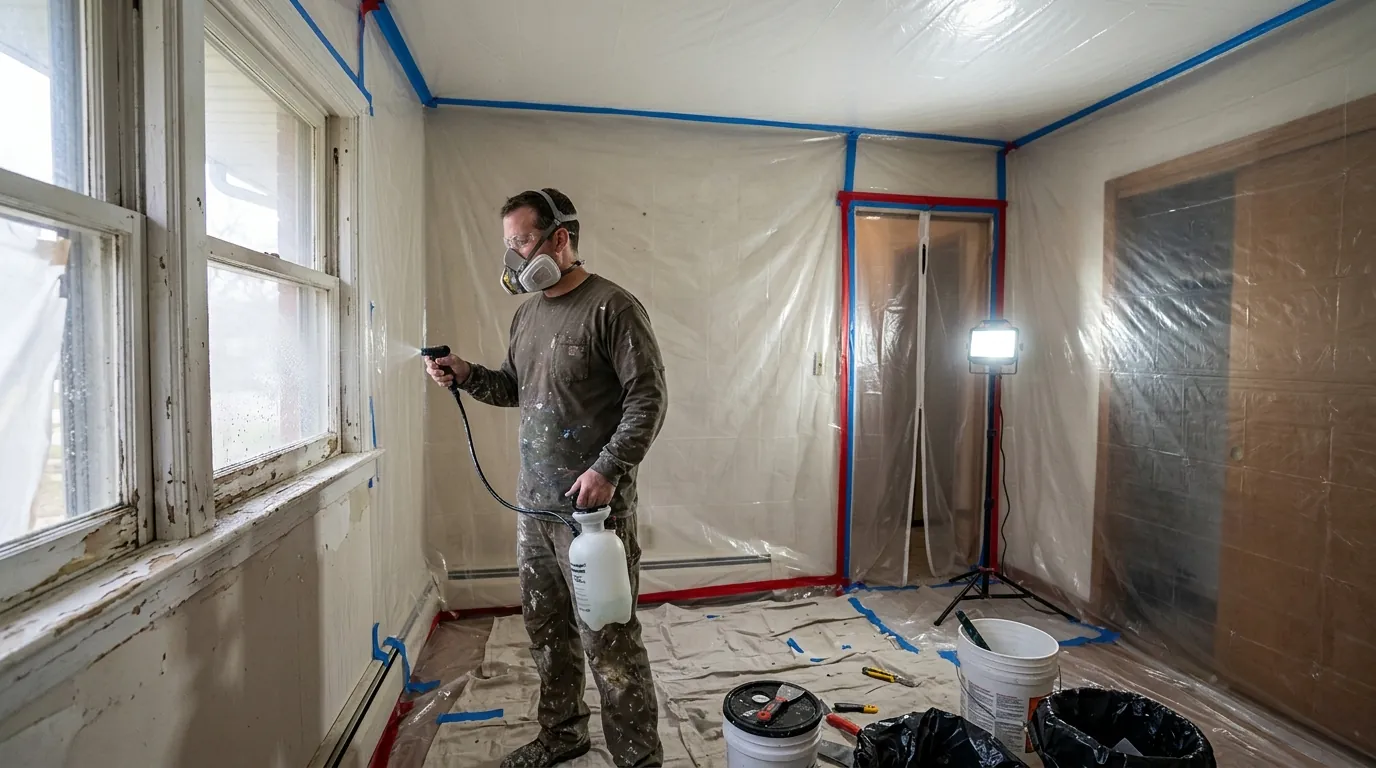
Lead-safe painting is ordinary painting done with containment and cleanup methods that keep lead dust from spreading. In a pre-1978 home that means plastic sheeting, misting before scraping and sanding, no open flame or dry power sanding, HEPA vacuums and a cleaning check at the end. In Park Ridge and the nearby suburbs, the setup typically adds $145 to $385 per room on top of the painting price.
Paint lines we use most, matched to the surface: Benjamin Moore, Sherwin-Williams and PPG for walls and trim, Romabio for limewash, Cabot and Sikkens for wood stain.
Very often, yes. People tend to think of lead paint as a problem for very old city housing, but homes built any time before 1978 may contain lead-based paint. That date takes in the postwar ranches of Niles and Des Plaines, the Cape Cods of Arlington Heights, the split-levels of Mount Prospect and Palatine, and most of the 1920s bungalows in Park Ridge, Berwyn and Elmhurst.
The risk is not paint that sits quietly on the wall. It is the dust and chips created when that paint is disturbed. Scraping trim, sanding doors, cutting into window sills and taking down painted wallpaper all turn old layers into fine dust that settles on floors and sills, where children pick it up on their hands.
The EPA Renovation, Repair and Painting Rule, called the RRP Rule, covers paid work that disturbs more than 6 square feet of painted surface inside a room or more than 20 square feet outside, in pre-1978 homes, child care facilities and schools. A room of doors and trim, or a front porch repaint, usually crosses those lines.
Before any scraping, plastic sheeting goes down on the floor, taped at the edges and running well past the work area. Doorways get plastic barriers so dust cannot drift into the hall, and the supply and return vents in the room are sealed so the furnace does not carry dust through the house.
Surfaces are misted with water before we scrape or sand. Wet methods keep chips and dust heavy, so they drop onto the plastic instead of floating. We never use open-flame burning or dry power sanding on old painted surfaces, the two methods that throw off the most hazardous dust.
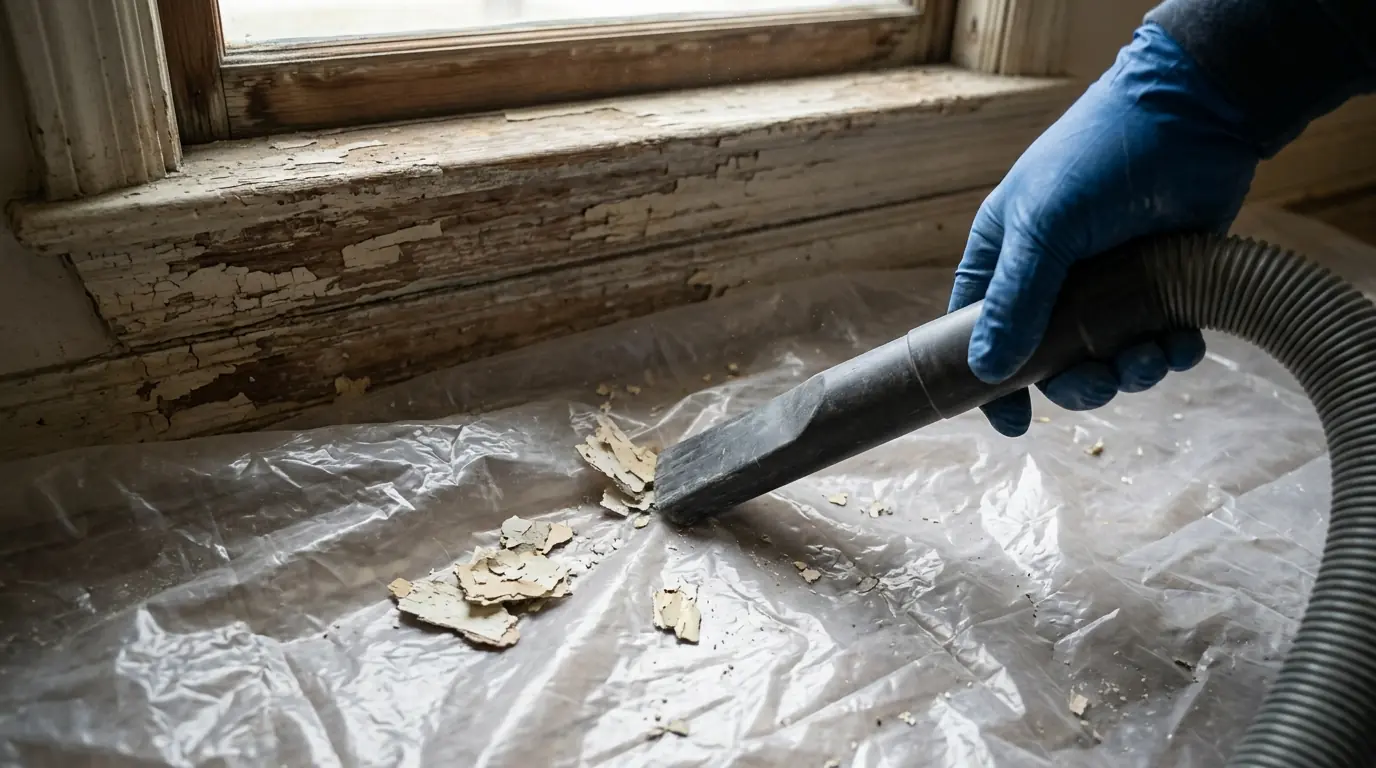
When prep is done, we HEPA vacuum the surfaces and the plastic, mist the plastic and fold it inward, then wet wipe floors and sills. A cleaning check confirms the area is clean before primer and paint go on.
Outside, the concern is chips and dust landing in soil, flower beds, vegetable gardens and the yard next door. We spread plastic on the ground below the work, running out from the foundation, and weight it so wind cannot lift it. If the wind picks up, scraping stops.
On brick ranches and Georgians the old paint is usually on the wood trim, soffits, window frames and front porch columns. On frame and sided houses it can be the whole wall under the aluminum or vinyl. We wet scrape loose paint, collect debris from the plastic each day and bag it before we leave.
Window sashes and sills rub every time the window opens, which makes them a steady source of lead dust. When we scrape and repaint wood windows, we treat both the inside and the outside faces as lead-safe work.
Park Ridge, Niles, Morton Grove, Skokie and Des Plaines grew fastest in the 1950s and 1960s, and nearly every house from those decades predates 1978. The paint on the walls may have been redone many times, but the original trim, doors, closet shelves and window frames often still carry the early coats underneath.
Farther out, Evanston, Oak Park, River Forest, Wilmette, Winnetka, Glen Ellyn and Hinsdale have large numbers of homes from before 1930, with painted woodwork, wood windows and porches that have been scraped and recoated for close to a century. Those are the houses where lead-safe prep takes the most care.
Season matters for the outside work. With average October highs near 63F and November near 48F at O'Hare, we try to finish exterior scraping by mid-fall, while it is warm and dry enough to mist, clean up and prime the same day. Interior lead-safe work runs all year.
If any of these apply, plan the job around lead-safe practices from the start.
Homes from before 1978 may contain lead paint, and that covers most of the postwar suburbs as well as the older towns.
Paint cracked into a scaly pattern usually has many layers under it, often including early lead coats.
Wood sashes that rub as they open and close can grind old paint layers into dust on the sill.
Young children and pregnant residents are the most sensitive to lead dust, so containment matters even more.
Owners repainting a pre-1978 rental should plan lead-safe prep to protect the next household.
Work that touches a lot of painted surface, inside or out, will usually cross the RRP Rule thresholds.
We note the year built, walk the surfaces to be painted and plan where containment goes and how you will move through the house.
Plastic goes on floors and over doorways, vents are sealed and warning signs go up at the work area.
Painted surfaces are misted and scraped or hand sanded, with debris falling onto the plastic.
Each evening we HEPA vacuum and collect debris so nothing gets tracked into the kitchen or bedrooms.
Plastic is misted, folded inward and bagged, floors and sills are wet wiped and a cleaning check confirms the area is clean.
Once the area passes, we prime bare spots and apply finish coats as on any paint job.
Lead-safe setup is priced per room on top of the regular painting work, since containment and cleanup add hours.
| What is priced | Typical range | Unit |
|---|---|---|
| Lead-safe setup and cleanup | $145 to $385 | per room |
| Interior room walls, 2 coats | $465 to $890 | per room |
| Trim and molding | $1.85 to $4.40 | per linear ft |
| Window sash and frame | $185 to $465 | each |
| Front porch floor, steps and railings | $1,180 to $3,960 | per porch |
These ranges are typical for the area, and the walk-through in your home sets the real number.
Full painting price guideWe take lead-safe painting jobs in Park Ridge and the suburbs around it. A few of the places we work most:
It may. Homes built before 1978 may contain lead-based paint, and that includes most postwar ranches. Since a test is not always done before painting, we treat painted surfaces in pre-1978 homes with lead-safe practices.
Usually yes, if you stay out of the contained area. Children and pregnant residents should keep well away from the room until the final cleanup and check are done.
The RRP Rule covers paid work that disturbs more than 6 square feet of painted surface inside a room in a pre-1978 home. Painting over sound paint without scraping may stay under that line, but most real prep goes over it.
Dry power sanding of old painted surfaces throws off fine lead dust that spreads through the house. Lead-safe practice uses misting and hand methods instead, which keeps debris heavy and on the plastic.
If the porch was painted before 1978 and the work disturbs more than 20 square feet of painted surface, yes. Most porch repaints with real scraping reach that amount.
Call (312) 579-0481. We walk the house, plan containment around the move-out and move-in dates and include the lead-safe setup in the price from the start.
Walls, ceilings and trim in occupied homes, with furniture moved, floors covered and rooms handed back each evening.
DetailsSashes, frames and sills scraped, reglazed where loose and painted so windows still open and shed water.
DetailsFront porch floors, steps, ceilings, columns and railings scraped, repaired where soft and coated with porch enamel or stain.
DetailsCracked and bulging plaster on vintage walls reattached, patched and skimmed with materials that move like the original.
DetailsFast repaints between tenants in houses, condos and apartments: patching, stain blocking and a full coat so the unit shows on schedule.
DetailsCall any hour. Someone picks up, takes the details and books a time to walk the job with you.