Ceiling Painting
Flat, even ceilings with no lap marks, including high stairwell ceilings and stained ceilings that need a sealing primer first.
DetailsInterior painting
We paint walls, ceilings and trim in lived-in homes across Park Ridge and the nearby suburbs, from brick ranches and Georgians to 1920s bungalows with plaster and oak trim. Furniture gets moved and covered, floors get protected, and rooms are usable again each evening.
Short answer
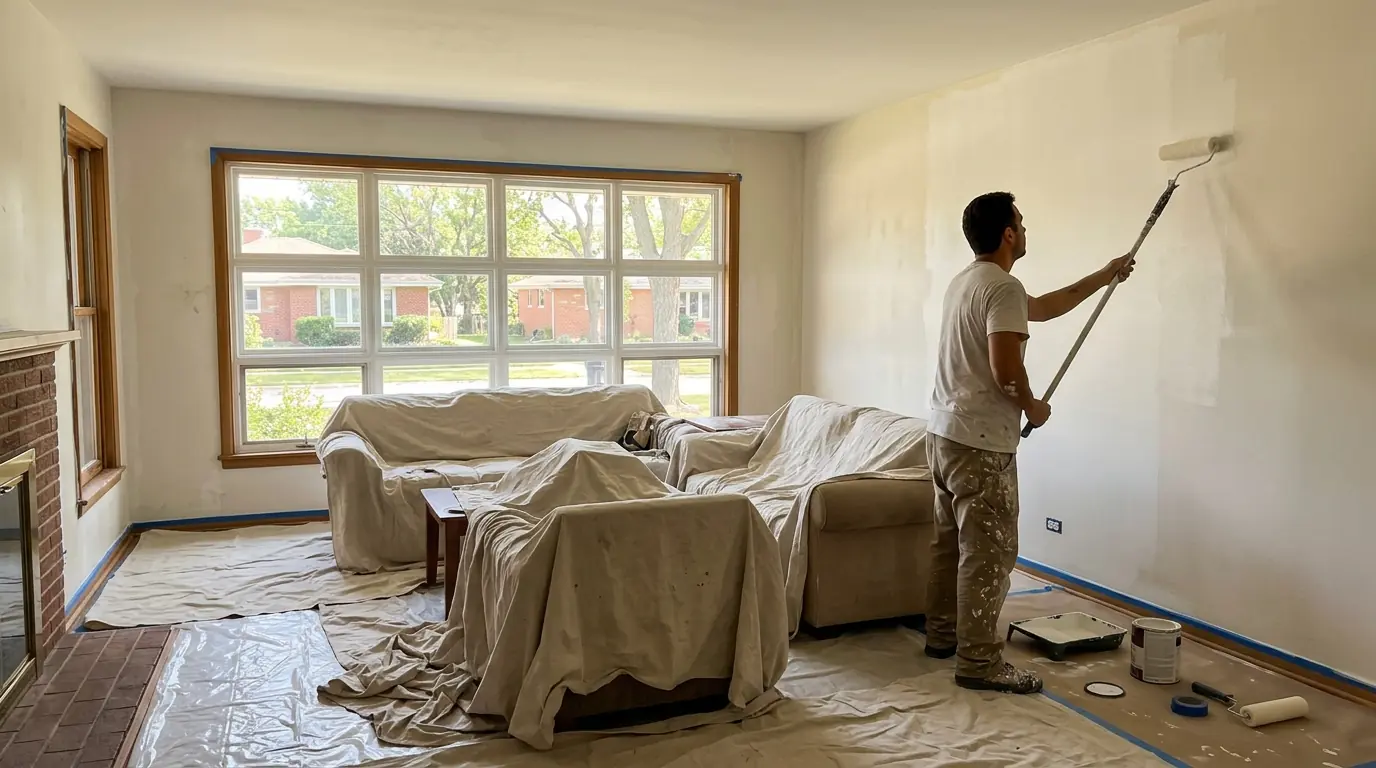
Interior painting covers the prep and two finish coats on walls, plus ceilings, trim and doors when you want them. Around Park Ridge that usually means patching drywall nail pops or plaster cracks, sealing old water stains and following EPA lead-safe practices in pre-1978 houses. Walls in a typical room run $465 to $890 for two coats, with ceilings, trim and repairs priced as separate lines.
Paint lines we use most, matched to the surface: Benjamin Moore, Sherwin-Williams and PPG for walls and trim, Romabio for limewash, Cabot and Sikkens for wood stain.
Most of the work in a good interior job happens before the first coat. We pull furniture to the middle of the room and cover it, lay canvas or rosin paper on the floors, take off switch plates and outlet covers, and pull the picture hooks and anchors you no longer need. Then we walk every wall with a work light held flat against it, because raking light shows the ridges, nail pops and old patches that daylight hides.
Repairs come next: setting compound in deep cracks, lightweight spackle in nail holes, caulk where baseboard has pulled away from the wall, and primer over every patch so it does not flash through the finish. Old leak or smoke stains get a shellac or oil-based primer such as Zinsser BIN, because a water-based primer lets them bleed back. The finish is two coats, cut in by brush at the ceiling and trim and rolled in full wall sections so each wall dries evenly.
Most of the brick ranches, Cape Cods and split-levels around Park Ridge, Des Plaines and Mount Prospect went up between the late 1940s and the 1970s. Early ones often have rock lath with a thin plaster coat, and later ones are taped drywall. The common problems are nail pops along the studs, hairline cracks at the corners of doors and windows, and tape seams that show after decades of seasonal movement. We reset popped fasteners with a screw beside them, retape loose seams and skim the area so it vanishes under paint.
Older homes near downtown Elmhurst, Wilmette, Evanston and Oak Park usually have three-coat plaster on wood lath, which cracks along the same lines each winter as the boiler dries the house out. We fill those cracks with setting compound and mesh tape the long runs. Loose plaster gets reattached with plaster washers first, and old oil paint gets a bonding primer so latex does not peel off it.
Lead paint is not just an old-city issue. Most of the postwar suburbs were built before 1978, so a 1958 ranch in Niles or a 1965 split-level in Arlington Heights can carry lead in the bottom layers on trim, windows and walls. Sanding or scraping that paint without precautions spreads fine dust that settles on floors and sills. The EPA Renovation, Repair and Painting Rule covers paid work that disturbs more than 6 square feet of painted surface in a room.
On those jobs we follow EPA lead-safe work practices: plastic sheeting on floors and over doorways, misting before any scraping or sanding, no dry power sanding or open-flame removal, HEPA vacuums for cleanup and a wipe check at the end. The setup adds $145 to $385 per room, depending on how much surface we disturb and how many doorways need sealing.
Most interior jobs happen with the family living at home. We plan the order of rooms so you always have a working bedroom, bathroom and kitchen, and we end each day with furniture back where you can use it and doorways clear. Walls still wet get a note on the door so nobody leans on them.
In townhomes and condos we check the association rules on work hours, parking and common hallways before we start. If the board or manager needs paperwork from contractors, tell us at the walk-through so the start date is not held up.
Paint wears out in ways people stop noticing, so these are the things we look for on a walk-through.
Flat paint in a hallway or a playroom burnishes and stains, and scrubbing just leaves a shiny patch.
Small round bumps in a line on drywall mean fasteners have backed out and need resetting before paint.
Plaster cracks that come back after each heating season need taping, not another coat over the top.
Older paint yellows in rooms without much daylight, and sunny walls fade unevenly around pictures and furniture.
Paint lifting near the shower usually means latex over old oil or a weak exhaust fan, and both need fixing first.
We look at every room, test old paint where needed and note repairs. Then we put the rooms, surfaces, colors and sheens in writing.
Furniture is moved and covered, floors are papered or dropped, and plates and fixtures come off the walls.
Cracks, holes and nail pops are fixed, and every patch and stain is primed. In pre-1978 homes this step runs inside lead-safe containment.
We brush the edges first and roll each wall in full sections, then apply the second coat once the first has dried.
Before we pack up, we go through each room together in good light and fix any missed spots right then.
Plates and hardware go back on, furniture returns to its place, and leftover paint is labeled by room for touch-ups.
We price interior work room by room, with ceilings, trim and repairs listed as separate lines so you can see where the money goes.
| What is priced | Typical range | Unit |
|---|---|---|
| Walls, two coats | $465 to $890 | per room |
| Ceiling | $245 to $520 | per room |
| Trim and baseboards | $1.85 to $4.40 | per linear ft |
| Lead-safe setup in pre-1978 homes | $145 to $385 | per room |
| Drywall small patch | $185 to $435 | each |
These ranges are typical for homes around Park Ridge, and the walk-through sets the real number for your rooms.
Full painting price guideThe housing around our Park Ridge headquarters shapes the job. A brick ranch in Niles or Des Plaines is mostly drywall with low ceilings, so the repairs are the nail pops and corner cracks of a 60-year-old house. A Georgian or Colonial in Park Ridge or Glenview adds a two-story stairwell and a lot of trim. A raised ranch or split-level in Mount Prospect or Arlington Heights brings a vaulted main floor and a lower-level family room that may need basement-grade paint.
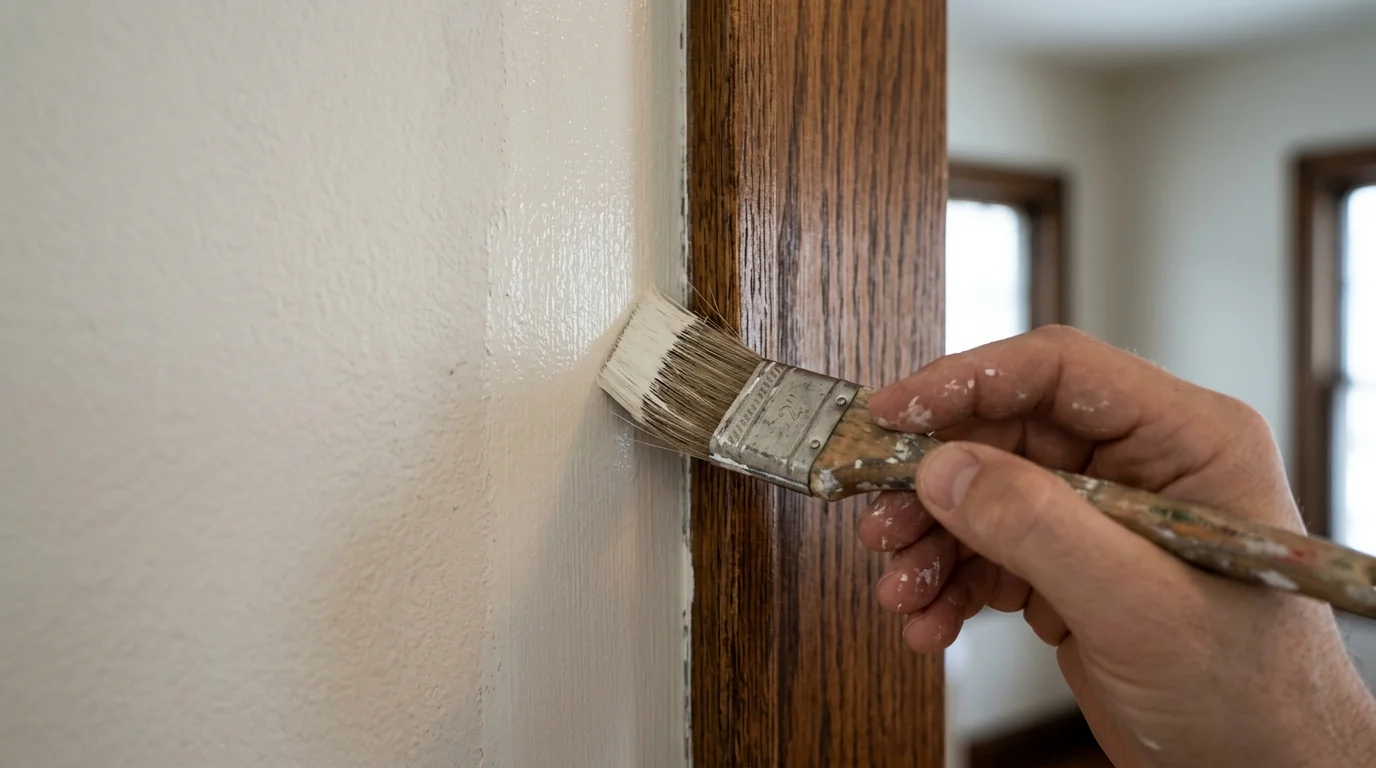
Older homes in Evanston, Oak Park, Wilmette and Glen Ellyn have plaster walls and stained oak or pine trim that owners want left alone, so we tape carefully and cut a clean line against it. In townhome communities from Wheeling to Palatine, we work within association hours and keep the shared entry clean. Winter is a good time for interior work here: with the heat on, paint dries well as long as the house stays at a steady temperature.
We take interior house painting jobs in Park Ridge and the suburbs around it. A few of the places we work most:
Yes, most of our interior work happens in occupied homes. We schedule rooms so you always have a usable bedroom, bathroom and kitchen, and we put furniture back at the end of each day. Low-odor paints keep the smell manageable even with the windows shut in winter.
If the house was built before 1978, we treat painted surfaces as possibly containing lead unless testing shows otherwise, and that includes most postwar ranches. We can test the areas we will disturb. Where lead is present or assumed, we follow EPA lead-safe work practices with containment, wet methods and HEPA cleanup.
Matte or flat hides the waves and patches common on old plaster and repaired drywall, so it suits living and dining rooms. Eggshell works in bedrooms and halls where you want some washability. Satin is the better pick for kitchens and bathrooms where walls get wiped and see steam.
A single room with normal repairs usually takes one to two days. The main floor of a three-bedroom ranch runs about four to seven working days, depending on repairs, trim and ceilings. We give you a day-by-day plan before we start.
A pop returns when the nail is simply hammered back in, because the same seasonal movement pushes it out again. We drive a drywall screw beside the old nail to pull the board tight, set the nail below the surface, then fill, sand and prime the spot before the finish coats.
Flat, even ceilings with no lap marks, including high stairwell ceilings and stained ceilings that need a sealing primer first.
DetailsBaseboards, casings and crown molding caulked, sanded and brushed to a clean line against the wall color.
DetailsHoles, cracks, water stains and nail pops patched, taped, sanded and primed so the repair disappears under the paint.
DetailsPainting in pre-1978 homes using EPA lead-safe work practices: containment, wet methods and HEPA cleanup.
DetailsLarge painted samples on your actual walls, checked in morning and evening light before a single gallon is ordered.
DetailsCall any hour. Someone picks up, takes the details and books a time to walk the job with you.