Epoxy Floor Coatings
Garage, basement and shop floors ground, repaired and coated with epoxy or polyaspartic systems with optional flake.
DetailsInterior painting
Basements in the northwest suburbs are cool, often damp and sometimes take on water after a hard storm. We test the walls for moisture, scrub off efflorescence and flaking paint, and use masonry and basement coatings built for below-grade rooms.
Short answer
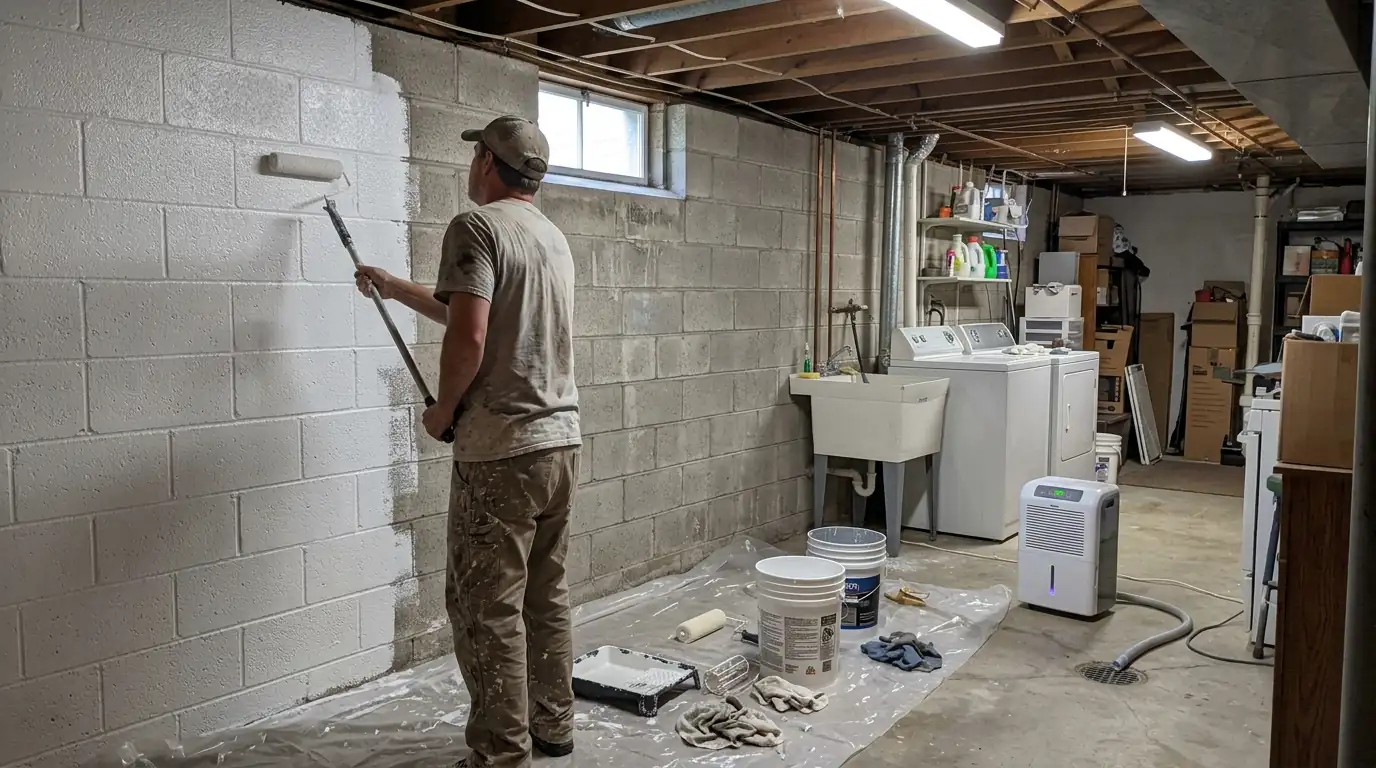
Basement painting covers poured concrete and block foundation walls, open joist ceilings, finished drywall rooms and concrete floors, coated with products made for below grade. Prep is most of the job: a moisture test, scrubbing off efflorescence, scraping failed paint and patching cracks. Around Park Ridge, basement walls usually run $1.65 to $3.90 per square foot, depending on condition, the coating chosen and how much has to be stripped.
Paint lines we use most, matched to the surface: Benjamin Moore, Sherwin-Williams and PPG for walls and trim, Romabio for limewash, Cabot and Sikkens for wood stain.
Most failed basement paint fails from the back. Water vapor moves through concrete and block from the soil, carrying dissolved salts. When the water evaporates at the surface, the salts stay behind as a white, chalky crust called efflorescence, and that crust pushes paint off the wall. Regular latex wall paint traps the moisture and peels even faster.
Before we coat anything, we tape squares of plastic sheeting to a few spots on the wall and leave them for a day or two. Condensation under the sheet means water is coming through the wall; moisture on top means humid air in the room. That simple test tells us which product will work and whether paint is the right answer at all.
Paint does not fix active leaks. A masonry waterproofing coating can slow vapor and minor dampness, but water running down a wall, pooling at the floor joint or coming through a crack is a gutter, grading, drain tile or foundation problem. If we see that, we tell you before we start, because coating over it wastes your money.
Each surface gets its own product. Foundation walls get a breathable masonry paint or a masonry waterproofing coating, depending on the moisture test. Block soaks up a lot, so it often gets a block filler first. Open joist ceilings are usually sprayed one color, which hides pipes and wiring and makes a low ceiling feel taller.
Finished basements are their own job. Many ranches and split-levels in the area have paneled or drywalled rec rooms from the 1960s to the 1990s. Wood paneling needs a bonding primer such as Zinsser, and drywall near the floor often shows water marks that need a stain-blocking primer or a cut-out repair first.
For floors, a concrete floor paint suits light foot traffic. A laundry room, workshop or gym usually does better with an epoxy coating. Either way, grease and old sealer have to come off, or the new coat will peel in sheets.
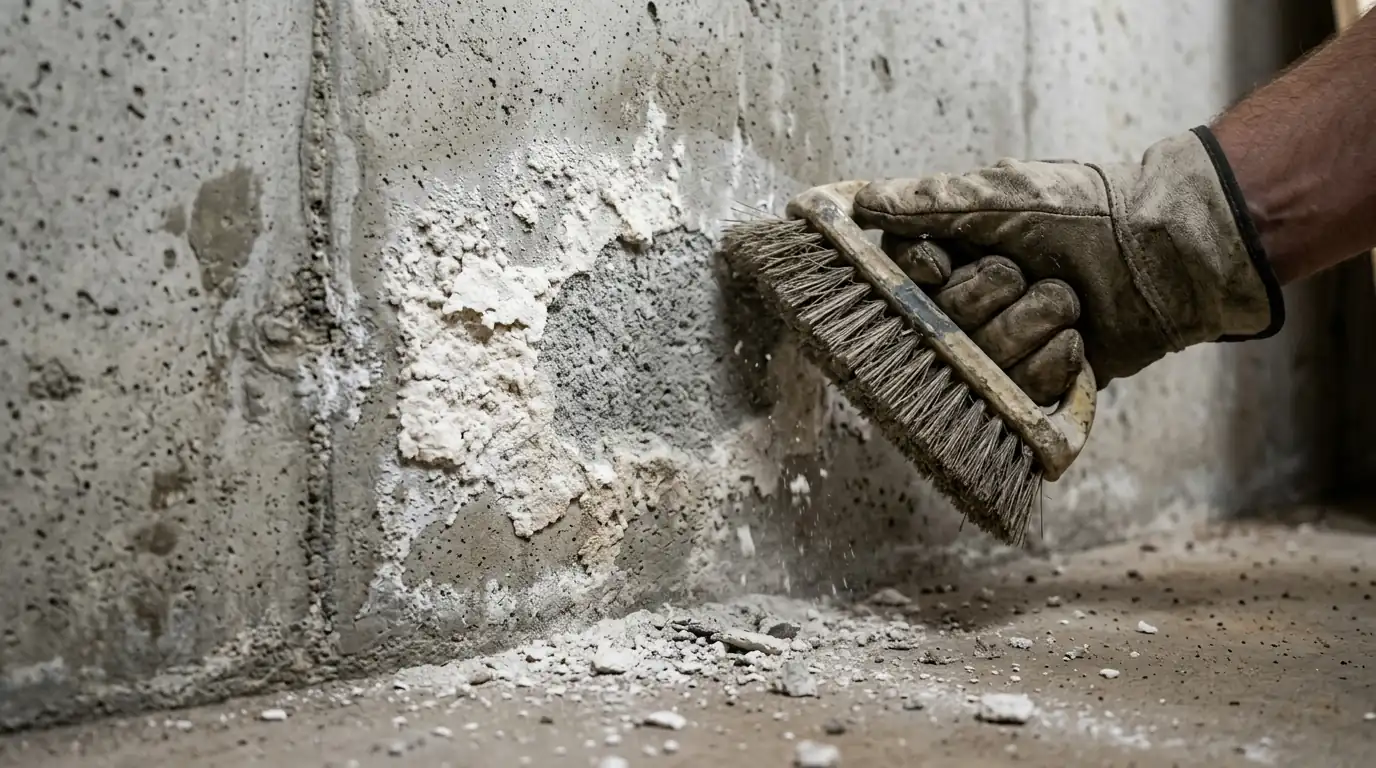
We scrape and wire brush all loose paint, scrub efflorescence off with a stiff brush and masonry cleaner, and let the wall dry. Cracks get hydraulic cement or a masonry patch. Mildew spots on walls or joists are cleaned with a mildew wash and dried before primer. If there is a lot of mold, that is a remediation job before it is a painting job.
A dehumidifier running for a few days before and after painting helps the coating cure. Summer basements near O'Hare can sit at high humidity when outside highs reach the low 80s, which slows drying and can leave the finish tacky. We read the can for minimum temperature and humidity limits and plan the visit around them.
Neighborhoods near the Des Plaines River, in Des Plaines and parts of Park Ridge, Mount Prospect and Prospect Heights, deal with high water, and after a heavy spring or summer storm some blocks see seepage through foundation walls or water backing up at floor drains. Many basements there carry a ring of old staining and paint peeling from the bottom up. Water-stain repairs and wall coatings come up often on those streets.
Housing shapes the job too. Brick ranches in Niles and Morton Grove often have full basements with block walls and a paneled rec room. Split-levels and raised ranches in Arlington Heights, Elk Grove Village and Streamwood have a lower level partly above grade, with drywall that meets a slab floor. After a flood or backup, we wait until walls and floor are fully dry, which can take weeks, and we will not paint over damp walls to hide the problem. If older painted walls from before 1978 have to be scraped or sanded, we follow EPA lead-safe work practices.
These are the conditions we look for when we walk a basement.
Efflorescence on block or concrete means moisture is moving through the wall and pushing salts out.
Large flakes or blisters on foundation walls usually mean the old paint was not made for masonry.
Staining along the bottom of the wall often marks where water wicked up or pooled after a storm.
A damp odor points to moisture and possible mildew on walls or joists that should be cleaned before paint.
Unpainted block sheds dust and is hard to clean. Block filler and paint seal the surface.
Dark 1970s paneling can be primed and painted a light color instead of torn out.
We look at the walls, floor and ceiling, ask about past water and check for active leaks.
Plastic squares taped to the walls for a day or two show whether water is coming through or sitting in the air.
The furnace, water heater and laundry hookups are masked, and stored items move to the center or another room.
Loose paint and efflorescence come off, cracks are filled with masonry patch, and mildew is cleaned and dried.
Block gets a block filler, concrete gets a masonry primer or the first coat of a waterproofing system.
Two coats are rolled and brushed into joints, and ceilings are sprayed if that is part of the job.
Fans and a dehumidifier run while the coating cures, following the times on the can.
Basements are priced by the square foot of wall, with floors and ceilings added separately. Wall condition moves the price more than size.
| What is priced | Typical range | Unit |
|---|---|---|
| Foundation walls, prep and two coats | $1.65 to $3.90 | per sq ft |
| Water-damaged drywall section in a finished basement | $460 to $1,240 | per section |
| Epoxy coating on a concrete basement floor | $4.35 to $9.85 | per sq ft |
These ranges are typical for basements around Park Ridge, and the walk-through and moisture test set the real number.
Full painting price guideWe take basement painting jobs in Park Ridge and the suburbs around it. A few of the places we work most:
It can slow water vapor and minor dampness through concrete and block, but it will not stop river flooding, backups or water running through cracks. Those need fixes outside or at the drain tile. We test the wall first and tell you if paint is not the right answer.
Only after the walls and floor are fully dry, which can take a few weeks with fans and a dehumidifier. We run a moisture test before starting, because coating a damp wall makes it peel.
That is efflorescence: salts carried through the wall by moisture and left behind when the water evaporates. It has to be scrubbed off before painting, or it will push the new coating off the wall.
Spraying the joists, ducts and pipes one color is a common choice. Dark colors hide the clutter and light colors brighten the space. It is quicker and cheaper than drywalling and keeps access to plumbing and wiring.
Yes. We clean it, scuff it, prime it with a bonding primer and paint it. The grooves can be filled for a flatter look or left as they are, and we check the lower edge for water damage first.
For light foot traffic, a concrete floor paint works after the floor is cleaned and etched or ground. For laundry rooms, workshops or gyms, an epoxy coating holds up better. Grease and old sealer must come off first either way.
Garage, basement and shop floors ground, repaired and coated with epoxy or polyaspartic systems with optional flake.
DetailsHoles, cracks, water stains and nail pops patched, taped, sanded and primed so the repair disappears under the paint.
DetailsWalls, ceilings and trim in occupied homes, with furniture moved, floors covered and rooms handed back each evening.
DetailsPainting in pre-1978 homes using EPA lead-safe work practices: containment, wet methods and HEPA cleanup.
DetailsCall any hour. Someone picks up, takes the details and books a time to walk the job with you.