Interior House Painting
Walls, ceilings and trim in occupied homes, with furniture moved, floors covered and rooms handed back each evening.
DetailsInterior painting
We paint kitchen cabinets in homes across Park Ridge and the nearby suburbs, from 1980s oak kitchens in split-levels to original birch cabinets in postwar ranches. Doors come off and get sprayed, boxes are brushed and rolled in place, and the finish cures hard.
Short answer
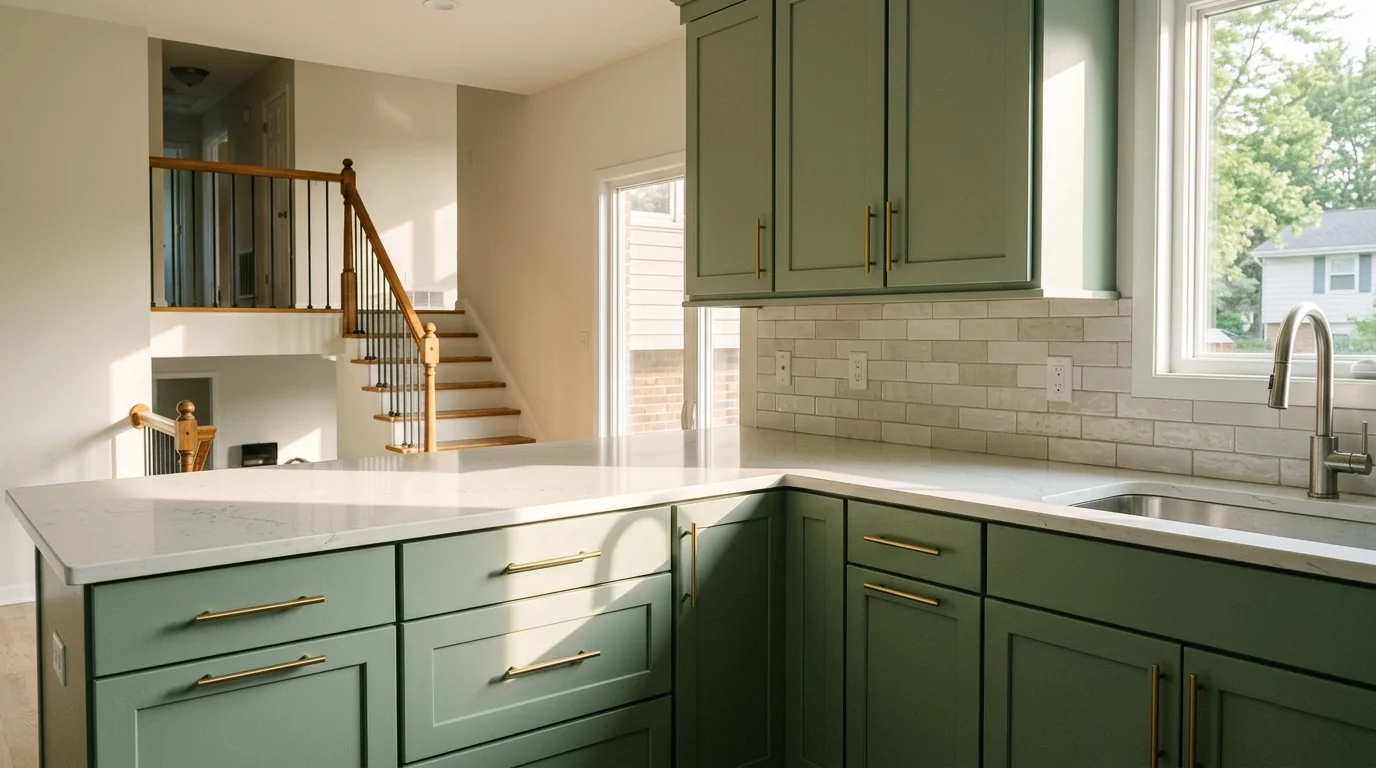
Cabinet painting means removing doors and drawer fronts, degreasing every surface, sanding, priming with a bonding primer, and spraying a hard-curing enamel, while the cabinet boxes are painted in place. In Park Ridge and nearby suburbs a typical kitchen runs $3,850 to $7,480, depending on the number of doors, grain filling, color change and how much repair the boxes need.
Paint lines we use most, matched to the surface: Benjamin Moore, Sherwin-Williams and PPG for walls and trim, Romabio for limewash, Cabot and Sikkens for wood stain.
Painted cabinets that peel within a year almost always fail for one of three reasons: grease was left on the surface, the old finish was glossy and never scuffed, or a wall paint was used that never cures hard. Kitchen cabinets carry years of cooking film, especially near the range and above the trash pull-out, and paint will sit on top of that film rather than grip the wood.
We start with a degreaser made for cabinet prep, rinse, then scuff sand every surface so the primer has a profile to hold. The primer is a bonding product chosen for the existing finish, and the topcoat is a urethane-modified or waterborne alkyd enamel that dries to a hard, washable film. These products take two to four weeks to reach full hardness, so we tell you which first-week habits to avoid.
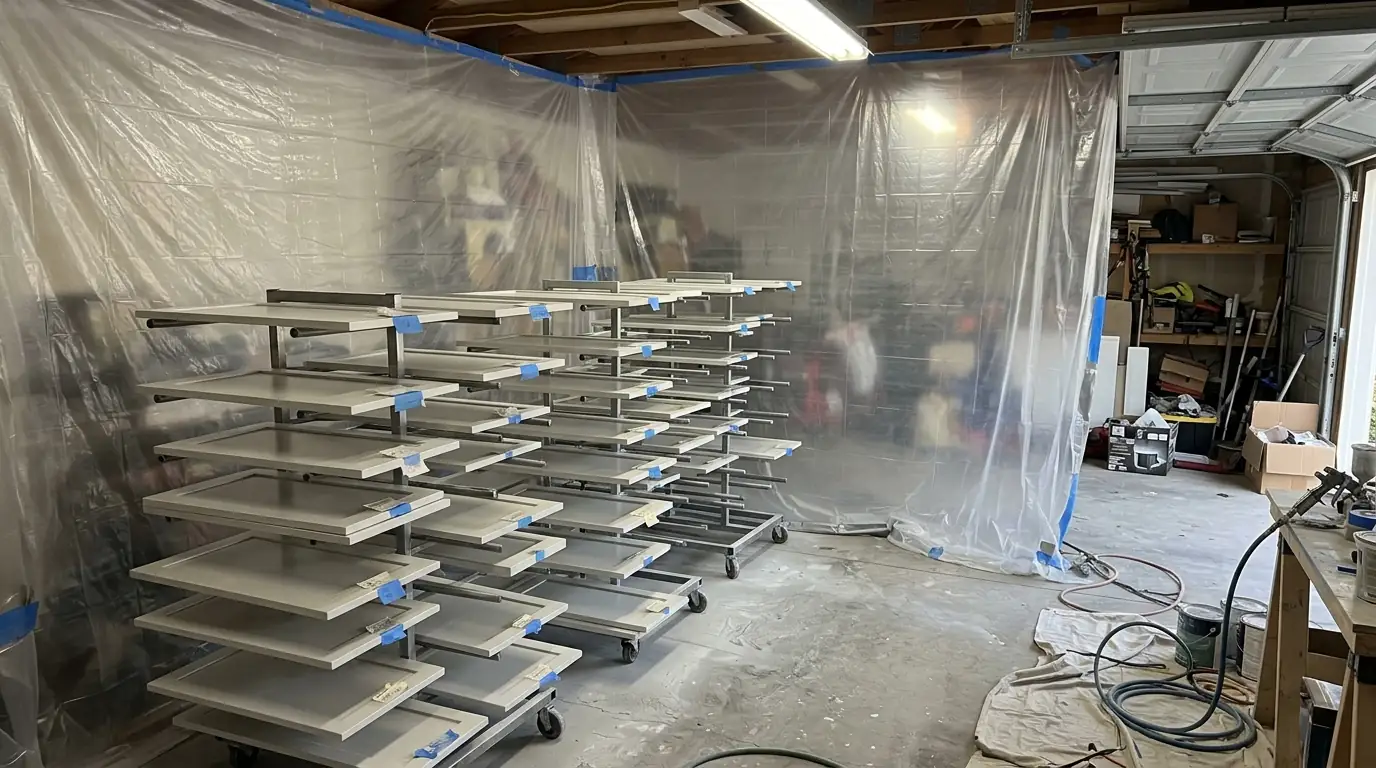
We label each door and drawer front with its location, remove the hinges and pulls, and take the doors to a controlled spray area. That might be our shop or, in many suburban homes, your attached garage set up with plastic walls and a floor cover. Spraying flat on racks gives a smooth finish with no brush marks and no drips down the edges.
The cabinet boxes, face frames and end panels stay in the kitchen. We mask the counters, backsplash, appliances and floor, then brush and fine-roll the frames, or spray them inside full plastic containment when the layout allows it. You can usually keep using the sink and the fridge through most of the job.
A lot of kitchens in Arlington Heights, Buffalo Grove, Palatine and Northbrook still have the honey oak cabinets that came with the house in the 1980s and 1990s. Oak has deep, open grain, and paint alone settles into it, so the texture shows through even in a dark color.
If you want a smooth painted look, we apply a grain filler or a high-build primer, sand it back, and repeat where needed. That step adds time and cost, so we show you a sample door both ways. Some people like a little grain showing, and that saves money. Maple, birch and MDF doors take paint smoothly without filler.
Original painted cabinets and built-ins in pre-1978 homes, from 1920s bungalows in Elmhurst and Berwyn to 1950s brick ranches in Niles, may have lead in the lower paint layers. Sanding those doors without precautions puts lead dust in the room where you prepare food.
On those jobs we follow EPA lead-safe work practices: containment, wet sanding, HEPA vacuums and a cleaning check at the end. We can test the old finish at the walk-through so you know before work starts.
If the boxes are sound, paint is usually a better choice than replacement.
Clear finishes on oak amber with age and sunlight, and paint resets the whole kitchen.
Bare wood around pulls and under the sink means the topcoat is gone and moisture is getting in.
If doors close well and the boxes are dry and square, there is no reason to tear them out.
Flaking along edges usually means no primer or wall paint was used, and it needs stripping back.
A finish that stays tacky has broken down and will not hold up much longer.
Painted cabinets in a neutral color photograph well and cost far less than new ones.
We test the old finish, check for lead in older homes, and paint a sample door in your color.
Doors, drawer fronts, hinges and pulls come off, each labeled by location.
Every surface is cleaned with cabinet degreaser, rinsed and scuff sanded.
Bonding primer goes on, then grain filler on oak if you chose a smooth look, with dents and chips filled.
Doors get two coats of enamel sprayed on racks, and boxes are finished in place.
Doors are rehung, hinges are adjusted so the gaps line up, and pulls go back on or new ones are fitted.
We price cabinets by the kitchen, with lead-safe setup or color help listed separately when needed.
| What is priced | Typical range | Unit |
|---|---|---|
| Typical kitchen, doors, drawers and boxes | $3,850 to $7,480 | per kitchen |
| Lead-safe setup for older painted cabinets | $145 to $385 | per room |
| Color consultation with sample doors | $165 to $345 | per visit |
These ranges are typical, and the walk-through sets the real number for your kitchen.
Full painting price guideThe kitchens we see around our Park Ridge headquarters fall into a few groups. Postwar ranches and Cape Cods in Des Plaines, Niles and Morton Grove often have birch or maple cabinets that were painted once before, usually with wall paint that is now chipping. Split-levels and 1980s two-stories in Mount Prospect, Arlington Heights and Buffalo Grove have the honey oak kitchens that most owners want painted white, gray or green.
Older homes in Evanston, Oak Park and Wilmette sometimes have original built-ins in the butler pantry or breakfast nook. We treat those carefully, and if the wood has never been painted, we talk through whether refinishing makes more sense. Spraying doors in an attached garage works best from late spring to early fall, because enamel needs the garage above about 50F to level and cure.
We take kitchen cabinet painting jobs in Park Ridge and the suburbs around it. A few of the places we work most:
Most kitchens take five to eight working days from removal to reinstall. Oak grain filling or a large island adds time. You will have the kitchen back in usable shape for much of that window.
Laminate can be painted with the right bonding primer if it is not peeling or swollen. Thermofoil that is lifting at the edges cannot be painted reliably, so we tell you at the walk-through if the doors need replacing instead.
A urethane-modified or waterborne alkyd enamel dries to a hard, washable film. It reaches full hardness in two to four weeks, so we ask you to avoid harsh cleaners and slamming doors during that time.
Paint alone settles into oak grain, so some texture will show. If you want a smooth look, we apply grain filler or high-build primer and sand it back. We show you a sample door both ways first.
It is a good time to do it, since the doors are already off. If you change pull sizes, we fill the old holes and drill the new ones before priming. Soft-close hinges are an easy upgrade on many face-frame cabinets.
Often yes. We wall off part of the garage with plastic, cover the floor and set up drying racks. It works best when the garage stays above about 50F, so in winter we usually take the doors to our shop.
Walls, ceilings and trim in occupied homes, with furniture moved, floors covered and rooms handed back each evening.
DetailsLarge painted samples on your actual walls, checked in morning and evening light before a single gallon is ordered.
DetailsPainting in pre-1978 homes using EPA lead-safe work practices: containment, wet methods and HEPA cleanup.
DetailsOriginal oak and pine woodwork cleaned, touched up and recoated so the grain stays visible instead of hidden under paint.
DetailsCall any hour. Someone picks up, takes the details and books a time to walk the job with you.