Commercial Painting
Offices, storefronts and common areas painted on nights and weekends so tenants and customers are not disrupted.
DetailsCommercial & multi-unit
We paint dining rooms, bars, kitchens, sales floors and storefronts in Park Ridge, Des Plaines, Arlington Heights and the towns around them, starting after close and clearing out before your morning prep or first customer.
Short answer
Retail and restaurant painting means repainting dining rooms, sales floors, fitting rooms, kitchens, restrooms and storefront trim, usually overnight so the business never closes. Around Park Ridge and the nearby suburbs it typically runs $1.55 to $4.10 per square foot of floor. Kitchen grease, ceiling height, fixtures and displays to work around, brand colors and how many overnight shifts the job needs move the price.
Paint lines we use most, matched to the surface: Benjamin Moore, Sherwin-Williams and PPG for walls and trim, Romabio for limewash, Cabot and Sikkens for wood stain.
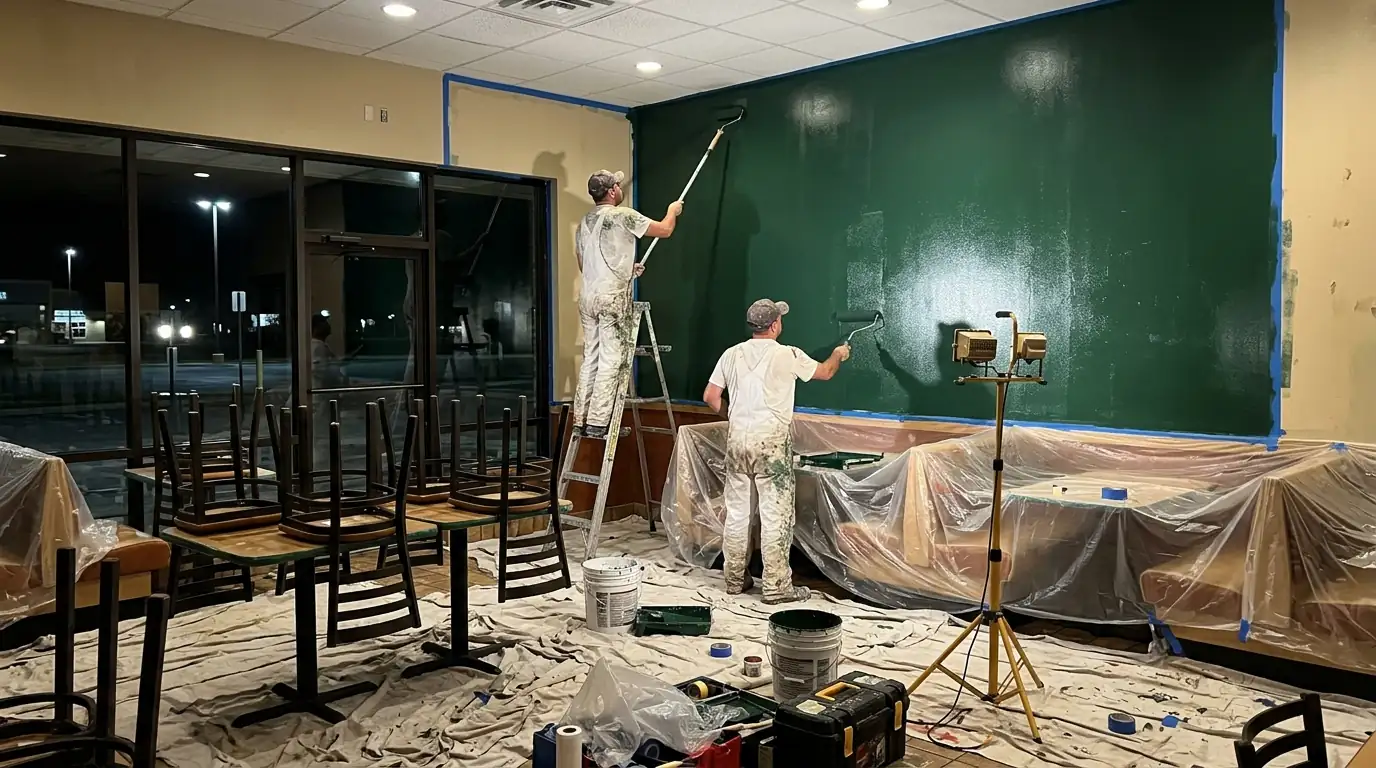
A restaurant cannot lose a Friday night to paint, so we work in the hours it is dark. Once the last table is cleared and the floor is mopped, we stack chairs, cover booths and banquettes, mask the bar top and start on the walls. On a small dining room we can often prep, paint and reset in one night. Larger rooms are split into sections over two or three.
Before we leave, the chairs go back down, the plastic comes up and the floor is swept and dry. We use low or zero VOC wall paints in dining rooms and keep air moving through the night, so the room smells like a restaurant again by the time the lunch crew arrives.
We also plan around your deliveries, cleaning service and alarm codes. If the back door has to stay clear for a five a.m. produce drop, the schedule says so.
Commercial kitchen walls see grease, steam and constant scrubbing. Ordinary wall paint softens and peels there, so we degrease thoroughly, sand glossy areas, prime and finish with a scrubbable semi-gloss or an industrial enamel that tolerates daily cleaning. Areas near ovens and fryers often need more prep time than the paint itself.
Restrooms and dish areas get moisture-tolerant finishes that resist mildew. Hollow metal doors and frames, which get kicked and pushed all day, get a direct-to-metal enamel. Walk-in cooler exteriors and stainless panels are left alone unless they were painted before.
Kitchen work is usually done on a closed day or after the last cleaning shift, because the line has to be shut down, covered and cool before we can prep it.
In a store the walls are part of the display. We paint around slatwall, shelving, mannequins and stock, moving what we can and wrapping what cannot move. Fitting rooms take a beating from hangers and elbows, so they usually get a more durable finish than the main floor.
Brand colors matter in retail. We match colors from a brand book or an approved chip and paint a test area first, because deep reds and greens often need a tinted primer and an extra coat to look even under store lighting.
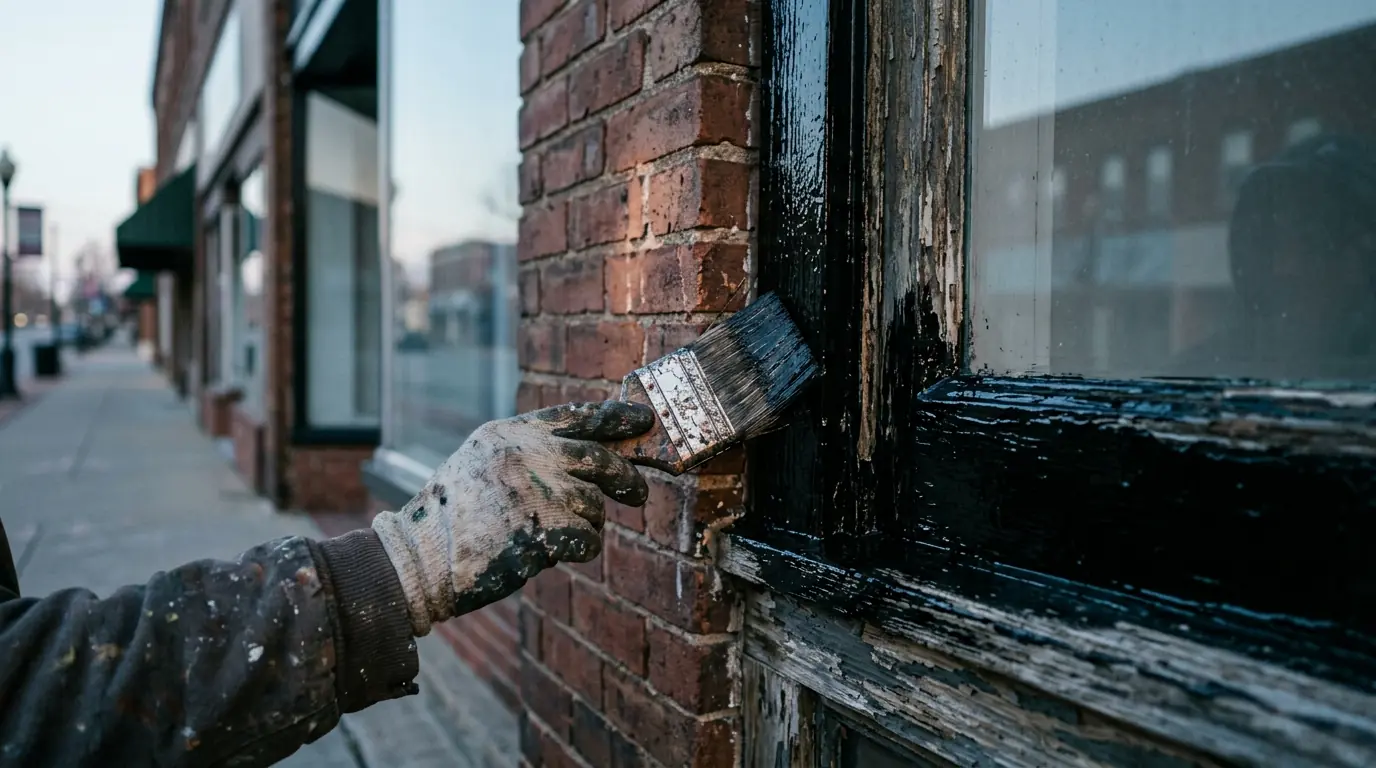
Storefront exteriors, door frames and painted trim are scheduled in warm, dry weather. We protect sidewalks and window displays and keep the entrance open while we work.
Customers notice tired walls quickly, and these are the problems that usually show first.
A sticky or yellowed layer near the pass and the line means the old finish is breaking down and holding grease.
Chair and booth backs leave marks along dining room walls that no longer clean up.
Lifting paint near sinks and hand dryers points to a finish that cannot take moisture and daily cleaning.
Sun-facing door frames and window trim chalk and fade, which makes the whole storefront look neglected.
Removed shelving, art and signage leave anchor holes that show under display lighting.
A new concept or brand colors is often the cue to repaint the whole space at once.
We visit when you are closed, measure, note damage and fixtures, and learn your closing time, delivery schedule and cleaning routine.
The job is split into sections that fit between close and open, with kitchen work set for a closed day if needed.
Furniture, booths, displays, stock and the bar or counter are wrapped, and floors are masked along the walls.
Kitchen walls are degreased, glossy areas are sanded, holes are patched and stains are spot primed.
Finish coats go on with the right product for each area, and fans keep air moving while it dries.
Plastic comes down, furniture and displays go back and floors are swept so you open on time.
These jobs are priced on floor area, adjusted for kitchen prep, fixtures and the number of overnight shifts.
| What is priced | Typical range | Unit |
|---|---|---|
| Dining room or sales floor repaint | $1.55 to $4.10 | per sq ft of floor |
| Accent or brand color wall | $285 to $640 | per wall |
| Restroom or back of house door with frame | $135 to $265 | per door |
| Patch at removed shelving or signage | $185 to $435 | each |
These ranges are typical for retail and restaurant work in the area; the walk-through sets the real number for your space.
Full painting price guideA lot of our retail and restaurant work is in the suburban downtowns closest to our headquarters on Northwest Highway: Uptown Park Ridge near the Pickwick Theatre, downtown Des Plaines and downtown Arlington Heights around the Metra station. Many of these storefronts sit in older brick buildings with wood or metal trim facing the street and back doors that sit in salt and slush all winter, so steel frames and thresholds often need rust treatment before paint.
Further out, we paint restaurants along Milwaukee Avenue in Wheeling and Niles, shops near Woodfield Mall in Schaumburg and strip center units along Golf Road and Dempster Street. Interior work runs year round. Storefront exteriors are best painted from late spring into early fall, when O'Hare average highs run from about 70 degrees in May into the mid 70s in September and overnight lows stay above the minimum on the can.
We take retail & restaurant painting jobs in Park Ridge and the suburbs around it. A few of the places we work most:
Yes. We start after the last table is cleared and finish before your morning prep, splitting larger rooms over a few nights. Chairs, booths and the bar are covered while we work and reset before we leave.
We degrease and sand first, then prime and finish with a scrubbable semi-gloss or industrial enamel made for frequent cleaning. Areas by fryers and ovens take the most prep. Kitchen work is usually booked on a closed day so the line is cool and shut down.
We use low or zero VOC paints in dining areas and run fans through the night. Most rooms have little or no odor by the time staff arrive. Stronger coatings for kitchen walls or metal are saved for closed days.
Yes. We move what can be moved and wrap what cannot, including slatwall, shelving and stock. Displays go back where they were before the store opens.
Late spring through early fall, when daytime highs and overnight lows both stay above the minimum application temperature listed on the can. We watch the forecast and keep the entrance open while we work.
Yes. We match from a brand book, a printed sample or a chip and paint a test patch under your lighting first. Deep brand colors may need tinted primer and an extra coat, which we price in up front.
Offices, storefronts and common areas painted on nights and weekends so tenants and customers are not disrupted.
DetailsOpen offices, conference rooms and corridors painted floor by floor in low-odor coatings, after hours when needed.
DetailsFeature walls, two-tone color blocking, stripes and glazed finishes laid out with a level and taped to a crisp edge.
DetailsGarage, basement and shop floors ground, repaired and coated with epoxy or polyaspartic systems with optional flake.
DetailsCall any hour. Someone picks up, takes the details and books a time to walk the job with you.