Staircase & Banister Refinishing
Treads, risers, spindles and handrails stained or painted, with traffic planned so the house keeps a usable route.
DetailsInterior painting
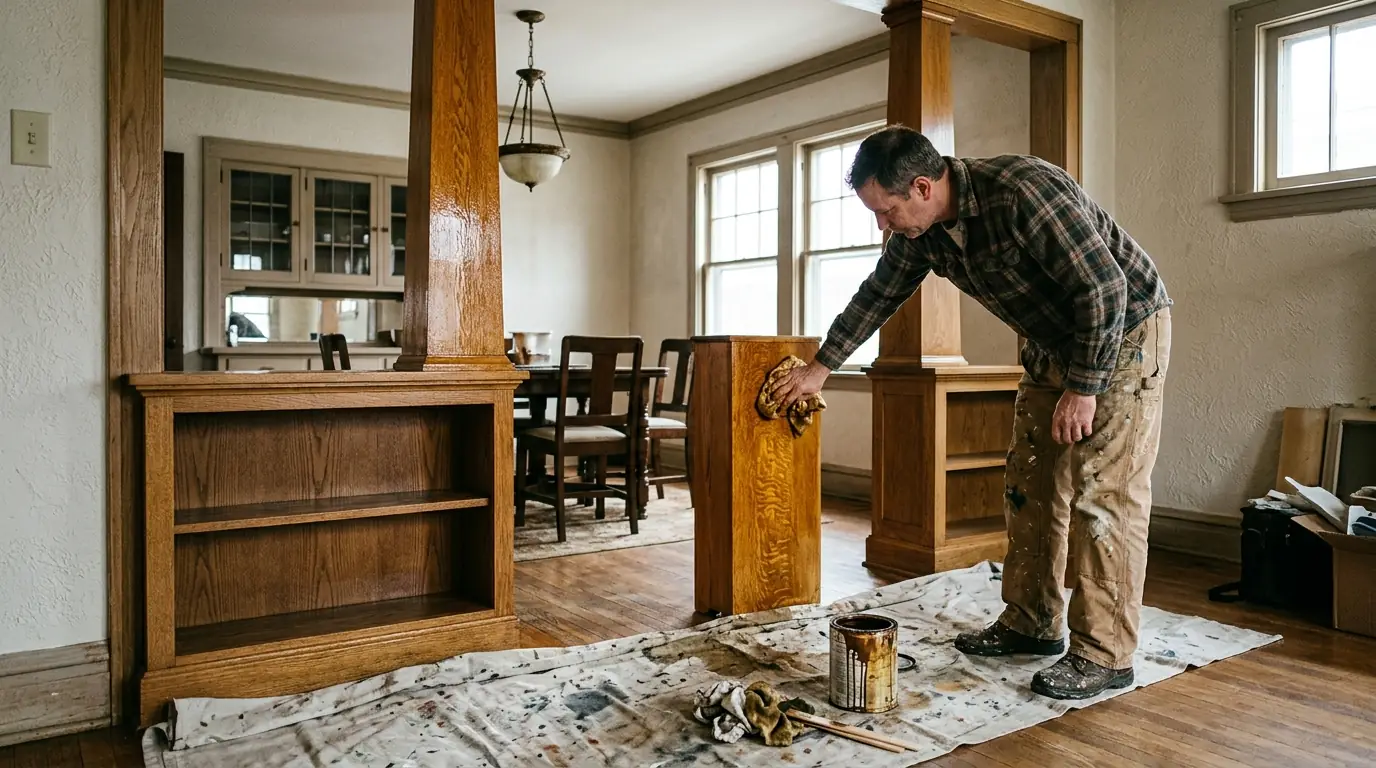
The oak casings, built-in buffets and colonnades in 1920s bungalows, and the stained trim in older Oak Park and North Shore homes, are worth keeping. We clean off decades of grime, blend in worn spots and recoat so the grain shows again.
Short answer
Woodwork staining and varnishing restores the clear or stained finish on interior trim, doors, built-ins and paneling without painting over it. Depending on condition, that means cleaning and recoating, reviving the old finish, touching up color, or stripping and restaining. Around Park Ridge it usually runs $640 to $1,780 per room, depending on how much woodwork there is, its condition and whether any of it must be stripped.
Paint lines we use most, matched to the surface: Benjamin Moore, Sherwin-Williams and PPG for walls and trim, Romabio for limewash, Cabot and Sikkens for wood stain.
Often, yes. Much of the dull woodwork in older suburban homes is not damaged. It is covered in a century of cooking grease, smoke and furniture polish over an aging shellac or varnish. Careful cleaning with a mild solvent and fine abrasive pads can bring back much of the color and grain, often in a day per room.
If the finish is crazed or alligatored but still on the wood, we can sometimes soften it and brush it back together so the cracks flow closed, a method called reamalgamation. Shellac responds to alcohol; old varnish needs other solvents. We test inside a closet or behind a door first so we know what we are working with.
Full stripping is the last option. We only go there when the finish is gone, badly water damaged or painted over, because stripping is slow, messy and takes some of the patina with it.
Quartersawn oak and old-growth pine have aged to colors no stain copies straight from the can. We mix and layer stains, test them on a hidden spot or a scrap of the same species, and look at the sample in the room's own light before we go near visible trim.
Scratches, worn stair rail edges, door edges and light rectangles where a picture hung get touch-up stains, colored wax fills and fine artist brushes. The goal is that you see the wood, not the repair.
Where some trim was replaced over the years with a different species, or a remodeled kitchen got new casings that do not match the dining room, we tone the newer pieces with a glaze between coats so they sit closer to the original color.
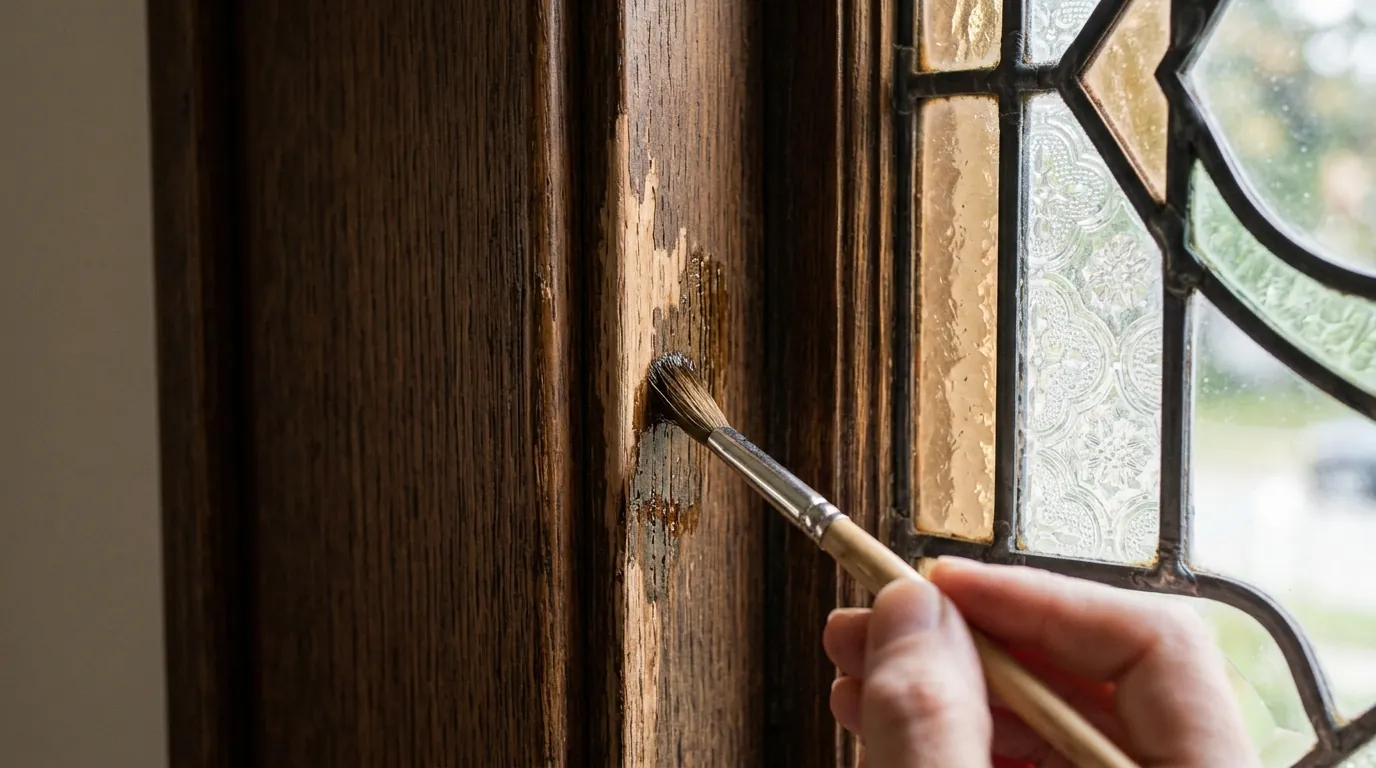
The topcoat should suit the original finish and how the wood gets used. Shellac was the usual original finish on early 1900s woodwork and is easy to repair later. Oil-based varnish is tougher and warmer in color. Water-based polyurethane dries fast with low odor but can look plastic on old oak if it goes on thick.
For doors, stair rails and window stools that get handled every day, we usually pick a harder varnish. For casings, crown and built-in cabinet faces that are rarely touched, shellac or an oil finish keeps the look closest to the original.
These are the conditions on original trim and built-ins that tell us it is time.
Grain you can barely see usually means grime and polish buildup rather than damaged wood.
Crazed shellac or varnish may be revived by reamalgamation instead of stripping.
Door edges, stair rails and window stools lose finish first and turn gray or dark.
Condensation on cold winter windows and spills on buffet tops leave pale water marks.
A replaced casing or baseboard looks lighter or redder than the original trim beside it.
Decades of furniture polish can leave a tacky film on the finish.
We find out what the old finish is and how it responds to cleaning, inside a closet or behind a door.
Floors are covered and the wall paint beside the trim is taped so solvents and stain stay off it.
Grime and polish come off with mild solvent and fine pads, which often brings back much of the color.
Scratches, worn edges, gouges and nail holes are filled, toned and blended with touch-up stains and wax.
Failed or painted-over sections are stripped by hand, with lead-safe methods where old paint is involved.
Matched stain goes on stripped areas, then the woodwork gets the chosen topcoat, rubbed out between coats.
Price depends most on how much woodwork the room holds and whether we can clean and recoat or have to strip.
| What is priced | Typical range | Unit |
|---|---|---|
| Clean, touch up and recoat woodwork | $640 to $1,780 | per room |
| Interior door stained or varnished with frame | $135 to $265 | per door |
| Staircase and banister refinish | $1,450 to $4,380 | per staircase |
| Lead-safe setup for stripping painted-over trim | $145 to $385 | per room |
These ranges are typical for homes around Park Ridge, and the walk-through sets the real number for your rooms.
Full painting price guideThe 1920s bungalow is known for its woodwork: oak casings, built-in china cabinets, colonnades between the living and dining rooms, and art glass windows framed in stained wood. Park Ridge, Morton Grove, Villa Park and Elmhurst all have bungalows where much of that trim is original, and Berwyn has one of the largest concentrations of bungalows anywhere, many still with oak trim and art glass. Prairie and Victorian homes in Oak Park and River Forest, and Tudors and Georgians in Wilmette, Winnetka and Lake Forest, often have similar stained oak, birch or pine.
A lot of that woodwork was painted over at some point, usually white, during a later remodel. Because these homes were built before 1978, painted-over trim may hold lead paint. When we strip it, we follow EPA lead-safe work practices: plastic containment, chemical or wet stripping, no open-flame burning, no dry power sanding, and HEPA cleanup with a cleaning check at the end.
We take woodwork staining & varnishing jobs in Park Ridge and the suburbs around it. A few of the places we work most:
Usually, yes, though it is slow work and the result depends on how the wood was prepared before it was painted. We strip a test area first to see how cleanly the paint comes out of the grain. In pre-1978 homes we follow EPA lead-safe work practices for the stripping.
Not always. Many original finishes can be cleaned and recoated, or softened and rebrushed, with no sanding. We only sand where the finish has failed or after stripping, and lightly between coats.
We mix and layer stains, test them on hidden spots or scrap of the same species, and compare them in the room's real light. Small worn areas are blended with touch-up stains and artist brushes.
Handled surfaces need something tougher than shellac, so we usually suggest an oil-based varnish or a hardwax oil. Casings and crown that are rarely touched can stay in shellac for an original look.
A clean and recoat in a typical bedroom can take a day or two. A bungalow dining room with a buffet, a colonnade and some stripping can take several days, because stain and varnish need drying time between coats.
Treads, risers, spindles and handrails stained or painted, with traffic planned so the house keeps a usable route.
DetailsBaseboards, casings and crown molding caulked, sanded and brushed to a clean line against the wall color.
DetailsPanel and slab doors painted on both faces and all six edges, with hardware removed and frames done to match.
DetailsPainting in pre-1978 homes using EPA lead-safe work practices: containment, wet methods and HEPA cleanup.
DetailsCracked and bulging plaster on vintage walls reattached, patched and skimmed with materials that move like the original.
DetailsCall any hour. Someone picks up, takes the details and books a time to walk the job with you.