Exterior House Painting
Full exterior repaints with scraping, priming of bare wood, caulking and two finish coats, timed to the local paint season.
DetailsExterior painting
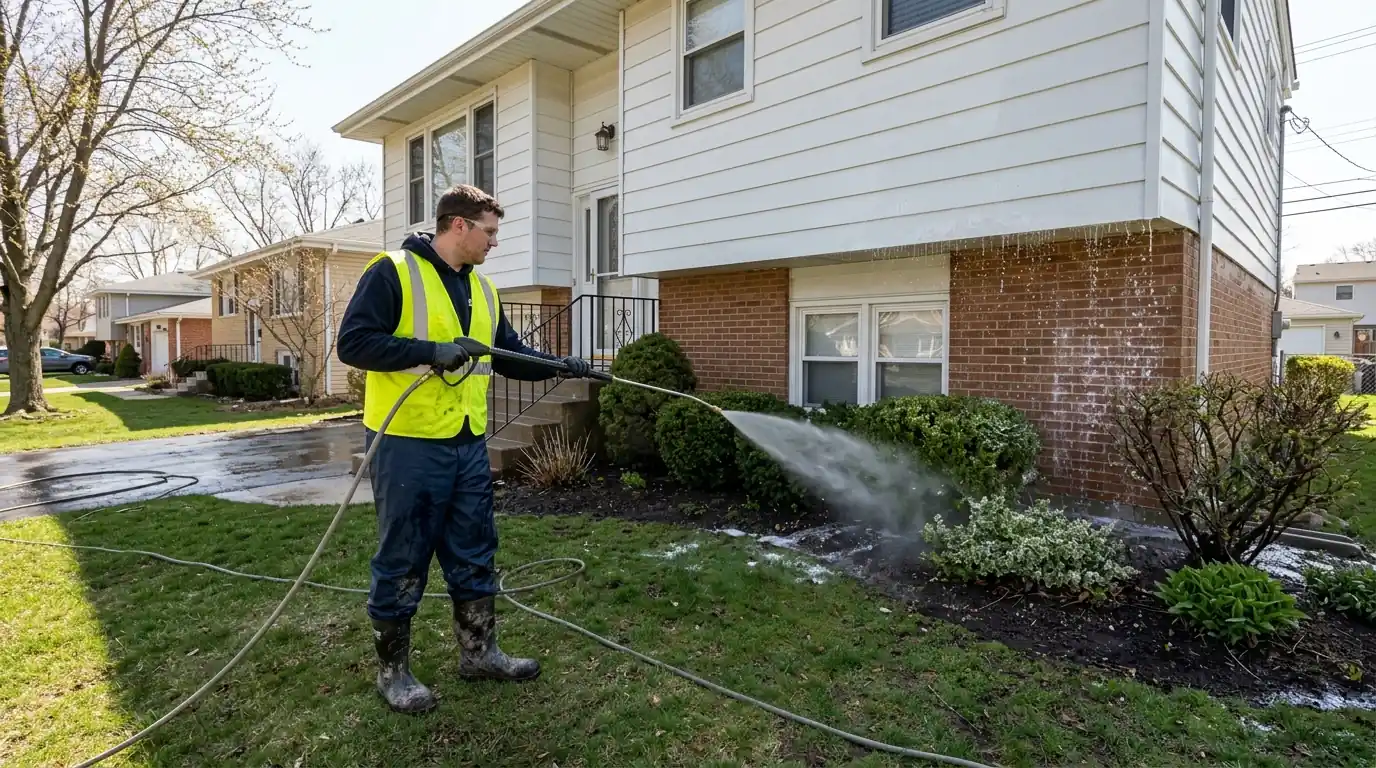
Washing a house is not about blasting it. Aluminum, vinyl, brick and wood each take a different cleaner and a different pressure. We wash homes around Park Ridge as paint prep and as yearly upkeep, without driving water behind the siding.
Short answer
Pressure washing for a home usually means soft washing: applying a cleaner suited to the surface, letting it work on mildew and dirt, then rinsing at low to moderate pressure. Higher pressure is saved for concrete and sound masonry. In Park Ridge and the nearby suburbs, washing a house typically costs $345 to $890, depending on size, siding type, height, mildew and whether a deck or walks are included.
Paint lines we use most, matched to the surface: Benjamin Moore, Sherwin-Williams and PPG for walls and trim, Romabio for limewash, Cabot and Sikkens for wood stain.
High pressure can etch wood, gouge mortar joints, strip the protective finish off aluminum and push water up behind vinyl siding and into walls. A lot of the damage we see on suburban houses comes from a rented washer used too close. Most surfaces on a house should be washed with a cleaner and a gentle rinse.
On aluminum and vinyl siding we use a mild cleaner and a low-pressure rinse, spraying downward so water does not get behind the laps. On brick we use a masonry-safe cleaner and moderate pressure, staying off soft or crumbling mortar. On wood siding and decks we use a wood cleaner and low pressure, so the fibers do not fuzz.
Concrete driveways, walks and patios can take higher pressure with a surface cleaner attachment. That is the one place where more pressure actually helps.
Aluminum siding on 1950s to 1970s homes in Des Plaines, Mount Prospect, Arlington Heights and Elk Grove Village chalks as the factory finish ages. Washing removes the chalk, but it can also show how thin the finish has become. If the siding is going to be painted, the wash is the first step of the prep.
Vinyl siding mostly collects mildew and dirt on north walls and under trees. A cleaner with mildewcide, a short dwell time and a low rinse gets it bright again. Brick on ranches and Georgians collects algae, dirt and efflorescence, and we treat it gently, especially on older brick with soft mortar.
Decks and fences get a wood cleaner and brightener before stain. Concrete steps and walks get a surface cleaner, and we can treat rust stains from railings and fertilizer.
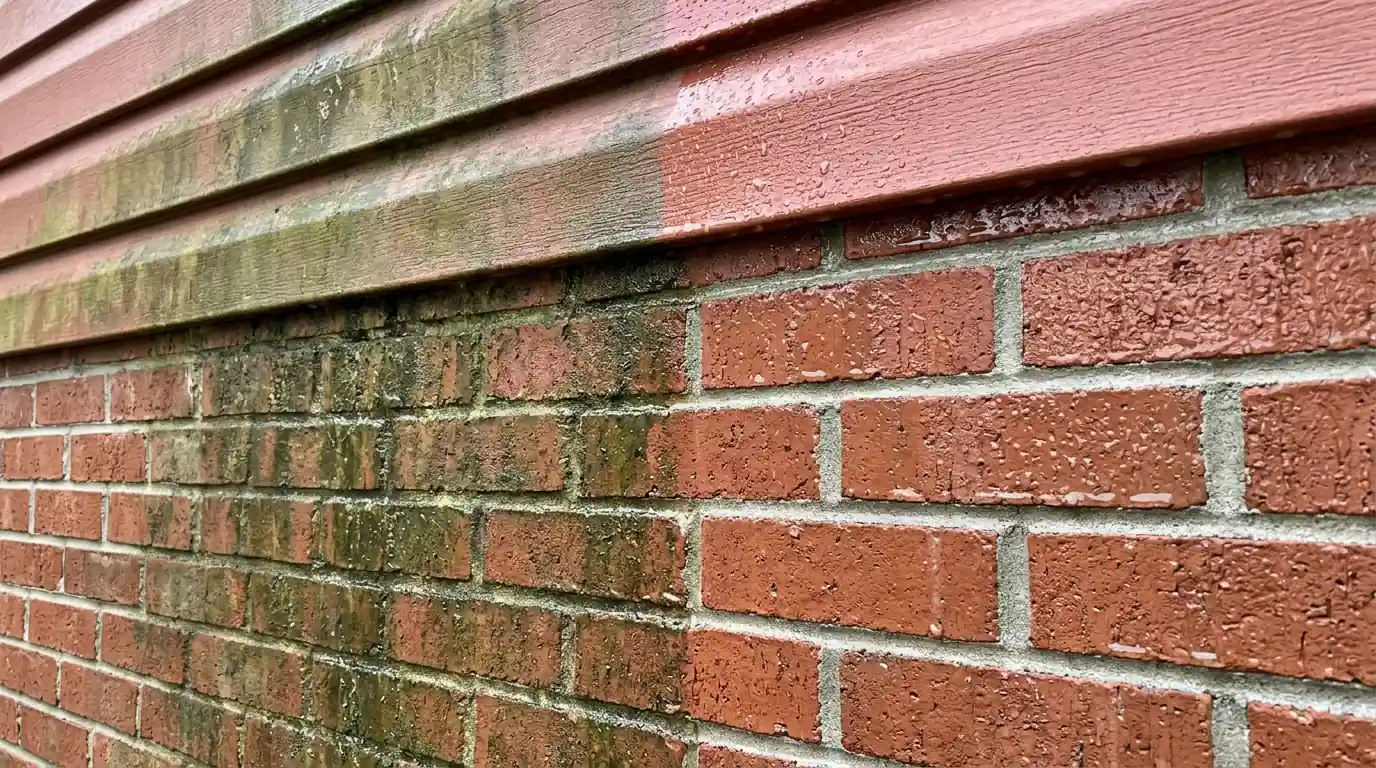
Before every exterior paint job, we wash the house. Paint sticks to clean surfaces, not to chalk, mildew or pollen. After washing, the house needs a day or two of dry weather before painting, longer for wood on shaded walls.
As upkeep, a yearly or every-other-year wash keeps paint looking fresh and slows mildew growth. A house painted a few years ago often looks almost new after a good wash, which can push the next repaint further out.
We cover outlets, light fixtures and the electric meter, close windows and rinse plants before and after. Cars, patio furniture and grills are moved or covered.
On pre-1978 homes with peeling paint, we do not blast the loose paint off with the washer, because that scatters chips that may contain lead across the yard. We wash at low pressure to clean the surface, catch what comes loose on ground sheeting, and leave the scraping for the lead-safe prep that follows. If you are only washing, we tell you which areas are peeling badly enough to need paint soon.
The postwar neighborhoods of Des Plaines, Niles, Mount Prospect and Elk Grove Village are full of ranches and raised ranches with aluminum or vinyl siding over a brick base. Mature trees shade the north walls, and humid summers near O'Hare, with average July highs of 84.5 degrees, grow mildew there every year. Spring washing clears winter road grime and salt splash off the lower walls.
Older brick homes in Park Ridge, Evanston and Oak Park need gentler handling because the mortar is often softer than modern mortar. We keep pressure low and stay off any joints that are already crumbling, and we tell you if repointing is needed before painting or limewash.
House washing runs from April through October, whenever overnight temperatures stay above freezing so water does not ice on walks and steps. Average April lows at O'Hare are near 40 degrees, so early spring washes happen on mild afternoons.
Look at the north side and the walls under trees first.
Mildew and algae grow on shaded walls and spread every humid summer.
Chalking aluminum siding or old paint means the finish is breaking down.
Splashback from rain and mulch stains the bottom few feet of siding.
Weathered decks need cleaning before stain can soak in.
Walks and drives collect rust, oil and algae stains.
Any exterior paint job should start with a full wash.
We check siding type, mortar, mildew and anything fragile before choosing cleaners.
Plants are rinsed, outlets and fixtures covered and windows closed.
The right cleaner goes on each surface and sits long enough to work.
Siding is rinsed top to bottom at low pressure, spraying downward.
Decks are cleaned and brightened, and walks get a surface cleaner.
Plants are rinsed again, and we walk the house with you.
Washing is priced by house size and what is included.
| What is priced | Typical range | Unit |
|---|---|---|
| House washing | $345 to $890 | per house |
| Deck staining after washing, 300 to 500 sq ft | $985 to $2,640 | per deck |
| Siding painting after washing | $2.15 to $4.85 | per sq ft |
These ranges are typical for homes in Park Ridge and the nearby suburbs, and the walk-through sets the real number for yours.
Full painting price guideWe take pressure washing jobs in Park Ridge and the suburbs around it. A few of the places we work most:
Not with the right method. We use a masonry-safe cleaner and moderate pressure and stay off soft or crumbling mortar. High pressure is what damages old brick, and we do not use it there.
Usually a day or two of dry weather. Wood on shaded walls can take longer. We check moisture before painting rather than going by the calendar.
Yes. We rinse vinyl at low pressure and spray downward with the laps, never up under them. Most of the cleaning comes from the cleaner, not the pressure.
It removes the mildew, but it will grow back over time on walls that stay shaded and damp. A yearly or every-other-year wash keeps it under control. Trimming plants back from the wall also helps.
Usually, yes. Washing removes the dirt and mildew that make paint look tired, and it slows the breakdown of the finish. Many houses look close to freshly painted after a good wash.
Full exterior repaints with scraping, priming of bare wood, caulking and two finish coats, timed to the local paint season.
DetailsWood clapboard, cedar shingle, fiber cement and aluminum siding cleaned and coated with the right primer for each.
DetailsDecks washed, brightened and stained with a penetrating or solid stain that suits the age and condition of the boards.
DetailsWood fences and gates cleaned and stained or painted on both sides, with plants and neighbor yards protected.
DetailsPreviously painted brick and masonry recoated with breathable masonry paint after cleaning, repointing checks and priming.
DetailsCall any hour. Someone picks up, takes the details and books a time to walk the job with you.