Drywall Repair
Holes, cracks, water stains and nail pops patched, taped, sanded and primed so the repair disappears under the paint.
DetailsWall repair & prep
Park Ridge bungalows and the older houses in Evanston, Oak Park, River Forest and the North Shore were finished in three-coat plaster over wood lath. We repair it with hard-setting materials so the crack does not open again next winter.
Short answer
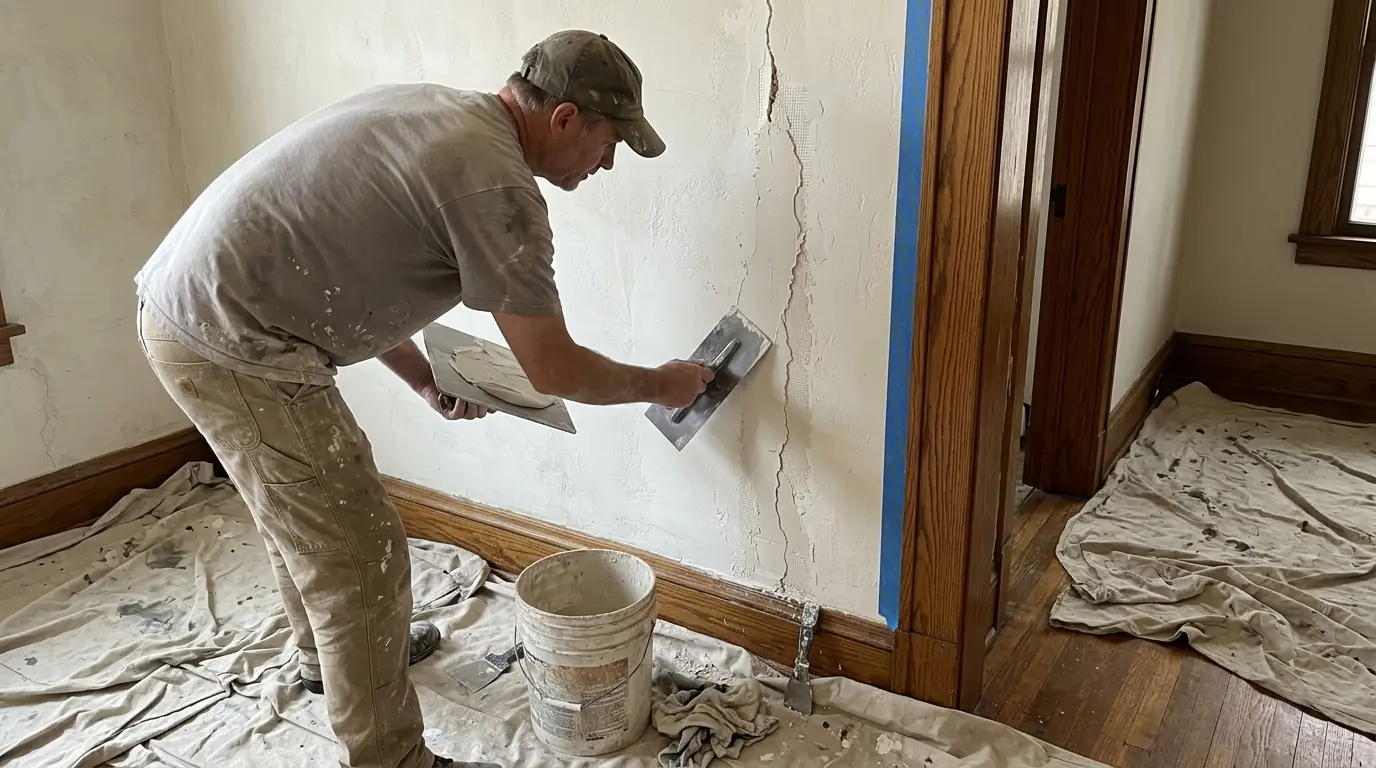
Plaster repair means reattaching loose plaster to the lath, filling cracks and holes with setting compound or base coat plaster, and skimming the wall flat before primer and paint. Around Park Ridge and the nearby suburbs, a single crack or small area usually runs $265 to $780 and a full room skim coat $1,380 to $3,460, depending on how much has come loose and whether lead-safe prep applies.
Paint lines we use most, matched to the surface: Benjamin Moore, Sherwin-Williams and PPG for walls and trim, Romabio for limewash, Cabot and Sikkens for wood stain.
A 1920s bungalow in Park Ridge or a Victorian near Lake Ellyn was plastered in three coats. The scratch coat was pushed through the gaps between the wood lath strips, where it curled over the back and hardened into keys. A brown coat built the wall flat, and a thin, hard finish coat went over the top. The keys are what hold the whole wall to the framing.
After eighty or a hundred years, those keys start to snap. Forced air or radiator heat dries the lath every winter, humid July air swells it again, and the house keeps settling on its footings. Cracks open over door heads and along the lath lines, and whole sections of ceiling start to drop away from the joists.
The common fix is a smear of lightweight spackle and a coat of paint. It looks fine for one season, then the crack shows right back through because the plaster on each side is still moving. We stop the movement first, then fill, then finish.
Usually it can. If most of the plaster is still attached and the brown coat is sound, saving it costs less than tearing it out. It also leaves the original oak casings and baseboards in place and avoids the dust of demolition in a house that very likely has lead paint on its walls.
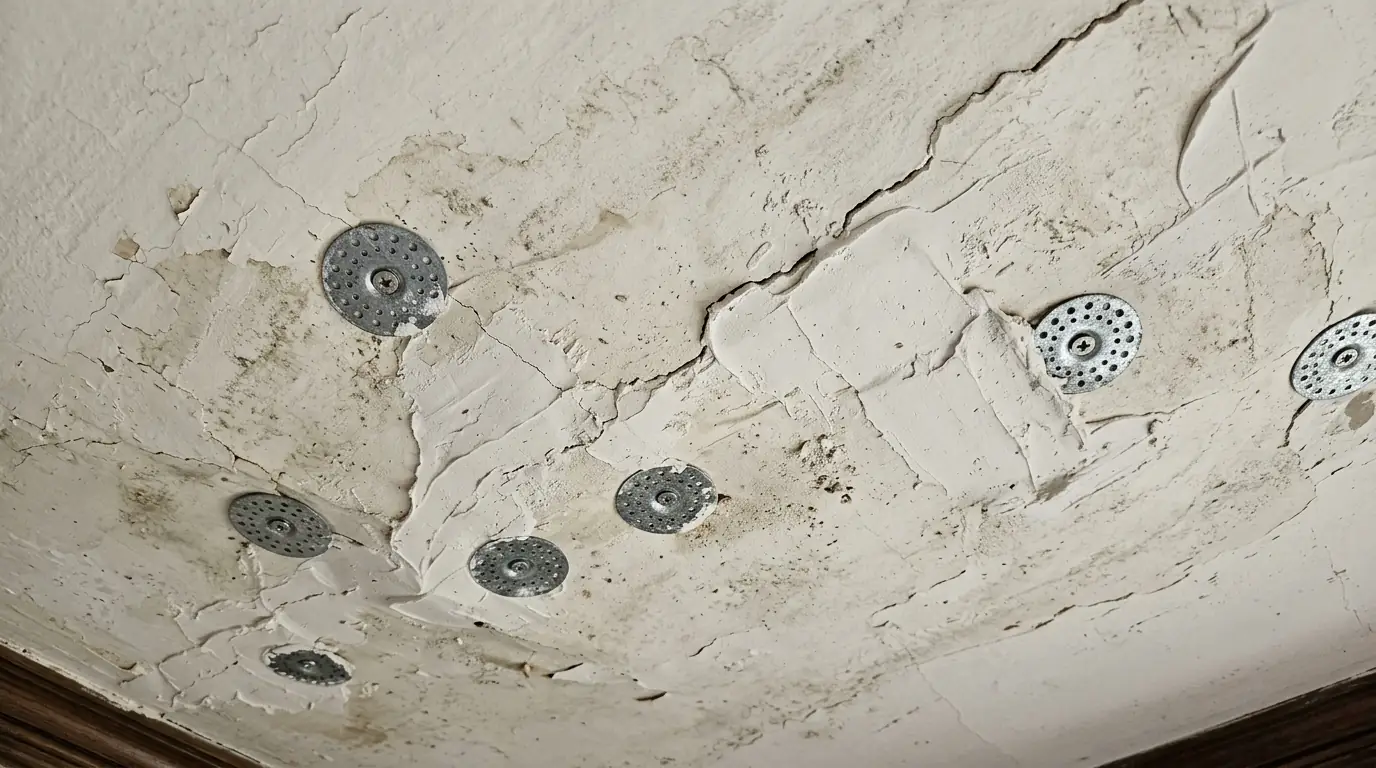
We check by pressing lightly along the wall and tapping. Plaster that flexes or sounds hollow has lost its keys. Where it can be pushed back flat, we drill small holes, inject a plaster adhesive and pull the plaster tight to the lath with screws and plaster washers while the adhesive sets. The washers come out the next day and the holes get filled.
Some sections are past saving: plaster that crumbles in your hand, has been soaked by an old roof or bathroom leak more than once, or has already fallen. We cut those back to a clean edge and rebuild with base coat plaster, or with drywall shimmed to the depth of the old wall, then skim the patch so it blends.
Old plaster is hard, and soft patching products do not bond to it or wear the way it does. For cracks and holes we use setting-type joint compound, the powdered kind that cures by chemical reaction. It shrinks less, sets harder and can be built up in thick layers in a single day.
Long cracks get fiberglass mesh tape bedded in setting compound so the repair can bridge the gap. Deep losses get base coat plaster to bring them up to the surface, then a thin finish coat troweled or skimmed to match the wall around them.
Before paint, every patch is sealed with a bonding primer so old and new surfaces take the finish the same way. Skip that step and the patches show up as dull spots once the room is painted.
Plaster problems are cheaper to fix when they are caught before a section lets go.
A crack that comes back after every repaint means the plaster on both sides is still moving. It needs reattaching and taping, not more filler.
A section that feels spongy or bows out when pressed has broken keys behind it. On a ceiling, that can drop without much warning.
Diagonal cracks running up from the corners of doors and windows are typical of houses that have settled for decades.
An old leak from an ice dam, a roof valley or an upstairs tub leaves brown rings and soft plaster that must be cut back.
A spider web of hairline cracks across a ceiling usually means the finish coat is losing its bond and should be skimmed.
Raised edges, sunken spots or a different sheen where someone patched before usually mean soft spackle was used over hard plaster.
We press and tap along the walls and ceilings, mark loose areas in pencil and go over which sections can be saved and which need rebuilding.
Floors are covered, furniture is moved or wrapped, and in pre-1978 homes we set up plastic containment and follow EPA lead-safe work practices.
Adhesive goes in behind the loose sections and washers hold the plaster tight to the lath while it sets overnight.
Cracks are opened slightly, taped with mesh and filled with setting compound. Deep holes are built up in layers with base coat plaster.
We skim the repaired areas or the full wall flat, then sand with HEPA vacuum attachments to keep dust out of the rest of the house.
Bonding primer goes over every patch, then two finish coats so the repairs disappear under the color.
Plaster work is priced by the area and the depth of the damage, not by the hour. These ranges cover typical jobs from Park Ridge out to the North Shore and DuPage.
| What is priced | Typical range | Unit |
|---|---|---|
| Single crack or small damaged area | $265 to $780 | each |
| Full room skim coat | $1,380 to $3,460 | per room |
| Lead-safe setup in a pre-1978 room | $145 to $385 | per room |
| Paint walls after repair, 2 coats | $465 to $890 | per room |
These ranges are typical for the area, and the walk-through in your home sets the real number.
Full painting price guidePark Ridge has a good stock of 1920s bungalows and Tudors with plaster walls set tight against oak trim, and the same is true in Berwyn, Villa Park, Elmhurst and Melrose Park. In Evanston, Wilmette, Winnetka, Oak Park, River Forest and Glen Ellyn the houses are often older and larger, with tall stairwells and plaster ceilings that have been patched by several owners. Saving the plaster in these houses usually means the original trim never has to come off.
Winters measured a few miles away at O'Hare average lows near 19F in January, and furnaces run hard for months. Walls on the north side and along exterior brick see the widest swings in temperature, and that is where cracks appear first. Plaster repair is interior work, so we do it in any season, but we give base coat and setting compound a full day to cure in a dry winter house before primer goes on.
Ice dams are the other local cause. Water that backs up under shingles at the eaves soaks the top of an outside wall, and the plaster near the ceiling line turns soft. Once the roof is fixed, we cut out the damaged plaster, rebuild it and seal the stain so it does not bleed through the new paint.
We take plaster wall repair jobs in Park Ridge and the suburbs around it. A few of the places we work most:
The horsehair is only a binder that holds the base coat together. The bigger concern in a pre-1978 house is lead in the paint layers on top of the plaster. We follow EPA lead-safe work practices whenever the repair disturbs those painted surfaces.
Small crack repairs can usually be primed the next day. Reattached sections need an extra day for the adhesive to set, and deep base coat fills can need two days in a cold, dry winter house.
A repair that reattaches the plaster and bridges the crack with mesh and setting compound holds far better than spackle. Old houses keep settling, so a hairline can show years later, but the wide recurring cracks should stop.
If the wall has a few cracks and is otherwise flat, patching is enough. If it has dozens of old patches, web cracking or a wavy surface, a full skim coat looks better and often costs about the same as patching everything.
Yes. Most vintage plaster has a smooth hard finish, and some rooms have a light sand finish. We match the existing texture with the finish coat or the skim so the repair blends with the rest of the wall.
Yes, once the roof is fixed and the wall has dried out. We cut the soft plaster back to a firm edge, rebuild it, and seal the stain with a stain-blocking primer before painting so the ring does not come back.
Holes, cracks, water stains and nail pops patched, taped, sanded and primed so the repair disappears under the paint.
DetailsPainting in pre-1978 homes using EPA lead-safe work practices: containment, wet methods and HEPA cleanup.
DetailsWalls, ceilings and trim in occupied homes, with furniture moved, floors covered and rooms handed back each evening.
DetailsFlat, even ceilings with no lap marks, including high stairwell ceilings and stained ceilings that need a sealing primer first.
DetailsPaper and old adhesive taken off without gouging the wall, then the surface is washed, repaired and sealed for paint.
DetailsCall any hour. Someone picks up, takes the details and books a time to walk the job with you.