Ceiling Painting
Flat, even ceilings with no lap marks, including high stairwell ceilings and stained ceilings that need a sealing primer first.
DetailsInterior painting
Textured ceilings from the 1960s to the 1980s date a room, hold dust and are hard to patch. Before anyone scrapes, the texture gets lab tested. With a clear result, we seal the room, wet and scrape the ceiling, skim it smooth and paint it.
Short answer
Popcorn ceiling removal means testing the textured coating for asbestos, sealing the room in plastic, wetting and scraping the texture off, then skim coating, sanding and priming so the ceiling can be painted smooth. Around Park Ridge it usually costs $2.35 to $5.80 per square foot, depending on whether the texture was painted, the condition of the drywall underneath and the ceiling height.
Paint lines we use most, matched to the surface: Benjamin Moore, Sherwin-Williams and PPG for walls and trim, Romabio for limewash, Cabot and Sikkens for wood stain.
Spray-on acoustic texture was widely used on ceilings from the 1950s into the 1980s, and some of it was made with asbestos. You cannot tell by looking. Scraping a ceiling that contains asbestos releases fibers into the air, so we do not disturb popcorn texture in older homes until a sample has been tested by an accredited lab.
Testing is quick. A small sample is taken from the ceiling and sent off, and results usually come back within a few days. If it shows no asbestos, we schedule the removal. If it does, the removal has to be done by an asbestos abatement contractor under the rules for that work, and we come in afterward to skim, prime and paint.
Homes built before 1978 may also have lead paint on the ceiling, under or over the texture. When we scrape a ceiling in an older home, we follow EPA lead-safe work practices for containment and cleanup.
Unpainted popcorn usually softens with water and scrapes off in sheets. Painted texture is harder, because the paint seals the water out. We may need a removal gel or several rounds of wetting, and that adds labor.
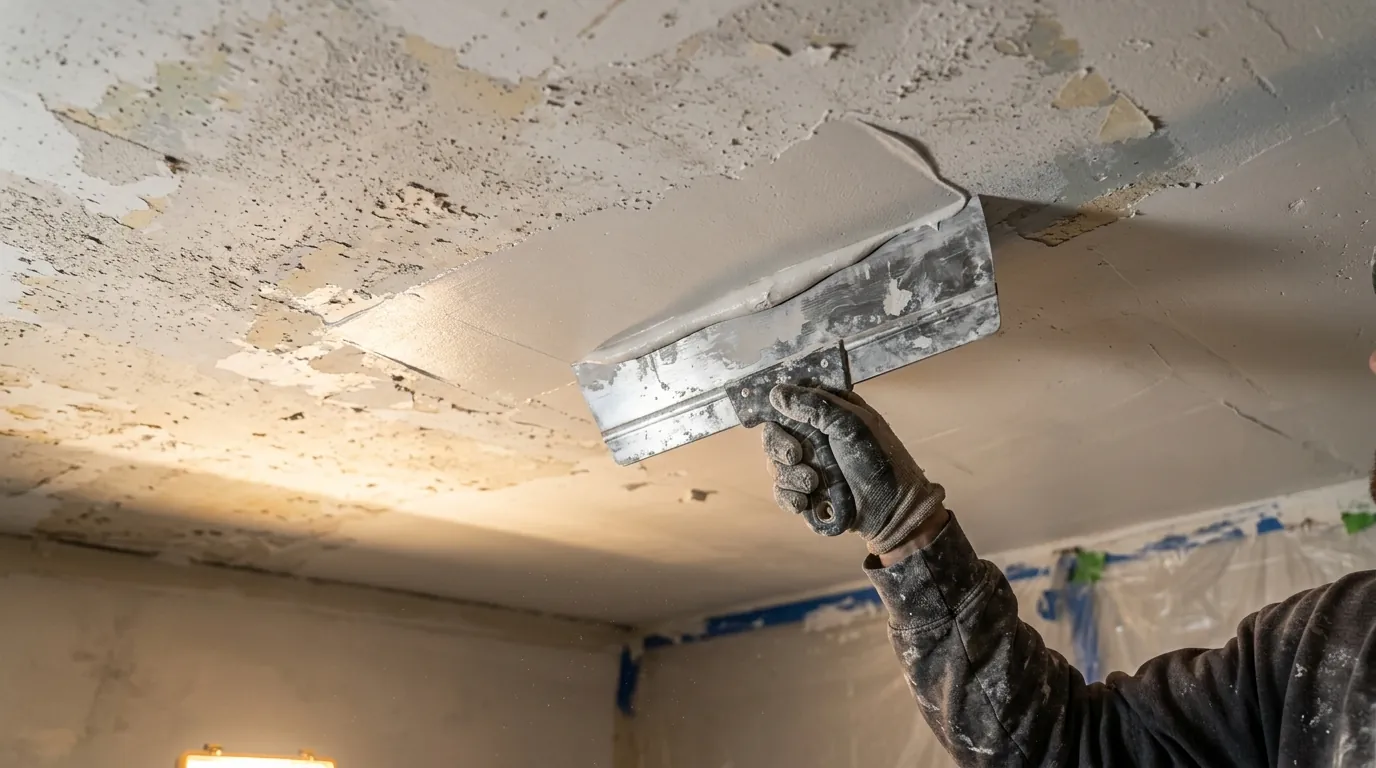
Once the texture is gone, the real ceiling shows. Drywall often has visible tape joints, screw heads and scraper gouges that the texture was hiding, and builders in the 1970s sometimes sprayed texture over joints that were barely finished. A full skim coat of joint compound, sanded smooth, is what turns a scraped ceiling into one you can paint flat without seeing every flaw.
We check the ceiling with a work light held low before primer. Low light across the surface shows ridges and dips that look fine from below but stand out when the late sun comes through a picture window.
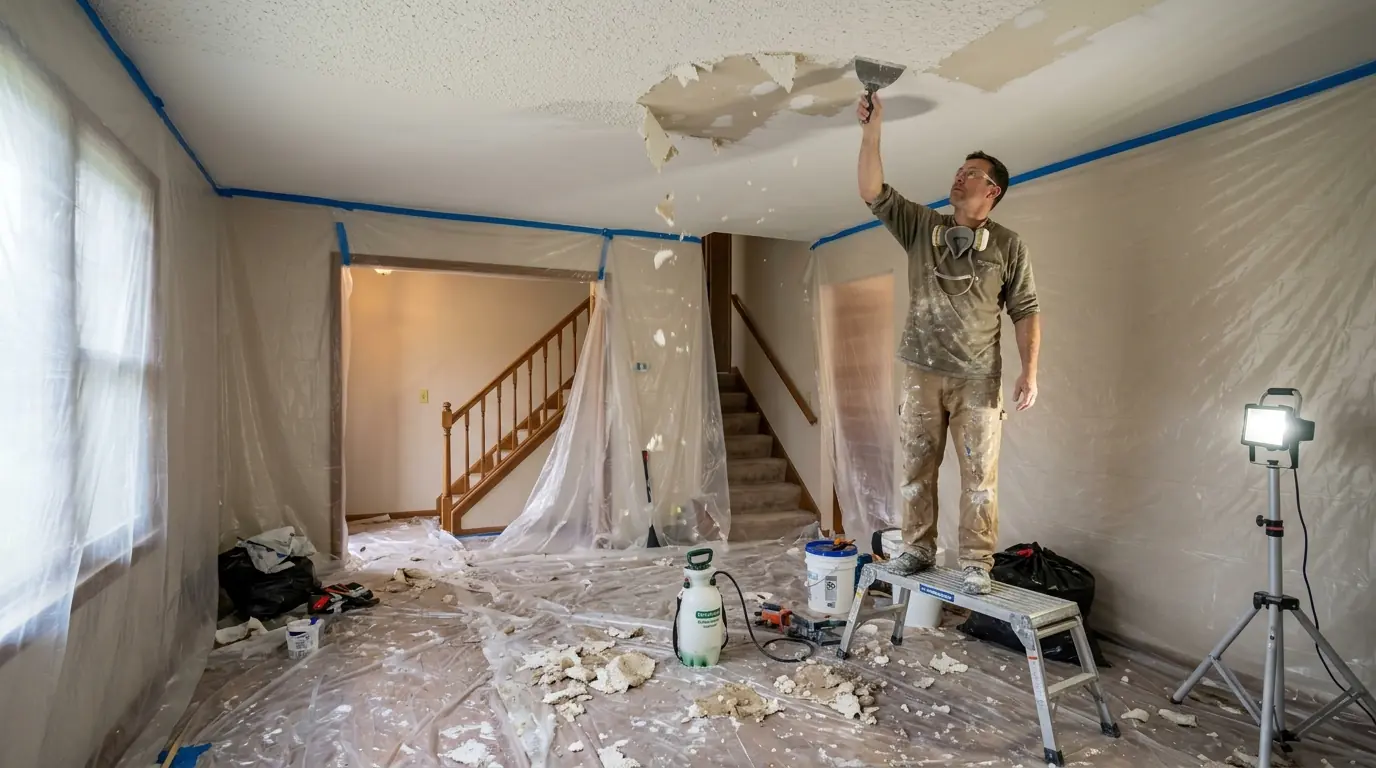
Popcorn removal is messy. Wet texture falls in clumps, and sanding the skim coat makes fine dust. We cover floors with plastic and rosin paper, run plastic up the walls, seal vents and fixtures, and hang zip doors at the room entrances.
Furniture leaves the room when possible, or is grouped in the center and wrapped. After removal and sanding, we HEPA vacuum the room and wipe the surfaces before primer and paint. In a split-level, where the living room ceiling often runs into the stair opening, we seal the stairwell too so dust does not drift to the bedroom level.
These are the reasons most homeowners call us about textured ceilings.
Bits of texture on the floor or bed mean it is loose and should be tested soon.
Popcorn takes stain-blocking primer poorly, so old leak marks bleed back through.
The rough surface holds dust and is close to impossible to clean.
Repairs after plumbing or electrical work leave flat spots that never match.
Buyers touring a ranch or split-level often see popcorn as a dated project they will have to take on.
Can lights cast long shadows across texture and make the ceiling look heavier.
A sample goes to an accredited lab for asbestos. We schedule only after a clear result.
Furniture is moved, floors and walls covered in plastic, vents and fixtures sealed, and zip doors hung.
We mist the texture with water, let it soak and scrape it off with wide blades into the plastic.
One or two thin coats of joint compound cover tape joints, gouges and old repairs.
We sand smooth with dust control, then look across the ceiling with a low light and fix any ridges.
The ceiling gets a primer and two coats of flat ceiling paint, then we clean up and take down containment.
Removal is priced by the square foot of ceiling. Painted texture and rough drywall underneath push the price up.
| What is priced | Typical range | Unit |
|---|---|---|
| Popcorn removal, skim coat and prime | $2.35 to $5.80 | per sq ft |
| Ceiling paint after removal | $245 to $520 | per room |
| Lead-safe setup in a pre-1978 home | $145 to $385 | per room |
These are typical ranges for Park Ridge and nearby suburbs, and the walk-through and test result set the real number.
Full painting price guidePopcorn texture shows up most in housing built from the 1960s to the 1980s: the raised ranches and bi-levels of Niles, Des Plaines and Elk Grove Village, the split-levels of Arlington Heights, Mount Prospect and Palatine, the 1970s subdivisions of Schaumburg, Hoffman Estates and Carol Stream, and condo buildings from the same years in Skokie, Wheeling and Prospect Heights. Older Park Ridge Georgians and bungalows usually started with plaster ceilings, but many were sprayed during later remodels, especially in kitchens and finished basements.
In condo buildings and townhome associations, check with management before scheduling. Many want notice of any work that disturbs ceilings, may ask to see the lab result, and limit messy work to set hours. We plan containment and cleanup to fit those rules, and we can usually finish one room in two to three days, including drying time for the skim coat.
We take popcorn ceiling removal jobs in Park Ridge and the suburbs around it. A few of the places we work most:
Yes. Texture from that era may contain asbestos and you cannot tell by looking, so a sample goes to an accredited lab before any scraping. If it contains asbestos, removal must be done by an asbestos abatement contractor.
We do not scrape it. An asbestos abatement contractor removes or encapsulates it under the rules for that work. Once they are done, we skim coat, prime and paint the ceiling.
Usually, but it takes longer. Paint keeps water from soaking in, so we may need a removal gel or several rounds of wetting. That extra labor shows up in the price.
The texture often hid tape joints, screw heads and rough patches, and the scraper can leave gouges. A thin skim coat sanded smooth gives an even surface so the paint does not show every flaw.
Yes, in most cases. The work room is sealed with plastic and zip doors, so the rest of the house stays usable. Keep children and pets out of the work room until cleanup is done.
Most single rooms take two to three days: one day to contain, wet and scrape, then skim coating with drying time, then sanding, primer and paint. Painted texture or a vaulted ceiling can add a day.
Flat, even ceilings with no lap marks, including high stairwell ceilings and stained ceilings that need a sealing primer first.
DetailsHoles, cracks, water stains and nail pops patched, taped, sanded and primed so the repair disappears under the paint.
DetailsCracked and bulging plaster on vintage walls reattached, patched and skimmed with materials that move like the original.
DetailsPainting in pre-1978 homes using EPA lead-safe work practices: containment, wet methods and HEPA cleanup.
DetailsWalls, ceilings and trim in occupied homes, with furniture moved, floors covered and rooms handed back each evening.
DetailsCall any hour. Someone picks up, takes the details and books a time to walk the job with you.