Deck Staining & Sealing
Decks washed, brightened and stained with a penetrating or solid stain that suits the age and condition of the boards.
DetailsExterior painting
A cedar privacy fence takes more weather than the house it surrounds: sprinklers, snow drifts, lawn mower spray and full sun on one face. We clean, repair and stain or paint wood fences and gates so they stay straight and sound.
Short answer
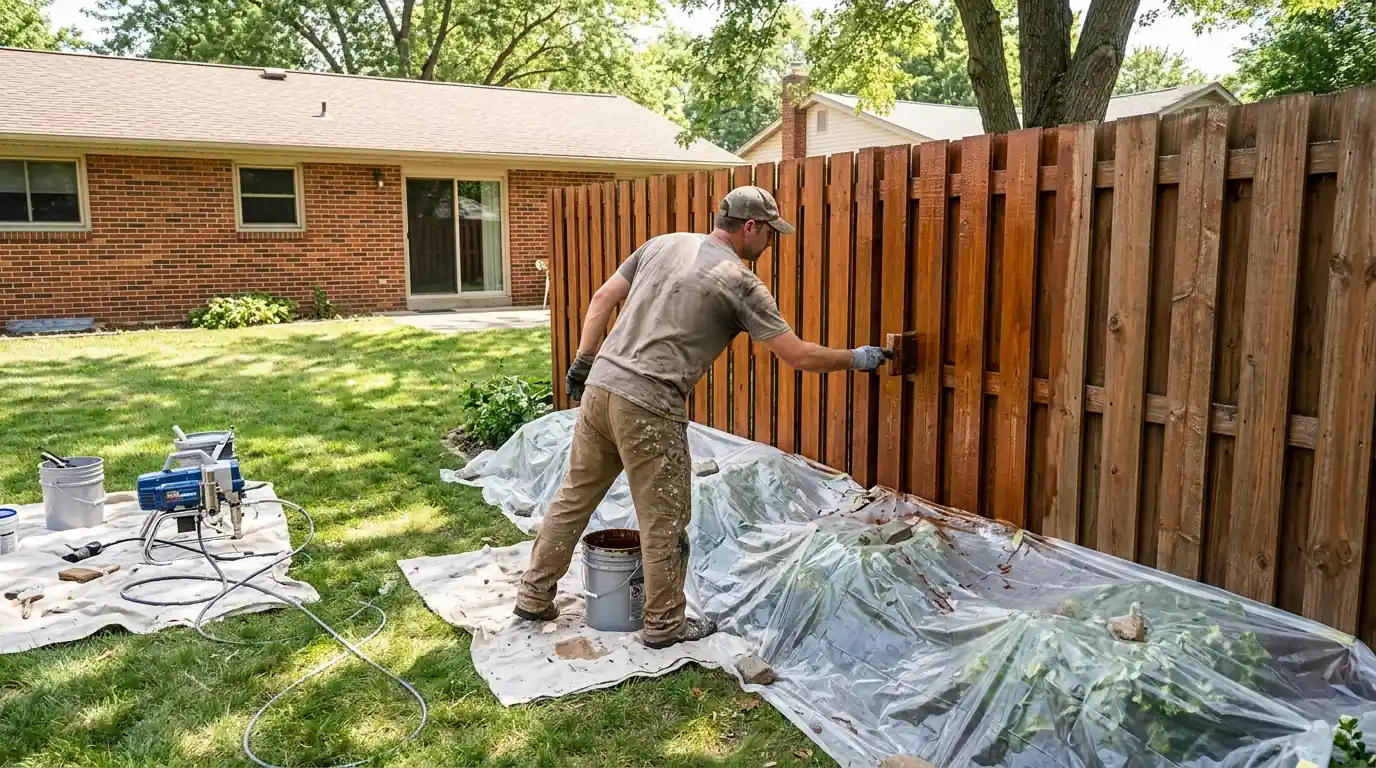
Fence staining is washing a wood fence, letting it dry, fixing loose pickets and brushing or back-rolling a penetrating or solid stain onto every face, post and gate. Painting is the same with primer and exterior paint. Around Park Ridge and the nearby suburbs it typically costs $3.20 to $7.45 per linear foot, depending on height, both sides or one, picket style and how much old coating must come off.
Paint lines we use most, matched to the surface: Benjamin Moore, Sherwin-Williams and PPG for walls and trim, Romabio for limewash, Cabot and Sikkens for wood stain.
Most fences we work on around Park Ridge, Des Plaines and Mount Prospect are six-foot cedar or treated pine privacy fences, board-on-board or shadowbox, built along a back lot line. The bottom of every picket sits close to the grass, so lawn sprinklers and snow piled against it in winter keep the lower foot wet for days at a time.
Fences also get uneven sun. The south face of an east-west fence bleaches and checks while the north face stays damp and grows green algae. A fence can look fine from the patio and be gray and soft on the other side. We look at both faces and the post bases before recommending a coating.
Then there is everything else a fence runs into: string trimmers that chew the bottom boards, dogs that scratch at the gate and climbing plants that hold moisture against the wood. Coating will not stop all of that, but a fence that sheds water lasts years longer than bare boards.
We recommend stain on most cedar fences. A semi-transparent stain keeps the cedar look and wears away gradually, so the next coat is cleaning and restaining instead of scraping. Solid stain covers like paint while still soaking into the surface, and it is the right pick for an older fence with mismatched replacement boards or a fence already coated solid.
Paint suits picket fences in front yards, where a crisp white or a color tied to the house trim matters. It needs a primer on bare wood and repainting when it peels, and fences peel faster than houses because water gets in at every board end. On a long privacy fence, paint usually turns into a maintenance chore.
Changing from paint or solid stain back to a semi-transparent look means stripping the fence to bare wood, which costs much more than recoating. We will tell you plainly when that is not worth it.
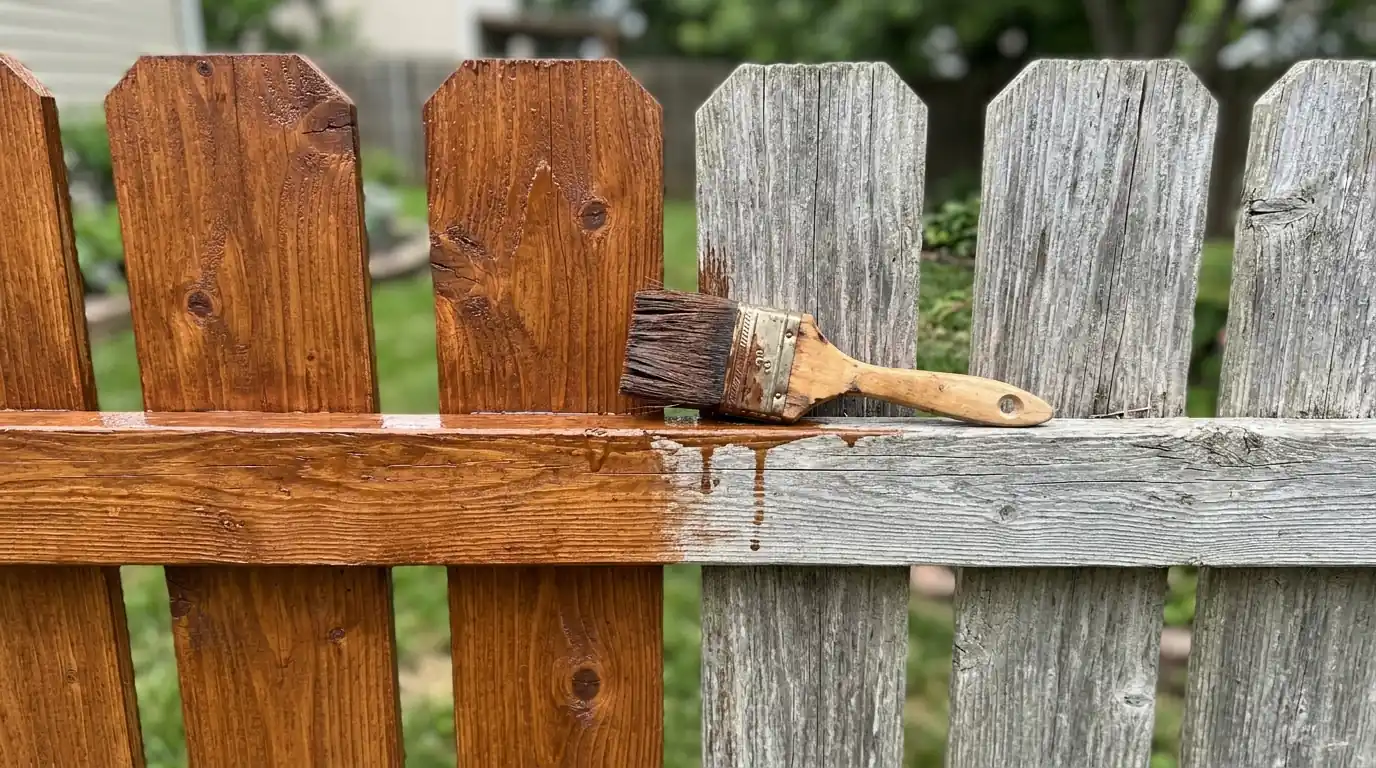
Stain over a loose fence just colors the problem. We reset popped nails with exterior screws, refasten pickets that have pulled away from the rails and replace cracked or rotted boards with matching stock. Leaning posts and sagging gates get flagged, since resetting a post in concrete is fence repair work rather than painting, and we tell you before we start.
We wash with a cleaner and low pressure so the wood does not fuzz, then brighten cedar so the stain soaks in evenly. The fence dries a day or two before coating. Post tops, rail tops and picket ends get extra stain because that is where water sits.
Plants along the fence are watered and covered, and drop cloths go down over mulch beds and the patio. Where the fence faces a neighbor, we stain their side only after you have talked with them, and we cover their plants too.
Lots in Park Ridge, Niles and Morton Grove are often narrow and deep, so a backyard fence can run well over a hundred linear feet with a neighbor on three sides. Big parkway trees drop sap and leaf litter that stains pickets, and road salt spray reaches corner-lot fences near busy streets. Those details shape both the prep and the price.
Further out, in Arlington Heights, Palatine and Buffalo Grove, many fences sit inside townhome or subdivision associations that set a single stain color for every fence in the community. Check your association's approved colors before we order product. Some villages also have rules about which side of a fence must face out, so the nice side may be the neighbor's.
Fence staining fits the dry weeks from late May through September, when O'Hare averages highs between 70 and 84 degrees. Cooler October days can work if overnight temperatures stay above what the can lists.
These usually show on the side of the fence nobody looks at.
Sun has broken down the surface of the wood and stain will not soak in evenly until it is cleaned.
Algae and mildew near the grass line mean the lower boards stay wet too long.
Splits around fasteners let water into the board and loosen it.
Paint lifting at board ends and edges needs scraping before anything new goes on.
Posts that give under a screwdriver at grade need attention before coating.
A gate that drags often has swollen boards or a loose hinge side post.
We check both faces, posts and gates and note anything the neighbor side needs.
Shrubs and flowers are wetted and covered, and tarps go over mulch and patios.
The fence is cleaned at low pressure and cedar is brightened for even absorption.
Pickets are refastened and damaged boards replaced while the wood dries.
Coating is brushed or sprayed and back-brushed into every face, edge and post top.
Covers come off, gates are checked for swing and you walk the run with us.
Fences are priced by the linear foot, with height, sides and condition moving the number.
| What is priced | Typical range | Unit |
|---|---|---|
| Wood fence staining or painting | $3.20 to $7.45 | per linear ft |
| Fence washing as a separate visit | $345 to $890 | per visit |
| Rotted picket, rail or post base repair | $235 to $860 | per spot |
These are typical ranges for fences around Park Ridge, and the walk-through sets the real number for your fence.
Full painting price guideWe take fence staining & painting jobs in Park Ridge and the suburbs around it. A few of the places we work most:
Only after you have talked with your neighbor and they agree. We need access to their yard, and we cover their plants and lawn the same way we cover yours. Staining both faces protects the whole board, so it is worth asking.
New cedar and treated pine usually need several weeks to a few months to dry, depending on season and shade. Treated lumber is often the wettest. We check the boards with a moisture meter and tell you when they are ready.
Not with a semi-transparent stain, because it needs bare wood to soak into. Over sound old paint we can apply a solid stain or repaint. Getting back to a natural look means stripping, which we price separately.
We wet and cover plants before cleaning and coating, because the cleaners and overspray are what cause damage. Plants pressed tight against the fence may need tying back. We tell you before the job if anything has to be trimmed.
A semi-transparent stain on a fence often lasts three to five years, longer than on a deck because vertical boards shed water. Solid stain usually lasts longer still. The south face and the bottom foot of the fence wear first.
Decks washed, brightened and stained with a penetrating or solid stain that suits the age and condition of the boards.
DetailsSiding, brick, decks and walkways washed at the right pressure for the surface, as prep or as yearly upkeep.
DetailsSoft sills, trim and porch parts cut back to sound wood, rebuilt with epoxy or new stock and primed before painting.
DetailsFront step railings, iron fences and gates wire brushed, rust treated and coated with a direct-to-metal enamel.
DetailsCedar shakes, clapboard and board-and-batten cleaned, brightened and stained in a semi-transparent or solid finish.
DetailsCall any hour. Someone picks up, takes the details and books a time to walk the job with you.