Exterior House Painting
Full exterior repaints with scraping, priming of bare wood, caulking and two finish coats, timed to the local paint season.
DetailsExterior painting
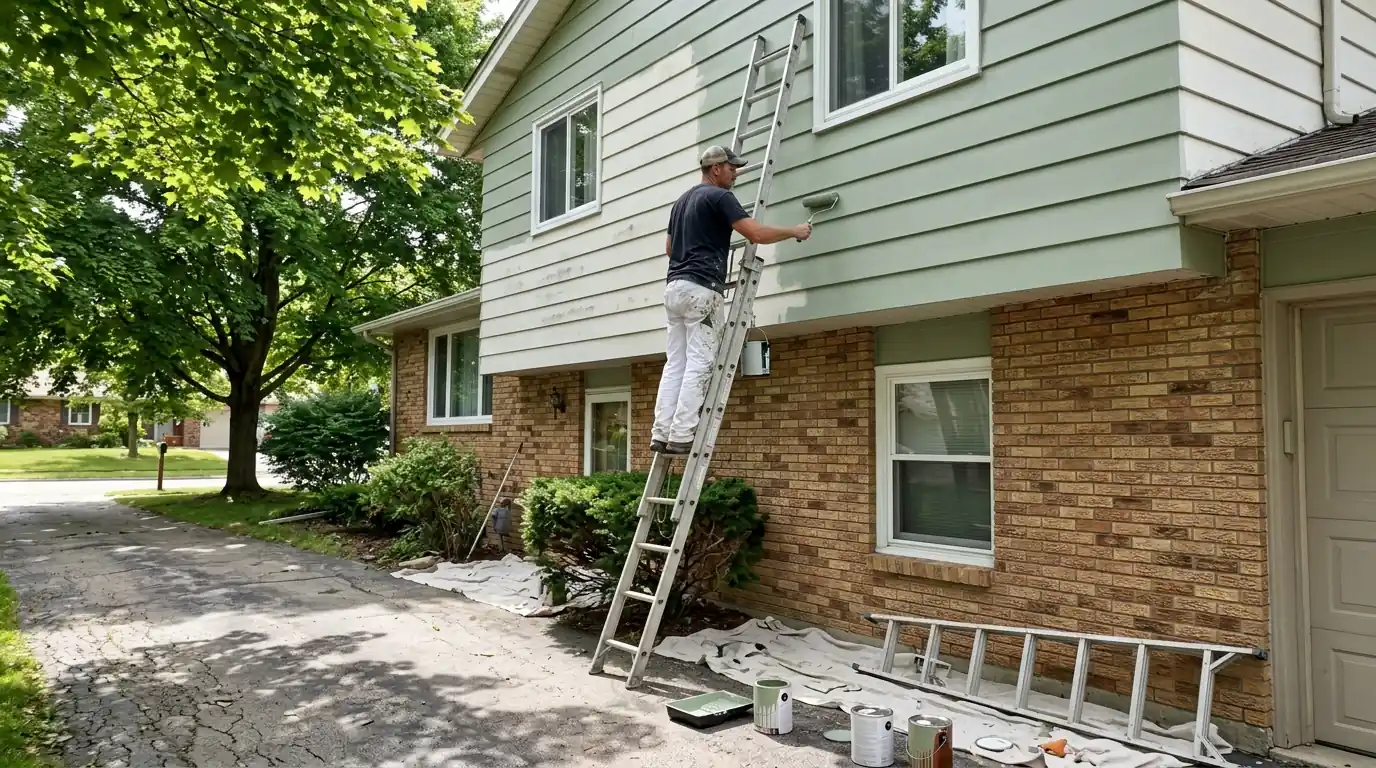
We paint wood clapboard, cedar, aluminum, fiber cement and vinyl siding on split-levels, Colonials and raised ranches around Park Ridge. Each material gets its own wash, primer and finish, so the new color stays on the wall.
Short answer
Siding painting means cleaning the siding, fixing loose or failing spots, priming where the material calls for it and applying two finish coats. Wood needs bare-spot priming, cedar needs a stain-blocking primer, aluminum needs its chalk washed off and vinyl needs a vinyl-safe color. Around Park Ridge and nearby suburbs, siding painting typically costs $2.15 to $4.85 per square foot, depending on the material, condition and wall height.
Paint lines we use most, matched to the surface: Benjamin Moore, Sherwin-Williams and PPG for walls and trim, Romabio for limewash, Cabot and Sikkens for wood stain.
Wood clapboard on older Colonials and on the frame houses near the Metra stations is forgiving, but it moves with humidity, so it needs a flexible acrylic finish. Any spot scraped to bare wood gets an exterior primer, and end grain at board ends and corner boards gets an extra coat because it soaks up water.
Cedar clapboard and shingles bleed tannins, the brown stains that come through light colors. We use a stain-blocking primer on cedar so a white or cream finish stays clean. If you would rather keep the wood grain showing, cedar staining has its own page. Fiber cement on newer homes and teardown rebuilds usually comes factory primed or finished, holds paint very well, and mainly needs a wash, fresh caulk at the butt joints and two acrylic coats.
Aluminum siding went over a lot of suburban homes in the 1960s and 1970s. As it ages it chalks, and that chalk has to come off fully before any coating. We wash it, prime the worst spots with a bonding primer, and note dents and loose panels before we start, because paint will not hide them.
Yes, when the siding is sound and just faded. The catch is heat. A dark color absorbs more sun, and vinyl that gets too hot can warp or buckle on a south wall in July. Paint makers sell vinyl-safe color collections formulated to stay within what the siding can handle, and we stay inside those collections.
Going the same shade or lighter is almost always fine. If you want to go much darker than the current vinyl, we will tell you plainly when it is a risk. Prep on vinyl is mostly washing: mildew, oxidation and dirt must come off completely or the new paint has nothing to hold onto.
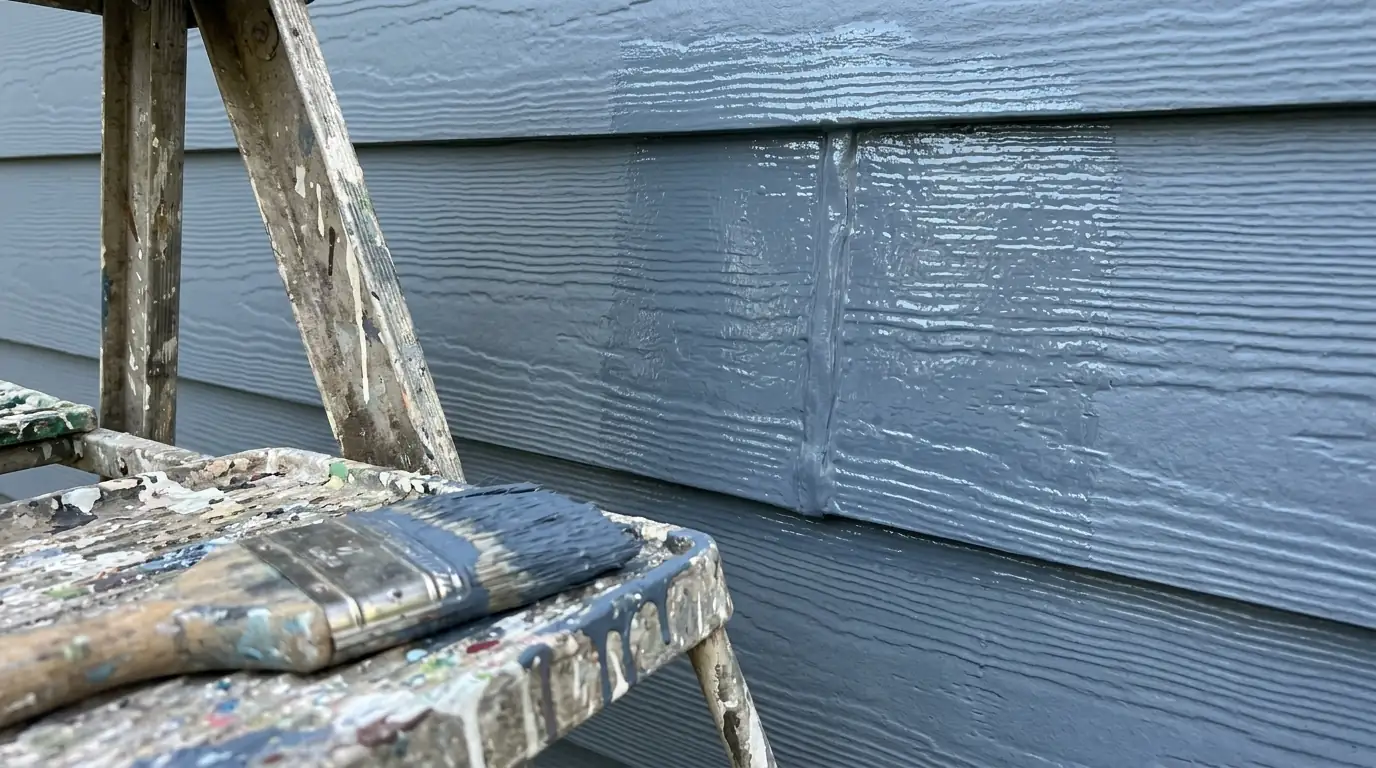
Wood siding on homes in Glen Ellyn, Wheaton and Downers Grove often carries many coats of paint, and the lower layers of anything painted before 1978 may contain lead. We follow EPA lead-safe work practices on that siding: plastic along the foundation, misting before scraping, hand tools or HEPA-attached sanders, and a full chip cleanup each day.
When paint fails in a band across one wall, it is usually a moisture problem, not a paint problem. We look for the source, such as a missing gutter, a downspout dumping against the wall, a bathroom fan venting into the attic, or a sprinkler head hitting the siding every morning. Painting over the symptom means the same band peels again within a couple of years.
Loose or split boards get refastened or replaced before painting. The bottom course near the foundation, where snow piles up and salt from the driveway splashes, gets careful caulking and a full coat on its lower edge.
These are the clues we look for when we walk a sided house.
If a wet rag comes off the siding white or colored, the factory finish has broken down and the panels are ready for a wash and paint.
Tannin bleed through a light color means the cedar was not primed with a stain blocker. It keeps coming back until it is.
Paint lifting across a single stretch of wall points to moisture behind it. We find the source before we recoat.
Color that has gone flat on the sunny sides while the north side still looks fine is normal aging, and it is easier to fix before the coating fails.
Gaps where fiber cement or wood boards meet let water behind the siding. Fresh caulk and paint close them.
Algae and mildew on walls under big trees need a mildewcide wash before paint, or they grow back through it.
We confirm the material on each wall, since many houses mix brick, aluminum and wood, and note dents, loose boards and failing areas.
Chalk, dirt and mildew come off with the right cleaner and pressure for the material, then the house dries for at least a day.
Loose paint is scraped with lead-safe methods where needed, boards are refastened, and soft wood is repaired.
Bare wood, cedar and chalky aluminum get the primer they call for. Fiber cement and sound vinyl often skip this step.
Open joints get flexible caulk, then two finish coats go on in the sun and shade windows that suit the product.
We walk each wall with you and fix any holidays or missed spots before we pack up.
Siding is priced by area, adjusted for material and condition. Most houses fall within these ranges.
| What is priced | Typical range | Unit |
|---|---|---|
| Siding painting, wood, fiber cement, aluminum or vinyl | $2.15 to $4.85 | per sq ft |
| Pressure washing a house before painting | $345 to $890 | per house |
| Wood rot repair on boards or trim | $235 to $860 | per spot |
These are typical suburban ranges, and the walk-through of your siding sets the actual price.
Full painting price guideBetween December and March, siding near O'Hare goes through repeated freeze and thaw cycles. Water that soaks into bare wood or open seams freezes, expands and lifts paint from behind. That is why we put the most work into end grain, corner boards and the bottom courses, where snow piles against the wall and salt from the driveway and street splashes up.
Many split-levels and raised ranches in Mount Prospect, Arlington Heights, Hanover Park and Streamwood have aluminum or vinyl siding on the upper level with wood trim, and sometimes brick below. We paint what is there; we do not strip cladding unless you ask. Hanover Park and Streamwood homes in particular often pair aluminum siding with wood fascia and garage doors that wear first.
In townhome associations, siding colors are usually set by the board. Check your association's approved colors before we order paint, and we can match the existing color or the new approved scheme.
We take siding painting jobs in Park Ridge and the suburbs around it. A few of the places we work most:
Stay with the same shade or lighter, or choose from a paint maker's vinyl-safe color collection. Those are formulated to keep the siding from overheating and warping. We will flag any color that is a real risk on your sunny walls.
Yes, once the chalk is fully washed off and the worst spots get a bonding primer. A good acrylic over clean aluminum holds up well. Dents and loose panels stay visible, so we note those first.
Cedar contains water-soluble tannins that migrate into light paint. A stain-blocking primer stops it. If cedar was painted without one, the streaks keep returning until the siding is primed properly.
Usually, because there is less wall area and less height, and many raised ranches have brick on the lower level. Gable ends, ladder access over landscaping and the condition of the old paint still move the price.
Yes. Once the factory finish fades, we wash it, recaulk the butt joints and apply two coats of exterior acrylic. Fiber cement holds paint very well, so prep is light compared with old wood.
Full exterior repaints with scraping, priming of bare wood, caulking and two finish coats, timed to the local paint season.
DetailsCedar shakes, clapboard and board-and-batten cleaned, brightened and stained in a semi-transparent or solid finish.
DetailsSiding, brick, decks and walkways washed at the right pressure for the surface, as prep or as yearly upkeep.
DetailsSoft sills, trim and porch parts cut back to sound wood, rebuilt with epoxy or new stock and primed before painting.
DetailsEaves, soffits, fascia boards and frieze trim painted from ladders and lifts, with soft spots flagged before coating.
DetailsCall any hour. Someone picks up, takes the details and books a time to walk the job with you.