Siding Painting
Wood clapboard, cedar shingle, fiber cement and aluminum siding cleaned and coated with the right primer for each.
DetailsExterior painting
We stain cedar shakes, clapboard and board-and-batten on 1950s to 1990s homes around Park Ridge, Northbrook and Deerfield. The siding is washed, brightened and dried before semi-transparent or solid stain goes on, so the wood stays sound.
Short answer
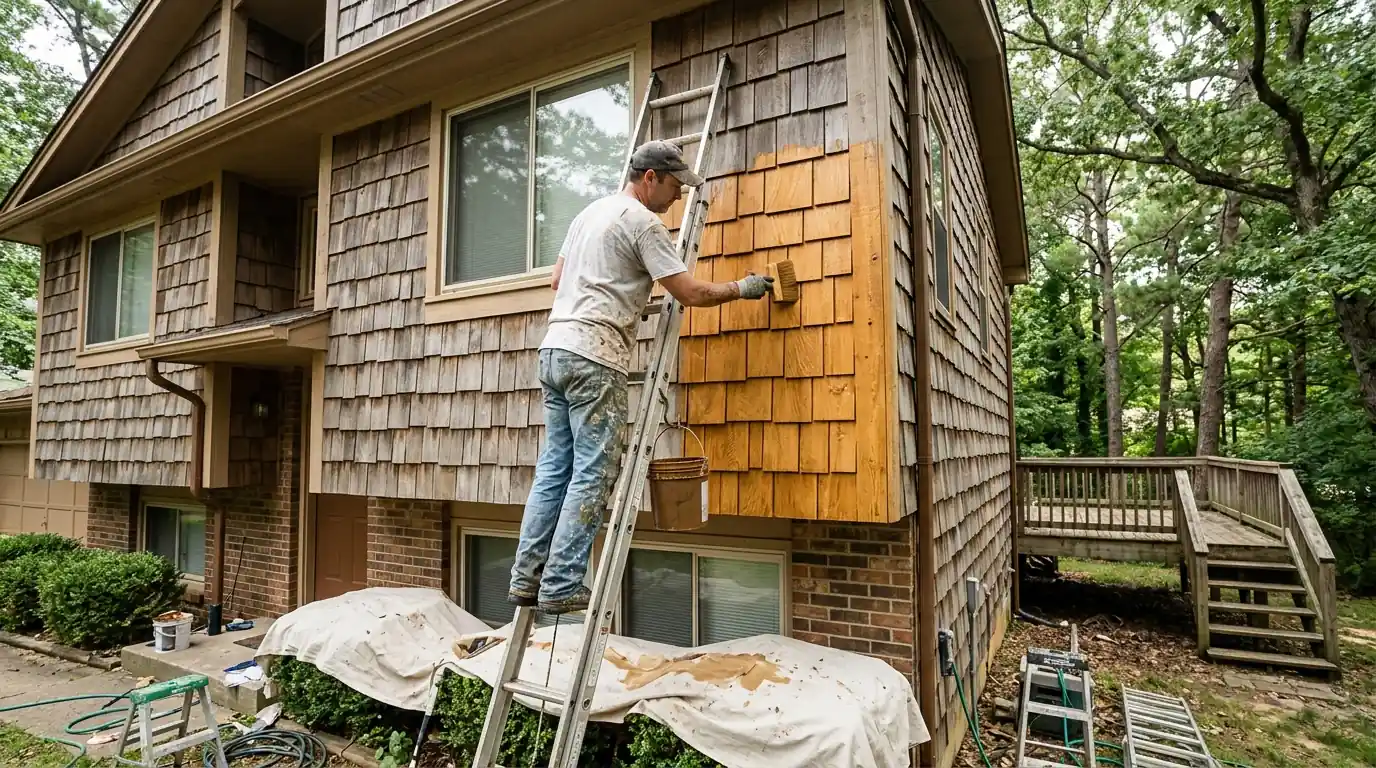
Cedar siding staining means cleaning off gray weathered fibers and mildew, brightening the wood, letting it dry, then brushing in a semi-transparent or solid stain. Semi-transparent shows the grain and needs recoating more often; solid covers more and lasts longer. Around Park Ridge and the nearby suburbs, cedar siding staining typically costs $1.95 to $4.40 per square foot, depending on the siding style, the existing finish and wall height.
Paint lines we use most, matched to the surface: Benjamin Moore, Sherwin-Williams and PPG for walls and trim, Romabio for limewash, Cabot and Sikkens for wood stain.
Cedar went on a lot of suburban homes built from the 1950s through the 1990s: shake fronts on split-levels, clapboard on contemporaries and two-story Colonials, and board-and-batten on ranches and mid-century homes. All three are the same wood, but they take stain differently.
Shakes have deep, rough faces and overlapping edges, so they soak up a lot of stain and need it worked into the butts and gaps with a brush. Clapboard is smoother, and the lap edges and nail lines are where stain wears through first. Board-and-batten has long vertical runs and battens that shed water down their faces, so we pay close attention to the bottom ends where water sits.
Rough-sawn cedar faces hold more stain than smooth-planed ones, which changes coverage and how long the finish lasts. We check the face of your siding before we price the job and before we pick a product.
Semi-transparent stain soaks into the wood and tints it while the grain and texture still show. It never peels, because there is no film on top, but it wears faster, especially on south and west walls. It only works on cedar that is bare or has been semi-transparent before. You cannot go back to semi-transparent over a solid stain without stripping the siding.
Solid stain looks closer to a flat paint but stays thinner and lets the texture show. It covers color differences, old repairs and patches of weathered wood, and it usually lasts longer between coats. Once a house has gone solid, it generally stays solid. Brands such as Cabot, Sikkens and Sherwin-Williams make both types in oil and water-based versions.
If your cedar was painted years ago, staining is no longer an option on those boards, and the job moves to siding painting with a stain-blocking primer. We tell you which side of that line your house is on at the walk-through.
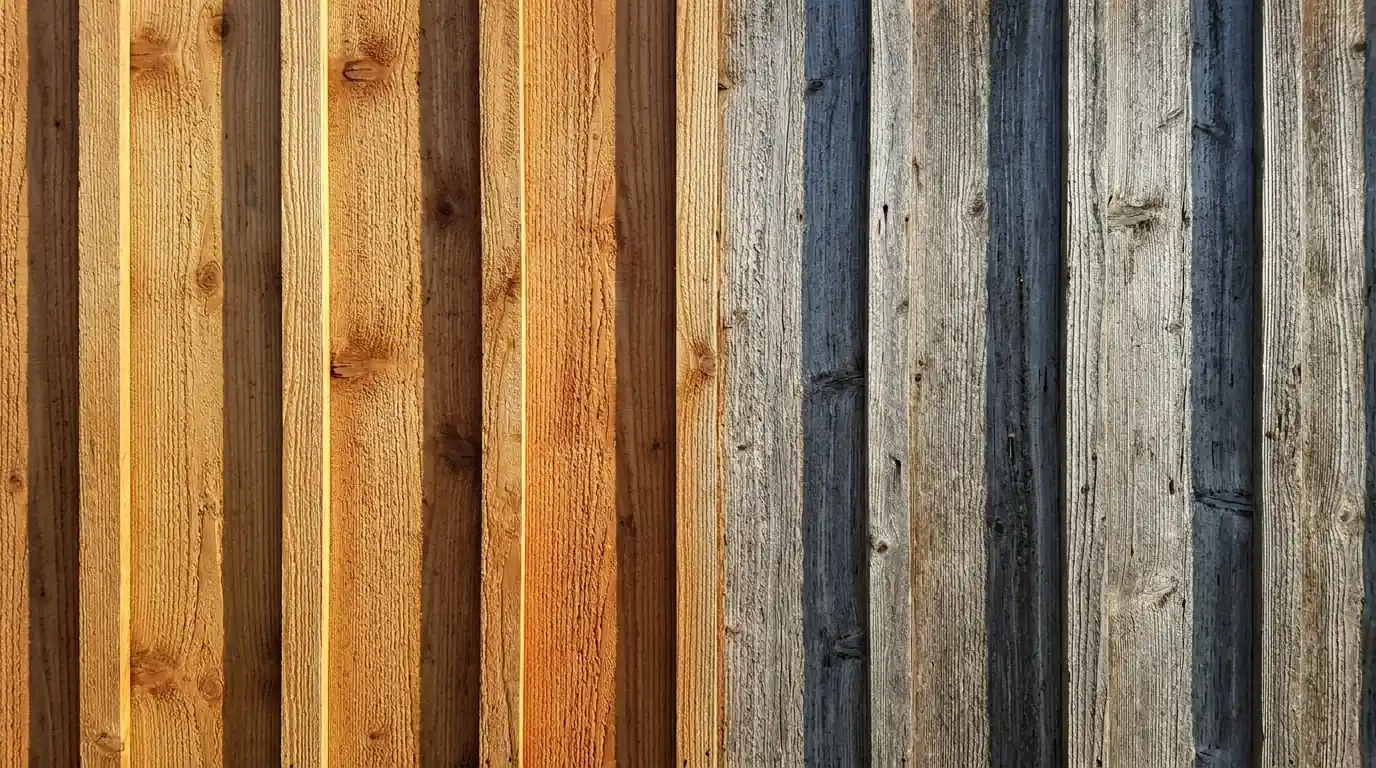
Cedar left uncoated turns gray as sunlight breaks down the surface fibers. Stain applied over that gray layer sits on loose fibers and lets go early. So we wash the siding with a cedar cleaner at low pressure, which lifts the gray layer, mildew and old worn stain without furring up the wood. A brightener follows, which restores the wood color and balances the surface so stain soaks in evenly.
Then the siding needs to dry, usually two or more dry days depending on sun and humidity. Stain goes on by brush, or sprayed and then back-brushed into the wood. On homes built before 1978, if any trim or siding carries old paint, we follow EPA lead-safe work practices wherever that paint is disturbed.
Northbrook has a lot of 1950s to 1990s homes with cedar siding and large decks, and Deerfield homes from the 1950s and 1960s often have cedar or redwood siding that needs regular stain. Prospect Heights and Highland Park homes on wooded lots and in ravines see heavy shade and moisture, which grows mildew on cedar faster than on open lots. Those shaded walls usually need cleaning every visit and sometimes more frequent recoats.
Recoat cycles depend on exposure and product. As a rough guide, semi-transparent stain on sunny walls often needs a fresh coat every few years, and solid stain lasts longer than that. Shaded north walls wear slower but mildew faster. We note which walls wore first on your house and suggest when to check them next.
Cedar stain needs the same weather as paint: dry wood, temperatures within the range on the can, and no rain for the rest of the day. Around O'Hare that usually means May through early October, with September often the best month for it.
Cedar tells you when its finish is worn if you know where to look.
When the south and west walls turn silver while the north side keeps its color, the stain has worn through there.
Splash water on the siding. If it soaks in and darkens the wood right away, the protection is gone.
Mildew on shaded cedar spreads quickly and has to be cleaned off before new stain, or it grows right through.
Shakes that cup or crack are drying out. Stain helps the sound ones, and the broken ones should be replaced first.
Solid stain lifting in sheets usually points to moisture behind the siding or a coat that went on too thick.
Dark streaks below nail heads come from older fasteners reacting with cedar. We spot treat them before staining.
We test whether the siding carries semi-transparent stain, solid stain or paint, since that decides what can go on next.
Beds, glass, brick and the driveway are covered or wetted down so cleaner and stain do not land where they should not.
Low pressure and a cedar cleaner lift the gray layer, mildew and worn stain without damaging the wood.
A brightener restores the wood color, then the siding dries for at least two days before any stain goes on.
Split shakes and broken boards are swapped, loose ones refastened, and open joints at trim are caulked.
Stain is brushed into every face, butt and lap edge, with a second coat where the product and wood call for it.
Cedar staining is priced by wall area, and the condition of the wood and the old finish move it most.
| What is priced | Typical range | Unit |
|---|---|---|
| Cedar siding stain, semi-transparent or solid | $1.95 to $4.40 | per sq ft |
| Pressure washing a house as prep | $345 to $890 | per house |
| Wood rot repair on boards or trim | $235 to $860 | per spot |
These ranges are typical, and the walk-through of your siding sets the actual number.
Full painting price guideWe take cedar siding staining jobs in Park Ridge and the suburbs around it. A few of the places we work most:
Semi-transparent stain on sunny walls often needs a fresh coat every few years, and solid stain lasts longer. Shaded walls wear slower but need mildew cleaning. We look at which walls faded first and set a check date from that.
Not without stripping the solid stain off first, which is slow and costly on shakes. In most cases we stay with solid, or choose a lighter solid color. Semi-transparent is best decided before a house ever goes solid.
Cleaners lift the gray layer and mildew, but they can leave the wood dark and uneven. A brightener restores the natural color and evens out the surface so stain soaks in at the same rate across each wall.
Yes. Shakes have rough faces and gaps between the butts, so they take more stain and must be back-brushed by hand. Clapboard goes faster, with most of the attention on lap edges and nail lines.
No. Stain needs bare wood or old stain to soak into. Painted cedar stays painted, and we use a stain-blocking primer under the new paint to stop tannin bleed.
Usually at least two dry days after washing, and longer after rain or on shaded walls. We check the wood before staining rather than going by the calendar.
Wood clapboard, cedar shingle, fiber cement and aluminum siding cleaned and coated with the right primer for each.
DetailsDecks washed, brightened and stained with a penetrating or solid stain that suits the age and condition of the boards.
DetailsSiding, brick, decks and walkways washed at the right pressure for the surface, as prep or as yearly upkeep.
DetailsSoft sills, trim and porch parts cut back to sound wood, rebuilt with epoxy or new stock and primed before painting.
DetailsFull exterior repaints with scraping, priming of bare wood, caulking and two finish coats, timed to the local paint season.
DetailsCall any hour. Someone picks up, takes the details and books a time to walk the job with you.