Woodwork Staining & Varnishing
Original oak and pine woodwork cleaned, touched up and recoated so the grain stays visible instead of hidden under paint.
DetailsInterior painting
We refinish staircases in homes across Park Ridge and the nearby suburbs, from oak center-hall stairs in Georgians to the short runs in split-levels and the enclosed stairs of 1920s bungalows. Treads, risers, spindles and handrails get stained or painted, and you keep a way up and down.
Short answer
Staircase refinishing means repairing loose parts, sanding or stripping the treads, risers, spindles and handrail, then staining and clear coating or painting each part in stages so the stairs stay usable. In Park Ridge and nearby suburbs a full staircase runs $1,450 to $4,380, depending on the number of steps, spindle count, stripping needs and whether the finish is stain, paint or a two-tone mix.
Paint lines we use most, matched to the surface: Benjamin Moore, Sherwin-Williams and PPG for walls and trim, Romabio for limewash, Cabot and Sikkens for wood stain.
Stairs take more wear than any floor in the house, so the finish has to match the use. Stained oak treads with a durable floor-grade clear coat hold up well and hide scuffs. Painted treads look sharp but show wear on the front edge, so they suit stairs with a runner or light traffic.
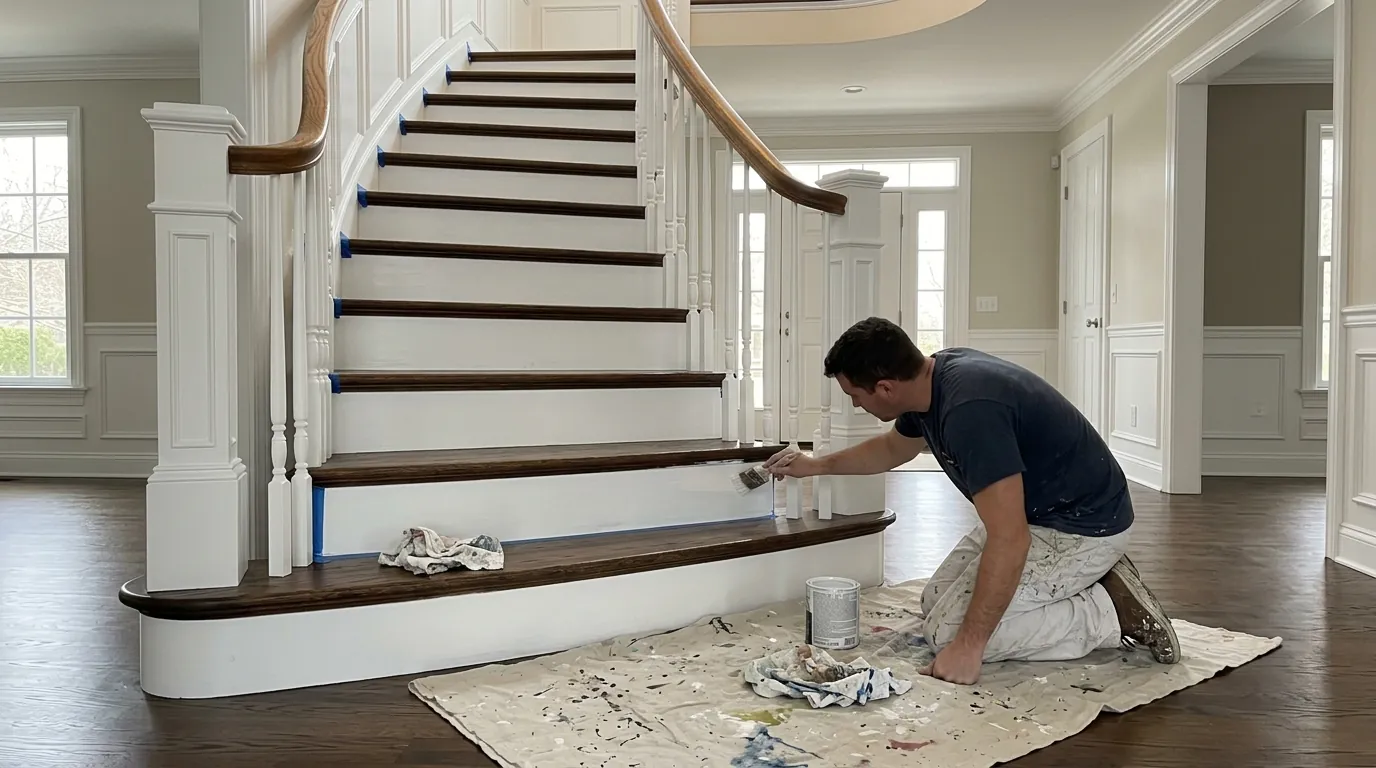
The most popular look in suburban homes right now is two-tone: stained treads and handrail, with white or off-white risers, spindles and skirt boards. It keeps the warmth of wood where feet and hands go and the clean look of paint everywhere else.
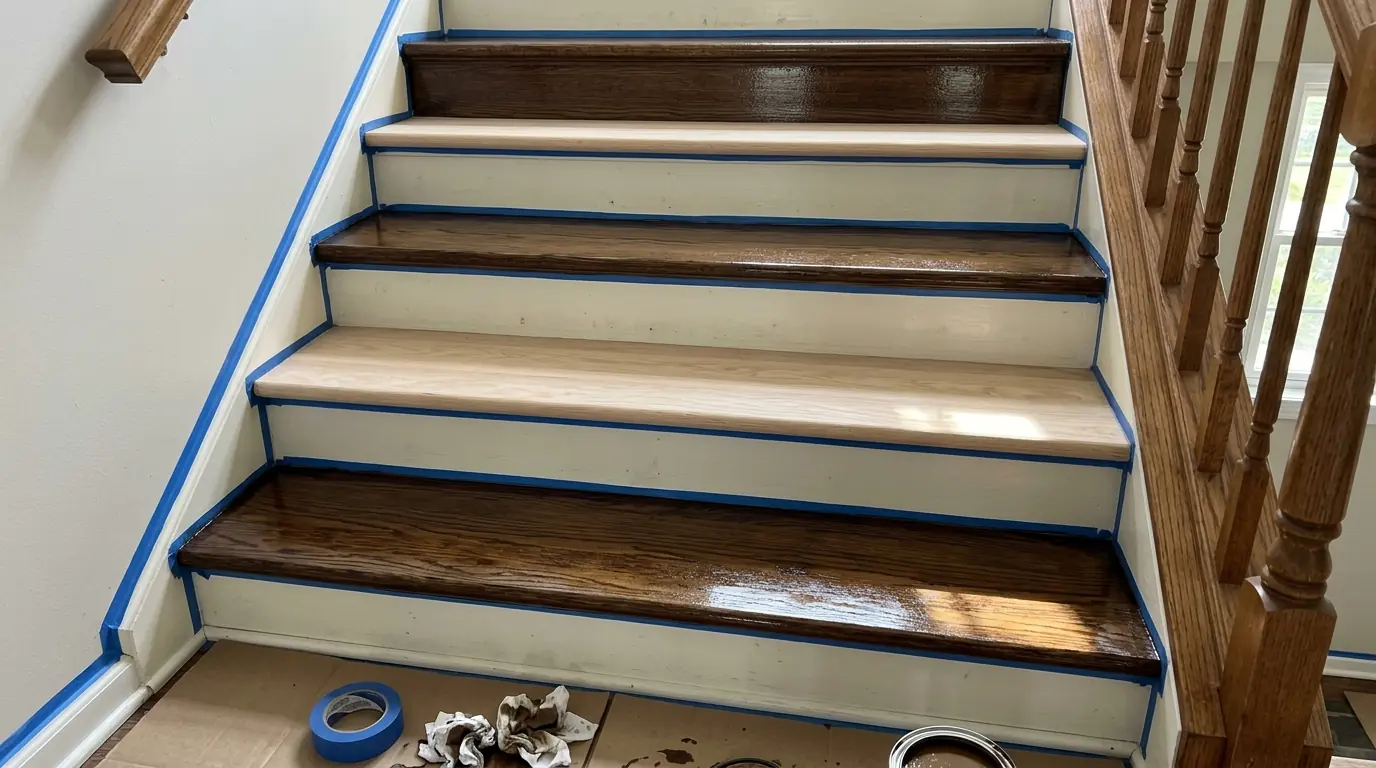
In most two-story homes the staircase is the only way to the bedrooms, so we plan the work in stages. On treads, we finish every other step first, let them cure, then do the rest. That way you can always climb using the dry steps.
Spindles, risers and the rail can be done while the treads are still usable, and we put up signs and tape so everyone in the house knows which parts are wet. We tell you the cure time for each coat before we start so you can plan around it.
Before any finish goes on, we fix what moves. Loose balusters get glued or pinned, a wobbly newel post gets tightened, and squeaky treads get screwed down from below where we can reach. Splits and dents in treads are filled or patched.
For stain, we sand the treads down to bare wood. Spindles and handrails with heavy old finish or paint may need stripping, which takes the most time. For paint, we scuff sand, fill and prime. Oak that was hidden under carpet for decades often sands up well, though staple holes and paint drips along the edges need attention first.
Painted stairs and banisters in pre-1978 homes may have lead in the older layers. That includes most postwar Georgians and Colonials as well as older homes in Evanston, Oak Park and the North Shore. Treads and handrails wear constantly, and sanding them without precautions spreads lead dust through the house.
We follow EPA lead-safe work practices on these jobs: plastic sheeting over the stairwell and floors below, misting before sanding, HEPA vacuums and a cleaning check at the end.
Stairs show wear in the same places in almost every house.
A pale stripe down the middle of each tread means the clear coat is gone and the wood is wearing.
Shoes mark painted or stained risers, and they look dull fast.
Old varnish breaks down with hand oils and turns tacky.
Vacuums, toys and pets knock paint off spindles, especially near the bottom.
A wobble means glue joints have failed and need fixing before finishing.
Oak stairs from the 1980s and 1990s amber with age and clash with newer floors.
We check the wood and old finish and help you pick stain, paint or two-tone.
Floors at the top and bottom are covered, and lead-safe setup goes in where needed.
Balusters, newel posts and squeaky treads are tightened before any sanding.
Treads and rails are sanded to bare wood for stain, or scuffed and primed for paint.
Alternate treads are finished first so the stairs stay usable, then the rest.
We apply the final clear coat or enamel and walk the stairs with you before we leave.
We price stairs as a whole job, with nearby trim and lead-safe setup listed separately.
| What is priced | Typical range | Unit |
|---|---|---|
| Staircase refinish, treads, risers, spindles and rail | $1,450 to $4,380 | per staircase |
| Skirt boards and stairwell trim | $1.85 to $4.40 | per linear ft |
| Lead-safe setup for a painted stairwell | $145 to $385 | per room |
These ranges are typical, and the walk-through sets the real number for your staircase.
Full painting price guideGeorgians and Colonials in Park Ridge, Glenview and Northbrook usually have a center-hall staircase with oak treads, a painted or stained handrail and a long row of spindles. Those are the biggest staircase jobs we do. Split-levels and raised ranches in Mount Prospect, Arlington Heights and Palatine have short runs of six to eight steps between levels, often with a wrought iron or wood rail that just needs refreshing.
Older bungalows and foursquares in Elmhurst, Berwyn and Lombard often have enclosed stairs with painted treads and a simple rail, while Victorian and Prairie homes in Oak Park and Evanston can have elaborate original staircases worth careful restoration. We plan the work around school and work schedules so the household keeps a dry route upstairs.
We take staircase & banister refinishing jobs in Park Ridge and the suburbs around it. A few of the places we work most:
Yes. We finish every other tread first, let it cure, then do the rest. You can always climb using the dry steps, and we mark the wet parts clearly.
Stained treads with a floor-grade clear coat hide wear better than paint. Painted treads look great but show scuffs on the front edge, so they suit stairs with a runner or lighter use.
Most staircases take four to seven working days, depending on spindle count, stripping and cure time between coats. Two-tone finishes add time for masking.
Usually yes. We pull staples and tack strips, fill the holes and sand to bare wood. Oak that was protected by carpet often looks good once it is sanded and stained.
It can be. Painted stairs and rails in older homes may have lead in the lower layers, and treads wear constantly. We follow EPA lead-safe work practices whenever we sand or scrape them.
We use a hard, fully curing clear coat or enamel and let it cure before heavy use. Sticky rails usually come from a soft varnish breaking down with hand oils, so we strip that layer first.
Original oak and pine woodwork cleaned, touched up and recoated so the grain stays visible instead of hidden under paint.
DetailsBaseboards, casings and crown molding caulked, sanded and brushed to a clean line against the wall color.
DetailsPainting in pre-1978 homes using EPA lead-safe work practices: containment, wet methods and HEPA cleanup.
DetailsWalls, ceilings and trim in occupied homes, with furniture moved, floors covered and rooms handed back each evening.
DetailsCall any hour. Someone picks up, takes the details and books a time to walk the job with you.