Brick Painting
Previously painted brick and masonry recoated with breathable masonry paint after cleaning, repointing checks and priming.
DetailsExterior painting
We apply limewash and mineral silicate paint to brick ranches, Georgians, chimneys and fireplaces around Park Ridge. These breathable finishes soften or change the color of masonry without sealing moisture into the wall, and we start with a dry sample panel.
Short answer
Limewash is a lime-based finish that soaks into bare brick or stone and hardens inside the surface, leaving a matte, breathable color that wears slowly instead of peeling. Mineral silicate paint bonds into masonry for a more even, longer-lasting color. Both need bare, porous masonry. Around Park Ridge and nearby suburbs, limewash or mineral paint typically costs $3.10 to $6.95 per square foot, depending on coats, prep and wall height.
Paint lines we use most, matched to the surface: Benjamin Moore, Sherwin-Williams and PPG for walls and trim, Romabio for limewash, Cabot and Sikkens for wood stain.
Ordinary acrylic paint forms a film on top of the surface. Limewash does not. It soaks into porous brick, reacts with carbon dioxide in the air and hardens back toward limestone inside the surface. The result is a matte, chalky finish that lets water vapor pass through, and it wears slowly over years rather than peeling.
Mineral silicate paint works differently but aims for the same thing. It bonds chemically with the mineral surface, so it becomes part of the masonry instead of sitting on it. It gives a more even, solid color than limewash and lasts longer between coats while staying breathable.
Both need bare or mineral surfaces. Limewash will not stick to brick already coated with acrylic or oil paint. If your brick has been painted, the job moves to brick painting with a masonry paint, or to a conversation about whether the old coating can come off.
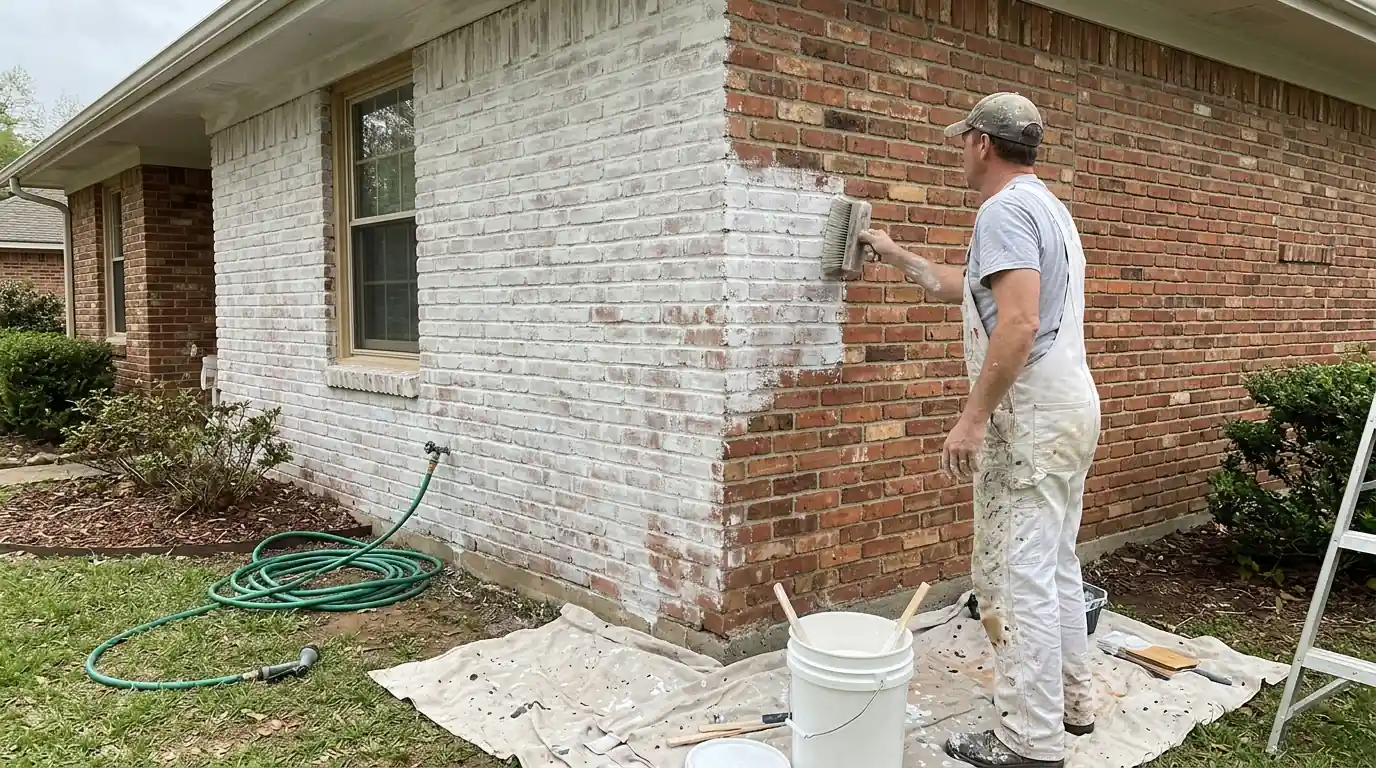
Limewash can read several ways depending on how it goes on. Brushed in one thin coat, it lets the brick color show through. Brushed on and then partly washed back with water while still wet, it gives the aged, old-world patina people often ask about for brick ranches and Tudor chimneys. Built up in two or three coats, it covers more fully but still reads softer than paint.
We always brush a sample panel on a hidden part of the wall and let it dry for at least a day. Limewash goes on dark and dries much lighter, and the color of the brick underneath changes how it reads. A dry sample in your own light avoids surprises across a whole house front.
Makers such as Romabio sell both limewash and mineral paint lines. We choose a product for the wall and the look you want, and only after checking its data for use on bare masonry.
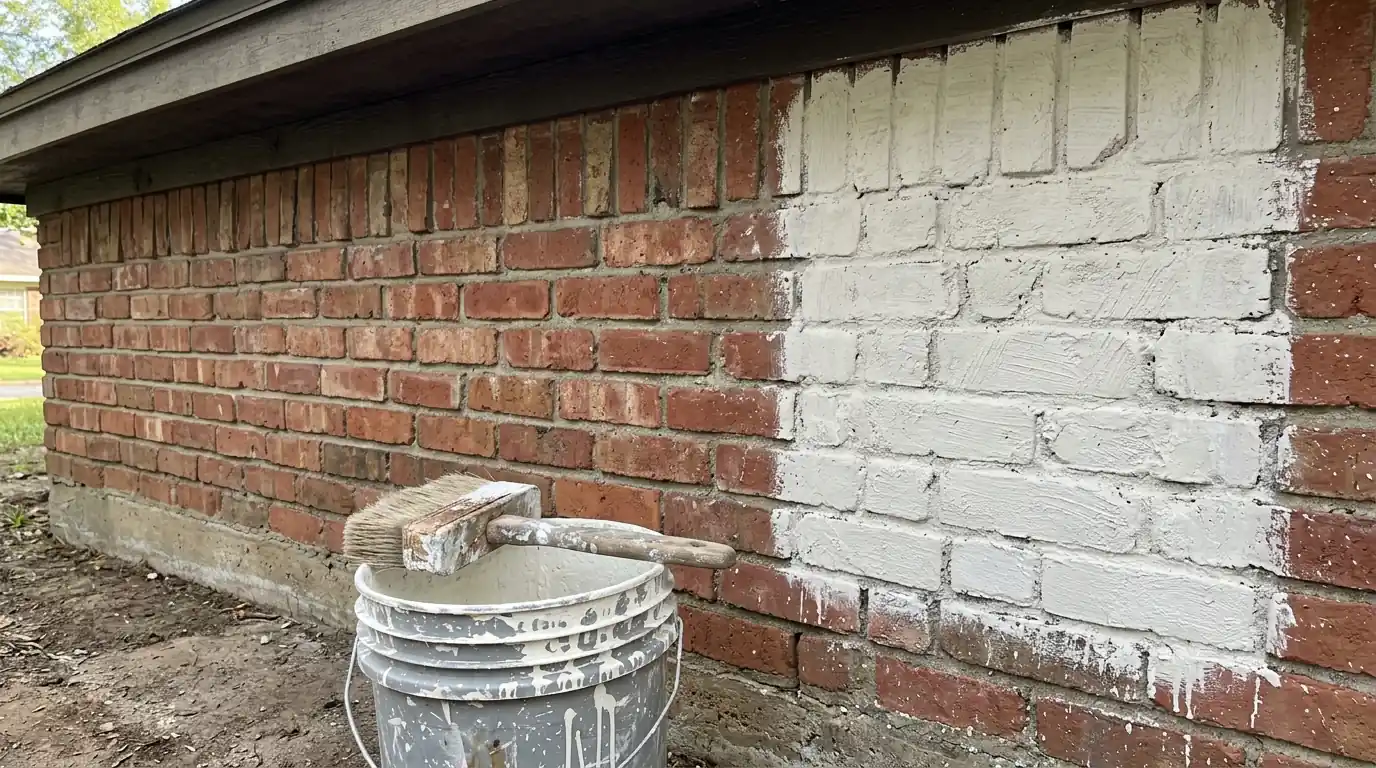
Limewash needs clean, damp, porous masonry. We wash the brick to remove dirt, mildew and loose material, then mist it right before applying so the lime does not dry too fast. It also wants moderate temperatures and slow drying, so we avoid hot afternoons in full sun and cold days near the bottom of the product's range. Mild days in late May, June and September usually suit it best near O'Hare.
Mortar joints must be sound before any finish goes on. Where joints are cracked or soft, we flag them for pointing first. Indoors, limewash on a brick fireplace surround or a basement brick wall follows the same steps, with floors and the hearth covered and the firebox left alone.
These are the situations where we usually suggest limewash or mineral paint over regular paint.
Postwar ranch brick that feels heavy or dated can be softened toward white or gray while still reading as brick.
A newer addition or patch in a different brick can be blended with the original using a mineral paint or fuller limewash.
Bare masonry is what limewash needs. It changes the color without the film and peeling risk of paint.
Walls that hold some moisture do better with a breathable finish than with a tight film that traps water.
Interior brick fireplace surrounds take limewash well and look softer than a painted fireplace.
We test whether any sealer or paint is on the brick, since limewash only bonds to clean, porous masonry.
A sample goes on a hidden area and dries for at least a day so you see the real color in your light.
The masonry is washed, windows, trim and plants are covered, and the walk and driveway are protected.
Small mortar gaps are filled or flagged for a mason before any finish goes on.
We dampen the wall and brush the limewash or mineral paint into the brick and mortar, working in sections.
For a patina we wash back while wet; for coverage we let it cure and apply the next coat.
Limewash is priced by wall area, and the number of coats and the prep needed move the number most.
| What is priced | Typical range | Unit |
|---|---|---|
| Limewash or mineral paint on brick or stone | $3.10 to $6.95 | per sq ft |
| Pressure washing before application | $345 to $890 | per house |
| Color consultation with sample panels | $165 to $345 | per visit |
These are typical ranges, and our walk-through and sample panel set the real number for your wall.
Full painting price guideBrick ranches and Georgians in Park Ridge, Niles, Morton Grove and Des Plaines are the most common limewash jobs we see. Owners like that it softens the brick without the look of a painted house, and that it wears gradually. When it thins out years later, another coat can go on without scraping.
Freeze-thaw cycles are the main reason we like breathable finishes on masonry here. Water that gets into a wall needs a way out. A film paint can trap it, and when it freezes it pushes the coating off or breaks the brick face. Limewash and mineral paint let that moisture leave.
Limewash still changes how unpainted brick looks from the street. If your house is in a local historic district in Oak Park, Evanston or Hinsdale, check with the village or city first before any coating goes on unpainted brick or stone. In townhome communities, check your association's approved colors. Interior fireplaces and walls not visible from the street are usually a simpler choice.
We take limewash & mineral paint jobs in Park Ridge and the suburbs around it. A few of the places we work most:
Limewash wears gradually rather than peeling, with the sunny and splash-prone areas thinning first. How long it lasts depends on the number of coats, exposure and how much wash-back was used. When it thins, another coat goes on without scraping.
No. Limewash needs bare, porous masonry to soak into. Over paint it will not bond and will rub off. Painted brick needs a masonry paint instead, or the old coating removed first.
Fresh limewash can often be partly washed back while still wet, and some products can be scrubbed off in the first days. Once fully cured it is much harder to remove, which is why we always do a dry sample panel first.
Yes. We cover the floor and hearth, wash the brick, mist it and brush the limewash on in thin coats. The inside of the firebox is left alone. Most fireplace surrounds take a day or two including drying.
Limewash gives a soft, uneven, chalky look and wears slowly over time. Mineral silicate paint bonds into the masonry for a more even, solid color that lasts longer between coats. Both stay breathable.
Previously painted brick and masonry recoated with breathable masonry paint after cleaning, repointing checks and priming.
DetailsLarge painted samples on your actual walls, checked in morning and evening light before a single gallon is ordered.
DetailsSiding, brick, decks and walkways washed at the right pressure for the surface, as prep or as yearly upkeep.
DetailsFull exterior repaints with scraping, priming of bare wood, caulking and two finish coats, timed to the local paint season.
DetailsCall any hour. Someone picks up, takes the details and books a time to walk the job with you.