Porch Painting
Front porch floors, steps, ceilings, columns and railings scraped, repaired where soft and coated with porch enamel or stain.
DetailsExterior painting
Wrought iron front step railings, ornamental fences and gates rust fastest where salt and snow sit. We wire brush, treat, prime and paint railings, fences and gates in Park Ridge and the suburbs around it so the iron stays solid and the finish lasts.
Short answer
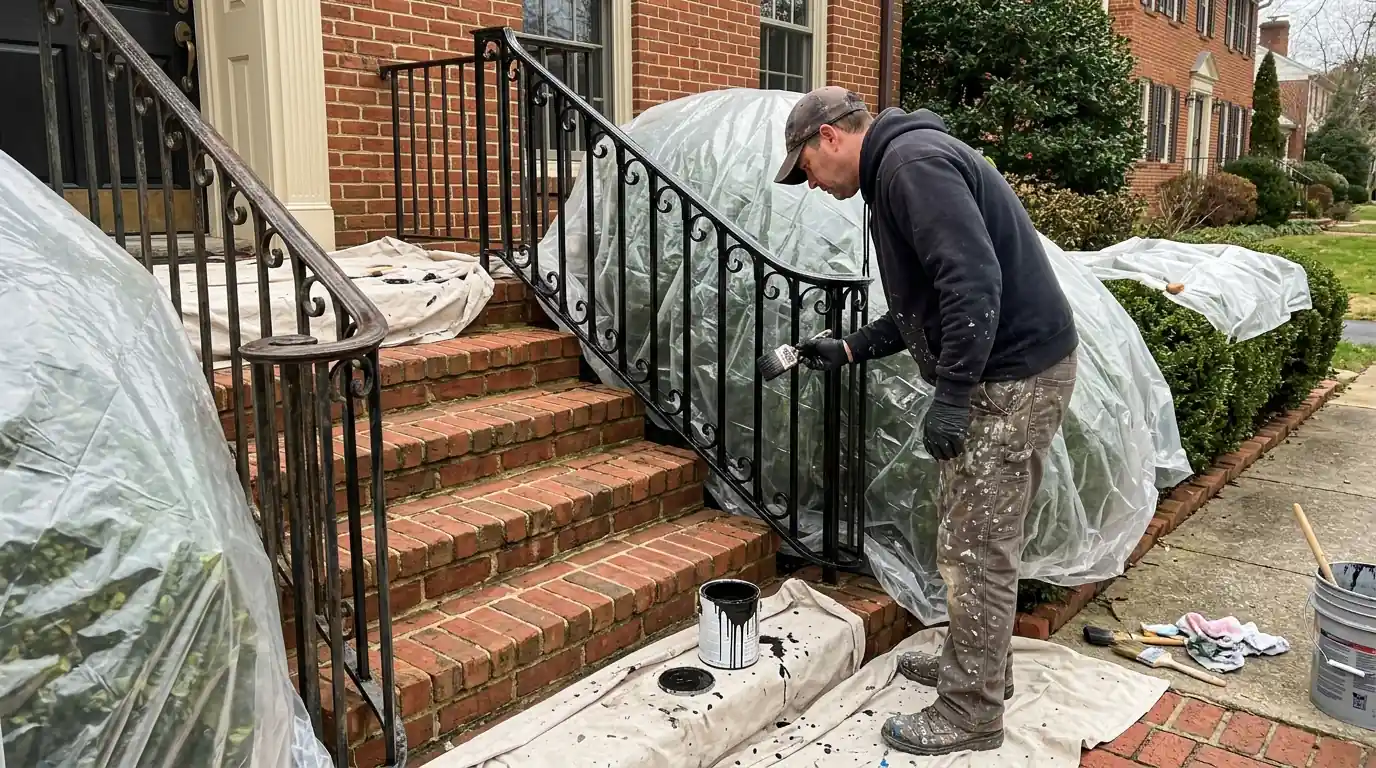
Iron railing painting is removing loose rust and old paint, treating what remains, priming bare metal with a rust-inhibiting primer and brushing on a direct-to-metal or exterior metal enamel. It covers front step railings, porch rails, ornamental fences and gates. Around Park Ridge it typically costs $14 to $38 per linear foot of railing and $9 to $24 per linear foot of fence, depending on rust, detail and access.
Paint lines we use most, matched to the surface: Benjamin Moore, Sherwin-Williams and PPG for walls and trim, Romabio for limewash, Cabot and Sikkens for wood stain.
Front step railings on brick ranches, Georgians and Cape Cods around Park Ridge, Niles and Des Plaines get salt every winter. You salt the steps, the snow melts, and salty water runs down to the base of each post where it meets the concrete. That is where rust starts and where the posts eventually weaken.
Iron fences have the same problem along the bottom rail, where snow plowed off the sidewalk piles up against them. Gates rust at the hinges and latches, where paint wears off every time they move.
Once rust starts under paint it spreads sideways. The paint on top may look fine until it bubbles and flakes off in sheets. Catching rust early, while it is on the surface, keeps the job to cleaning and painting instead of welding or replacing sections.
We remove loose rust and flaking paint with wire brushes, scrapers and sanding pads, working into scrolls, pickets and post bases. Old paint that is still tight is scuffed so the new coat bonds. The goal is sound metal and sound paint, not bare metal everywhere.
Remaining surface rust gets a rust converter or treatment where it fits the coating system, then bare metal is primed with a rust-inhibiting primer such as Rust-Oleum or a direct-to-metal product. Iron that is rusted thin, posts loose in the concrete or broken welds are noted and shown to you, because paint cannot fix structural damage.
Many older railings and fences were painted with lead-based paint. On pre-1978 homes we follow EPA lead-safe work practices: plastic sheeting under the work, wet scraping where we can and no open-flame burning or dry power sanding, with HEPA cleanup at the end.
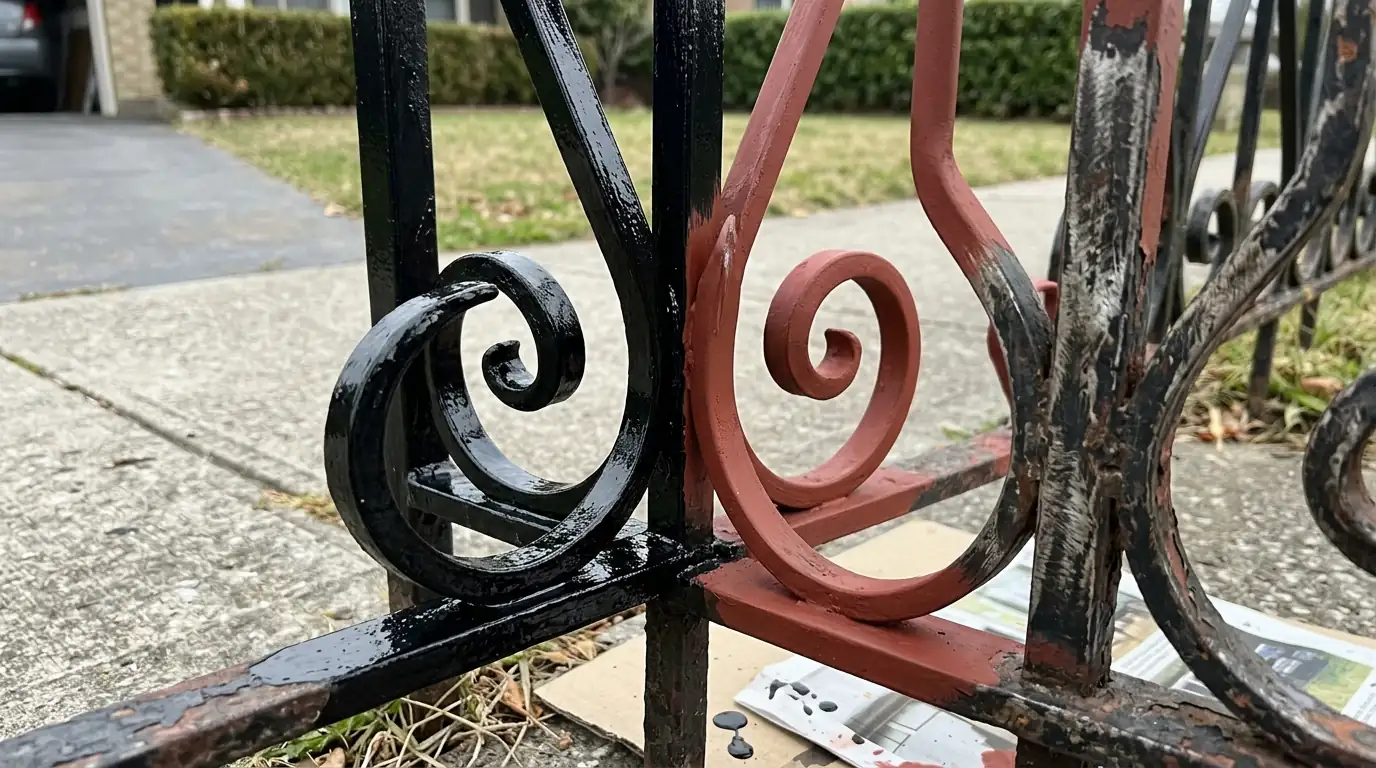
We brush finish coats on iron by hand, because spraying ornamental work wastes paint, drifts onto brick and siding and leaves thin spots on the back sides of pickets. Two coats of exterior metal enamel or direct-to-metal acrylic give an even, hard finish. Most people choose satin black, but dark bronze, dark green and other colors work well too.
Post bases and the bottom rail of fences get extra attention, since that is where salt water collects. We seal the joint where the post meets the concrete with a flexible exterior sealant so water does not sit there.
Railings on front steps stay usable during the job, with clear notice of wet paint. Gates are propped open while they cure so hinge areas do not stick, and latches are checked before we leave.
Many Park Ridge Georgians and Colonials, the brick ranches of Niles and Morton Grove and the bungalows of Melrose Park and Franklin Park have wrought iron step railings installed decades ago. Most have been painted many times, and salt has been eating at the post bases every winter. With average November lows near 34 degrees and freezing temperatures for months after that, salt use is heavy on every front walk.
Older homes in Evanston, Oak Park, River Forest, Wilmette and Winnetka often have ornamental iron fences and gates with scrolls, finials and cast details. Those take far longer per foot. In local historic districts in Oak Park, Evanston and Hinsdale, repainting iron in a similar dark color is usually routine, but check with the village or city first before changing a fence's look.
Iron painting runs best from May through early October. Metal heats and cools faster than air, so we check the can for the minimum surface temperature and avoid painting iron in direct midday sun on hot days.
Rust shows up first where water and salt collect.
Orange staining at the concrete line means salt water is attacking the iron.
Blisters on the paint film mean rust is spreading underneath.
Fence bottom rails lose paint from snow and salt piled against them.
Bare metal on gates where hands and hinges wear it off.
Orange runs on steps and sidewalks show active rust above.
A post that moves may be rusted at the base and needs a look before paint.
We check rust, post bases, welds and gates and tell you about any structural problems.
Steps, landscaping, brick and siding are covered, with plastic below on lead-safe jobs.
Wire brushes and scrapers take the iron back to sound metal and sound paint.
Remaining rust is treated and all bare metal is primed the same day.
Enamel goes on by hand into every scroll and picket, front and back.
The joint at the concrete is sealed, gates are checked and the area is cleaned.
Iron work is priced by the linear foot, with rust and ornamental detail moving the price most.
| What is priced | Typical range | Unit |
|---|---|---|
| Iron step or porch railing | $14 to $38 | per linear ft |
| Iron fence | $9 to $24 | per linear ft |
| Front porch floor, steps and railings together | $1,180 to $3,960 | per porch |
These ranges are typical for iron in Park Ridge and the nearby suburbs, and the walk-through sets the real number for your railings or fence.
Full painting price guideWe take iron railing & gate painting jobs in Park Ridge and the suburbs around it. A few of the places we work most:
With good prep, a railing usually goes several years between coats, but the post bases often need touch-up sooner because of salt. Checking the bottoms each spring and touching up small rust spots keeps the full repaint further away.
Yes, in most cases. Hand and power wire brushing, scraping and sanding remove loose rust and paint well enough for a sound repaint. Sandblasting on a residential lot is messy and, with old lead paint, creates hazardous dust, so we avoid it.
Not always. Converter works on light surface rust that cannot be fully removed, and it has to be compatible with the primer and paint. On clean metal, a rust-inhibiting primer is the better choice.
We can seal the base and paint it, but a post rusted thin or loose in the concrete needs a welder or railing installer. We point those out before painting so you can decide what to fix first.
Satin black is the most common and hides small chips well. Dark bronze and dark green also wear well. Very glossy finishes show every flaw on old iron, so we usually recommend satin.
Front porch floors, steps, ceilings, columns and railings scraped, repaired where soft and coated with porch enamel or stain.
DetailsWood fences and gates cleaned and stained or painted on both sides, with plants and neighbor yards protected.
DetailsPainting in pre-1978 homes using EPA lead-safe work practices: containment, wet methods and HEPA cleanup.
DetailsFull exterior repaints with scraping, priming of bare wood, caulking and two finish coats, timed to the local paint season.
DetailsPreviously painted brick and masonry recoated with breathable masonry paint after cleaning, repointing checks and priming.
DetailsCall any hour. Someone picks up, takes the details and books a time to walk the job with you.