Interior House Painting
Walls, ceilings and trim in occupied homes, with furniture moved, floors covered and rooms handed back each evening.
DetailsInterior painting
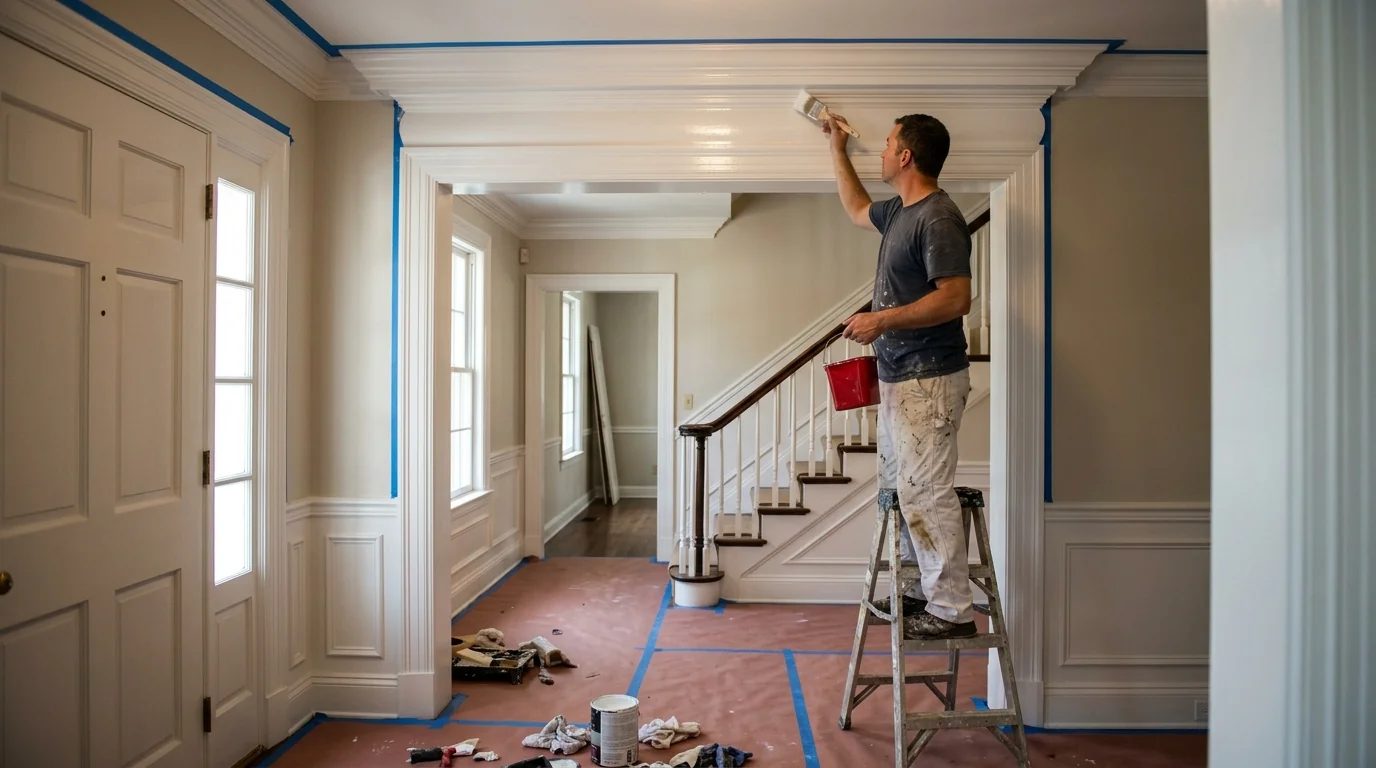
We paint baseboards, door and window casings, crown molding and chair rail in homes across Park Ridge and the nearby suburbs. Every joint gets caulked, every surface gets sanded, and the enamel is brushed to a clean line against the wall color.
Short answer
Trim painting means cleaning, sanding, filling and caulking baseboards, casings and crown, priming bare or oil-painted spots, and brushing two coats of a hard enamel. Around Park Ridge, trim in pre-1978 homes is often old oil paint that needs a bonding primer and lead-safe prep. Pricing runs $1.85 to $4.40 per linear foot, depending on profile detail and condition.
Paint lines we use most, matched to the surface: Benjamin Moore, Sherwin-Williams and PPG for walls and trim, Romabio for limewash, Cabot and Sikkens for wood stain.
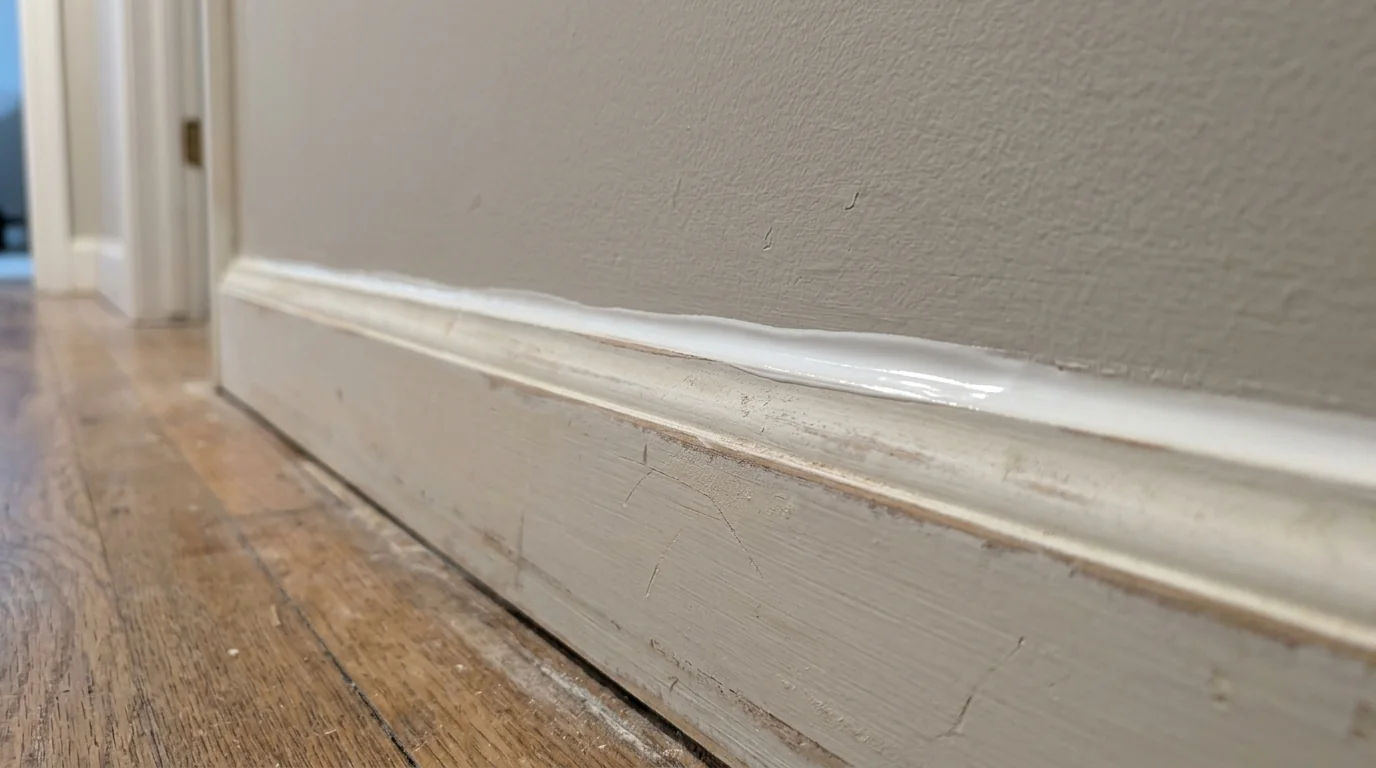
Trim is where people look first and touch most. A quick job leaves gaps along the top of the baseboard, nail holes still showing, brush marks in the enamel and a wavy line where the trim meets the wall. A good job takes most of its time in prep: cleaning off the grime, sanding the old finish, filling dents and holes, and running a bead of paintable caulk along every joint.
We brush trim instead of spraying it in occupied homes, because spray needs heavy masking and the overspray risk is high. A good brush and a leveling enamel, given time to flow out, gives a smooth finish without the plastic look of a heavily rolled coat.
Trim in most homes built before the 1990s was painted with oil-based enamel at some point. If someone later put latex straight over that glossy oil, it peels off in long strips, often along baseboards where a vacuum or a foot catches it.
We test with a denatured alcohol swab. Latex softens and wipes off, oil does not. Where we find oil, we sand to a dull finish and apply a bonding primer before the topcoat. For the finish we use a waterborne alkyd or urethane-modified enamel, which levels and hardens like oil but cleans up with water and yellows far less.
In most postwar brick ranches, Cape Cods and split-levels around Park Ridge, Des Plaines and Mount Prospect, the trim is simple pine or fir that was painted from the start. Painting it again is straightforward, and owners often switch from yellowed off-white to a crisp white, or paint trim the same color as the walls for a modern look.
Older bungalows and foursquares in Elmhurst, Villa Park and Berwyn, and Prairie and Tudor homes in Oak Park, Evanston and Wilmette, often still have original stained oak or pine trim. Once that wood is painted, getting back to bare grain means hours of stripping. If it is in decent shape, we usually suggest cleaning and recoating the clear finish instead. If you have decided to paint, we prime with a shellac-based primer first, because oak tannins bleed yellow through water-based primers.
Window stools, door casings and baseboards are the trim pieces most likely to carry lead in a pre-1978 house, because they were painted most often with high-gloss oil enamel. They are also the pieces that rub and wear, which makes dust. That covers most postwar ranches and split-levels in the northwest suburbs, not only older homes.
We follow EPA lead-safe work practices on that trim: plastic sheeting on the floor below, misting before sanding, hand sanding or wet sanding only, HEPA vacuums for cleanup and a wipe check at the end.
Trim usually shows wear before the walls do.
Vacuums, chairs and shoes knock paint off the top edge and corners of baseboards.
Dark lines along the top of baseboards or sides of casings mean the caulk has dried out and separated.
Old oil enamel yellows, especially in rooms without much daylight.
Latex over old oil without a primer comes off in long ribbons.
Bare wood on window ledges lets condensation soak in and swell the wood.
Drips from a past paint job make trim look rough and need sanding flat.
We check for oil paint and lead and agree on color and sheen for each room.
Floors get covered and we tape the floor edge below baseboards.
Trim is degreased, dents and nail holes are filled, and loose pieces are renailed.
Old finishes are scuffed, and bare wood or oil spots get a bonding primer.
Every gap between trim and wall gets a bead of paintable caulk, tooled smooth.
We brush the finish in two coats with drying time between, and cut a clean line at the wall.
We price trim by the linear foot, with doors and windows listed as their own lines.
| What is priced | Typical range | Unit |
|---|---|---|
| Baseboards, casings and crown | $1.85 to $4.40 | per linear ft |
| Interior door with frame | $135 to $265 | per door |
| Window sash and frame | $185 to $465 | each |
| Lead-safe setup | $145 to $385 | per room |
These ranges are typical, and the walk-through sets the real number for your trim.
Full painting price guideGeorgians and Colonials in Park Ridge and Glenview tend to have the most trim of any house we see: wide casings, crown in the main rooms, chair rail in the dining room and a long run of stair skirt board. That is usually painted white enamel, and after twenty years it has yellowed and the caulk has opened at every joint. Brick ranches in Niles and Morton Grove have less trim but it takes more wear, since baseboards in a one-story house see all the traffic.
In Oak Park, River Forest and Evanston, a lot of Prairie and Craftsman trim is still original stained wood, and we often get asked whether to paint it. If a home sits in a local historic district, interior trim is not usually reviewed, but it still pays to think hard before painting wood that cannot easily be stripped back.
We take trim & molding painting jobs in Park Ridge and the suburbs around it. A few of the places we work most:
If the oak is in decent shape, we usually suggest cleaning and recoating the clear finish instead. Once oak is painted, stripping it back is slow and costly. If you have decided to paint, we prime with shellac first so tannins do not bleed through.
That almost always means latex was painted over old oil enamel without a bonding primer. The fix is to sand off the loose paint, prime with a bonding primer and recoat with a hard enamel.
Semi-gloss is the usual choice because it is hard and washable. Satin is softer looking and still holds up well. High gloss suits doors and trim in formal rooms but shows every flaw in the wood.
We usually paint trim first, then cut the walls to it. That way the final line is the wall color against the trim, which is the easier line to keep straight.
Yes. We tape the ceiling line and cut carefully along it. If the ceiling paint is old and chalky, we may need to touch up a narrow band, and we tell you before we start.
We treat that trim as possibly containing lead in any pre-1978 house. We cover the floor below, mist before sanding, hand or wet sand only, and clean with HEPA vacuums.
Walls, ceilings and trim in occupied homes, with furniture moved, floors covered and rooms handed back each evening.
DetailsPanel and slab doors painted on both faces and all six edges, with hardware removed and frames done to match.
DetailsOriginal oak and pine woodwork cleaned, touched up and recoated so the grain stays visible instead of hidden under paint.
DetailsPainting in pre-1978 homes using EPA lead-safe work practices: containment, wet methods and HEPA cleanup.
DetailsSashes, frames and sills scraped, reglazed where loose and painted so windows still open and shed water.
DetailsCall any hour. Someone picks up, takes the details and books a time to walk the job with you.