Wallpaper Installation
Traditional and peel-and-stick papers hung plumb with matched seams, booked after the walls are smoothed and primed.
DetailsWall repair & prep
Postwar ranches, Georgians and split-levels around Park Ridge often hide two, three or four layers of wallpaper, and sometimes paint over the top. We take every layer off, wash the paste away, repair the wall and seal it for paint.
Short answer
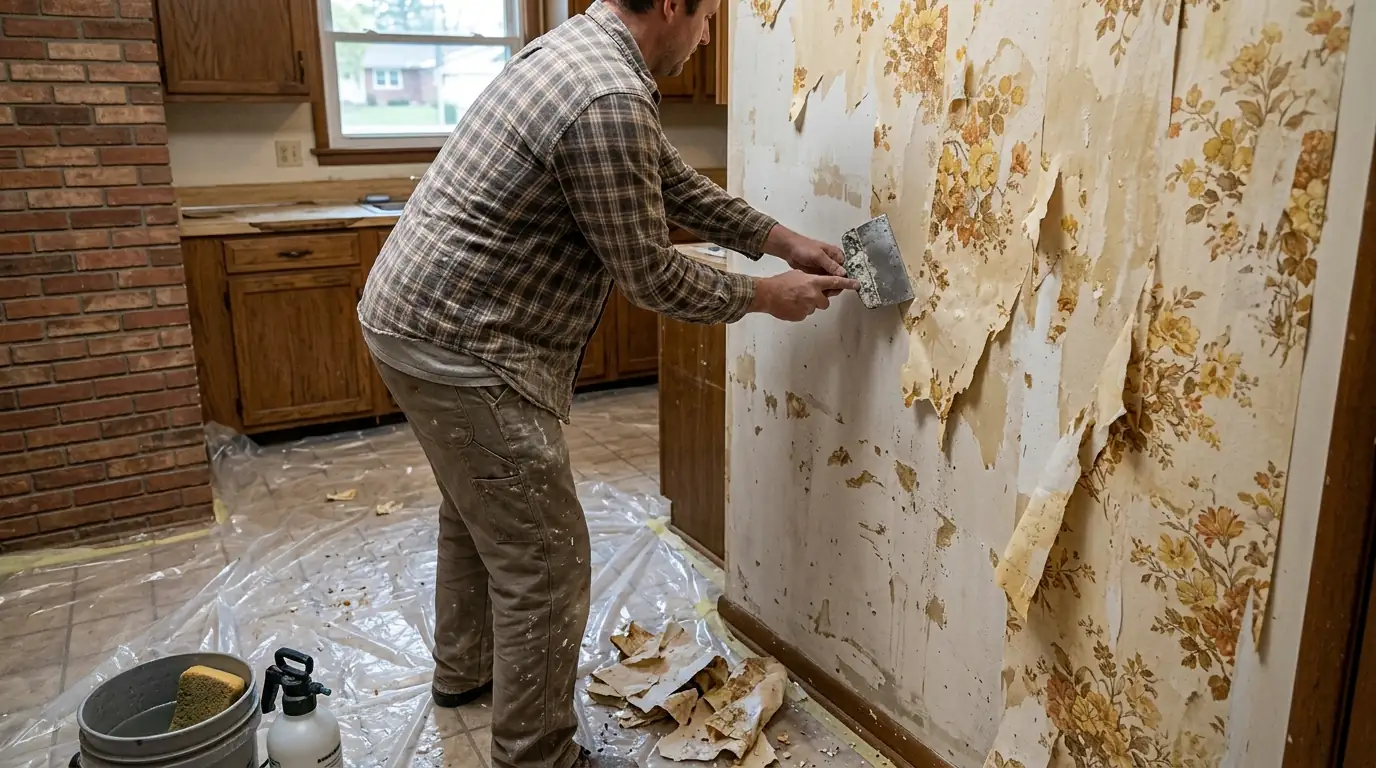
Wallpaper removal means peeling or scoring the face layer, soaking the backing and paste, lifting it off without damaging the wall, then washing off the adhesive and repairing what is underneath. In Park Ridge and the nearby suburbs it usually runs $485 to $1,320 per room. The price moves with the number of layers, painted paper, plaster or drywall behind it, and how much repair the bare wall needs.
Paint lines we use most, matched to the surface: Benjamin Moore, Sherwin-Williams and PPG for walls and trim, Romabio for limewash, Cabot and Sikkens for wood stain.
Houses built in Park Ridge, Des Plaines, Niles and Mount Prospect in the 1950s and 1960s went through a lot of wallpaper. The first owners hung it in kitchens, baths and dining rooms, the next owners papered right over it in the 1970s or 1980s, and someone later rolled paint over the top to cover a dated pattern. Each coat of paint seals the paper below so water cannot reach the paste.
The wall behind the paper matters as much as the paper. Plaster in an older bungalow takes water and scraping well. Drywall in a ranch or split-level is the real risk, because builders often hung paper on drywall that was never primed. The paste then bonds straight to the drywall face paper, and fast scraping tears it open.
Paste types change by decade too. Early wheat paste dissolves in warm water. Clay and vinyl adhesives from later decades need more soak time and a remover, and a few only let go under steam.
Every room starts with a small test patch. It tells us how many layers there are, what the backing is, what kind of paste was used and whether the wall is plaster or drywall. That test sets the method and gives you a realistic time frame before the rest of the room is touched.
Strippable vinyl papers get peeled dry first, which usually leaves the paper backing on the wall. Painted or coated papers are scored lightly so moisture can get in, then soaked with warm water and a remover. We give it time to work and lift the paper with wide, flexible scrapers held flat so the blade does not dig.
If soaking is not enough, we steam the wall section by section. Steam is slower, but it softens stubborn paste in stacked layers without the heavy scraping that gouges plaster or shreds drywall.
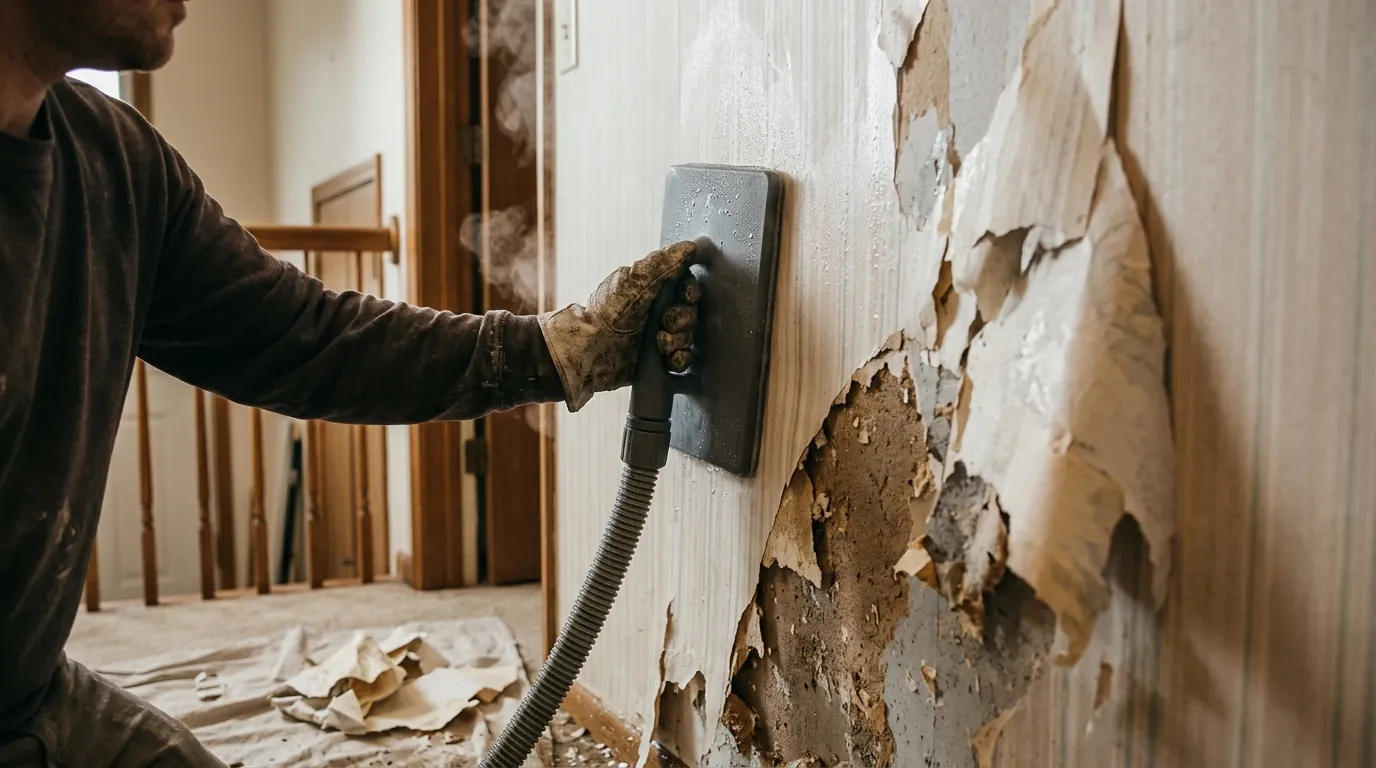
Getting the paper down is half the job. Leftover paste is why so many walls look blotchy or crack after a quick repaint. We wash the walls with warm water until the surface no longer feels slick, then run a damp hand across them to check for residue.
When the wall dries, we look it over under a work light. Plaster usually shows cracks and old patches the paper was hiding. Drywall may have torn face paper. Plaster gets setting compound. Torn drywall gets a sealing primer first so it does not bubble, then a skim coat to flatten it.
Last, an oil-based or shellac-based primer, or a primer made for paste residue, goes over the whole wall. It locks down any remaining traces of adhesive and gives you a clean base for paint or new paper.
Some wallpaper problems spread the longer the paper stays up.
Peeling seams near ceilings, vents and outside walls mean the paste has failed. Gluing them back rarely holds.
Blisters in paint over wallpaper mean moisture has softened the paper underneath, and they keep spreading.
Paper in a humid bathroom can trap moisture against the wall and grow mildew behind it.
A dated pattern is a fair reason too, especially before listing a house or a rental.
Raised edges at the ceiling or around trim usually mean several layers are stacked on top of each other.
Lines running across the paper are often plaster or drywall cracks behind it that need repair.
We open a small patch to count layers, find the paste type and confirm whether the wall is plaster or drywall.
Floors get waterproof covers, baseboards are taped, furniture is moved and outlets near the wet work are covered and switched off.
We dry peel what we can, score painted paper and soak it with warm water and remover in manageable sections.
Softened paper is lifted with flat scrapers. Stubborn layers get steam until they release.
Walls are washed until no residue remains and then left to dry fully, usually overnight.
Cracks and torn areas are repaired and sanded, and the whole wall is sealed with a primer suited to that surface.
Removal is priced per room, and what sits behind the paper moves the number as much as the room size does.
| What is priced | Typical range | Unit |
|---|---|---|
| Wallpaper removal and wash | $485 to $1,320 | per room |
| Drywall small patch after removal | $185 to $435 | each |
| Lead-safe setup in a pre-1978 room | $145 to $385 | per room |
| Paint walls after removal, 2 coats | $465 to $890 | per room |
These ranges are typical for the area, and the test patch and walk-through set the real number.
Full painting price guideIn the brick ranches and Georgians of Park Ridge, Niles and Morton Grove, and the split-levels of Arlington Heights and Mount Prospect, we find the most wallpaper in kitchens, half baths and front halls. Many of these houses have had four or five owners, and the paper tells the story in layers. Painted-over paper in a small powder room is the single most common job we see.
Almost all of this housing went up before 1978, so the paint on top of the paper, and on the trim beside it, may contain lead. Scraping painted paper disturbs painted surfaces, so in those rooms we follow EPA lead-safe work practices: plastic containment, wet scraping, HEPA vacuuming and a cleaning check before we leave for the day.
Removal is interior work and runs all year. A furnace running in January dries a washed wall faster than a humid August day does, but we still give every wall a full day to dry before primer goes on.
We take wallpaper removal jobs in Park Ridge and the suburbs around it. A few of the places we work most:
Yes. Painted paper takes longer because the paint keeps water from reaching the paste. We score it carefully, soak it longer and steam it if needed, then wash, repair and prime the wall.
It can if the drywall was never primed before the paper went up. We test first, soak or steam patiently, and seal any torn face paper with a primer before skimming so the wall ends up smooth.
Only if the paper is one layer and tight to the wall everywhere. Paint can soften the paste and make seams lift, and it makes later removal much harder. In most rooms, taking it off gives a longer lasting finish.
A single layer of strippable paper can come off in a few hours. Several painted layers can take a full day or two, plus overnight drying before primer and paint.
That is leftover paste, and it has to be washed off. Paint over paste residue can crack or peel, so we wash until the wall feels clean and then seal it with a primer made for that surface.
Yes. When removal disturbs old painted surfaces, we follow EPA lead-safe work practices with containment, wet methods and HEPA cleanup. Call (312) 579-0481 to talk through your rooms.
Traditional and peel-and-stick papers hung plumb with matched seams, booked after the walls are smoothed and primed.
DetailsCracked and bulging plaster on vintage walls reattached, patched and skimmed with materials that move like the original.
DetailsHoles, cracks, water stains and nail pops patched, taped, sanded and primed so the repair disappears under the paint.
DetailsWalls, ceilings and trim in occupied homes, with furniture moved, floors covered and rooms handed back each evening.
DetailsPainting in pre-1978 homes using EPA lead-safe work practices: containment, wet methods and HEPA cleanup.
DetailsCall any hour. Someone picks up, takes the details and books a time to walk the job with you.