Trim & Molding Painting
Baseboards, casings and crown molding caulked, sanded and brushed to a clean line against the wall color.
DetailsInterior painting
We paint panel and slab doors in homes across Park Ridge and the nearby suburbs, from hollow-core flush doors in postwar ranches to solid five-panel doors in 1920s bungalows. Hardware comes off, all six sides get paint, and frames are done to match.
Short answer
Interior door painting means removing hinges and knobs, cleaning and sanding the door, priming where needed and brushing or spraying two coats of enamel on both faces and all edges, along with the frame and casing. In Park Ridge and nearby suburbs a door with its frame runs $135 to $265, depending on panel detail, condition and whether old oil paint needs a bonding primer.
Paint lines we use most, matched to the surface: Benjamin Moore, Sherwin-Williams and PPG for walls and trim, Romabio for limewash, Cabot and Sikkens for wood stain.
A door has two faces and four edges, and most quick paint jobs skip the top and bottom. Unsealed edges let the wood take on moisture in humid July and give it up again in January when the furnace runs. That swelling and shrinking is what makes a door stick one season and rattle the next.
We take each door down, lay it flat or hang it on a rack, and coat the top and bottom edges along with everything else. It is a small step that keeps doors fitting better for years.
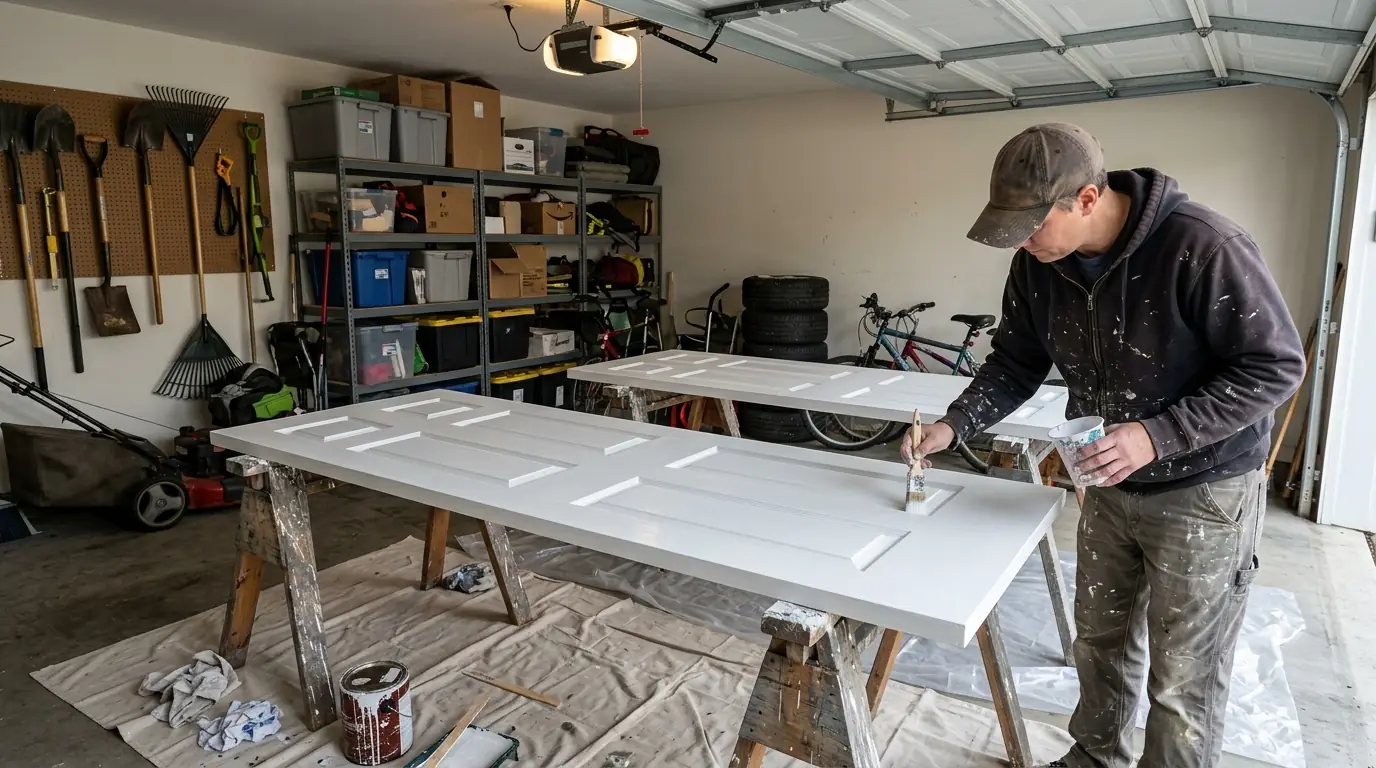
Paneled doors look best when they are painted in a set order. We do the molded edges around each panel first, then the panels, then the horizontal rails, then the vertical stiles, always following the direction of the wood. That order hides the brush laps and keeps the finish smooth where the eye lands.
Flat slab and hollow-core doors, common in ranches and split-levels built from the 1950s through the 1970s, can be rolled with a fine foam roller and tipped off with a brush, or sprayed. For a group of doors that are coming down anyway, we often spray them in a garage booth for a near factory finish.
For a single door or a quick refresh, painting in place with the hardware off and the door swung open can work. For a full house or a color change, we take the doors down. That gives a better finish on every edge, lets us fix sticking or rubbing doors, and keeps paint off hinges.
We label each door and its hinges so everything goes back where it came from. Doors rehang once the second coat has set, and we adjust the hinges so the gaps are even and the latch catches cleanly.
Solid wood doors in pre-1978 homes, from 1920s bungalows in Berwyn and Elmhurst to 1950s brick ranches in Niles, often have old oil paint and may have lead in the lower layers. The edges and the area around the latch see the most rubbing and wear, so they deserve the most care. We follow EPA lead-safe work practices on these doors.
Some older homes in Oak Park, Evanston and Wilmette still have stained oak or fir doors with original finishes. If the wood is in good shape, refinishing usually makes more sense than paint, and we can quote it both ways.
Doors take more handling than any other painted surface in a house.
Flat or eggshell wall paint used on doors stains and burnishes where hands touch.
Unsealed top and bottom edges let the door swell with humidity.
Latch edges and corners chip when the paint is soft or never gripped the old finish.
Old oil enamel yellows, especially on doors in dim hallways.
Heavy coats from a past paint job leave runs that need sanding flat.
Mixed whites and sheens from piecemeal repaints make a hallway look patchy.
We note any sticking or rubbing and test the old paint for oil and lead.
Knobs, strike plates and hinges come off and are bagged and labeled by door.
Doors are degreased, dents and splits are filled, and the old finish is scuffed.
Bare wood and old oil get a bonding primer, and stained wood gets a shellac primer to stop bleed.
Two coats of enamel on every face and edge, with the frame and casing done to match.
Doors go back on their hinges, and we adjust the fit so they close and latch smoothly.
We price doors one by one with the frame included, and trim elsewhere in the room is a separate line.
| What is priced | Typical range | Unit |
|---|---|---|
| Interior door with frame and casing | $135 to $265 | per door |
| Matching baseboards and trim | $1.85 to $4.40 | per linear ft |
| Lead-safe setup | $145 to $385 | per room |
These ranges are typical, and the walk-through sets the real number for your doors.
Full painting price guideA lot of the brick ranches and Cape Cods around Park Ridge, Des Plaines and Morton Grove still have the original flush birch or lauan doors. They are light and plain, but they take paint well and look much better in a fresh white or a soft gray. Split-levels and 1980s two-stories in Arlington Heights and Buffalo Grove often have molded six-panel hollow-core doors that just need clean prep and two coats.
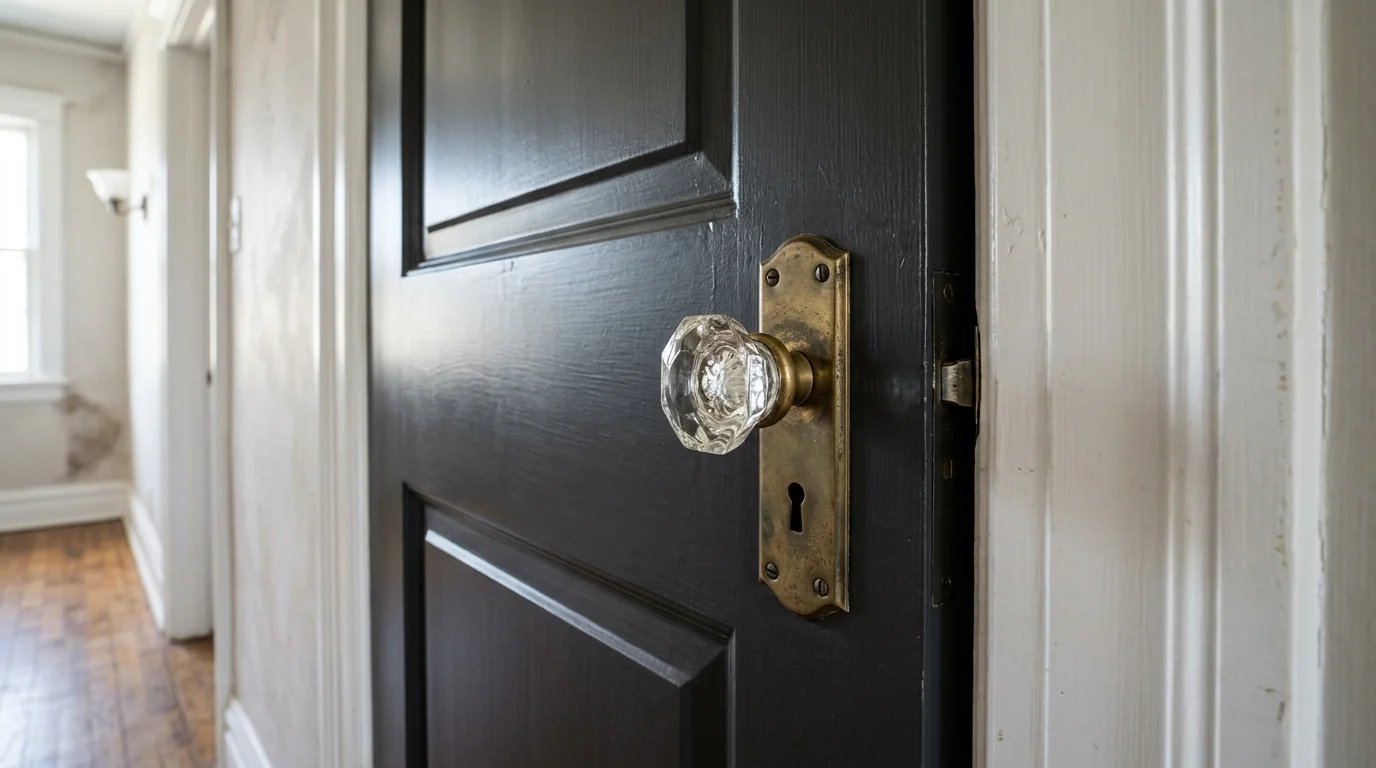
Older homes in Evanston, Oak Park, Wilmette and Glen Ellyn have solid wood doors, sometimes with original glass knobs and mortise locks. We remove and protect that hardware rather than taping around it. Humid summers near O'Hare are when sticking doors show up, so we often plane a binding edge before painting it.
We take interior door painting jobs in Park Ridge and the suburbs around it. A few of the places we work most:
For a full house or a color change, we take doors down so every edge gets coated and the finish stays smooth. For one or two doors, painting in place with the hardware off can work. We tell you which makes more sense at the walk-through.
Most enamels are dry to the touch in a few hours, but they stay soft for a day or two. We ask you to leave doors slightly open overnight so they do not stick to the stop molding.
Semi-gloss or satin white is the most common choice because it is washable and matches most trim. Darker doors in charcoal or navy are popular now and look sharp against white casing.
Usually yes. We plane the binding edge, tighten loose hinge screws or shim a hinge, then seal the bare wood so it does not swell again.
No. We remove knobs, plates and hinges, bag them by door, and put them back after the paint has set.
If they are not cracked or delaminating, painting is far cheaper and they look fine afterward. If you want a heavier door or a different style, replacement may be worth it, and we can paint new doors once they are hung.
Baseboards, casings and crown molding caulked, sanded and brushed to a clean line against the wall color.
DetailsWalls, ceilings and trim in occupied homes, with furniture moved, floors covered and rooms handed back each evening.
DetailsOriginal oak and pine woodwork cleaned, touched up and recoated so the grain stays visible instead of hidden under paint.
DetailsPainting in pre-1978 homes using EPA lead-safe work practices: containment, wet methods and HEPA cleanup.
DetailsCall any hour. Someone picks up, takes the details and books a time to walk the job with you.