The short version
- The overnight low matters as much as the daytime high for curing
- May through early October is the working season near O'Hare
- September is often the steadiest month for exterior paint
- Morning dew and late day dew set the length of each working day
Why the temperature on the can decides the calendar
Every exterior paint lists a minimum application temperature on the label. Depending on the product, that floor sits somewhere between 35F and 50F, and it applies to the air and the surface for several hours after the paint goes on, not just at the moment we brush it. So we check the can for the product we are using rather than relying on a general rule.
The reason is curing. Latex paint dries as the water leaves it, but it only forms a tough film if the particles fuse together while it is still warm enough. Paint applied too cold can look fine for a few weeks and then crack, chalk or peel early. Oil-based and alkyd primers have their own limits and dry more slowly in cool air.
That makes the overnight low the real gatekeeper. A 62F afternoon in late October feels like good painting weather, but if the temperature drops into the 40s by evening, paint applied after lunch spends its first night below what many products want.
What the O'Hare normals say, month by month
The NOAA 1991 to 2020 normals for O'Hare give a clear picture of the year. These are averages, so any given week can run warmer or colder, but they show which months give paint a fair chance and which do not.
March averages a high of 47F and a low of 31F, too cold for most exterior coatings. April warms to an average high of 59F, but the average low is 40F, so a mild April afternoon can still be followed by a frosty night. May is where the season opens for real, with an average high of 70.5F and a low of 51F.
- April: high 59F, low 40F, possible on warm stretches only
- May: high 70.5F, low 51F, the season opens
- June: high 80F, low near 61F, good with an eye on storms
- July: high 84.5F, low near 66F, good with early starts
- August: high 82.5F, low near 65F, good with early starts
- September: high 75.5F, low near 57F, often the best month
- October: high 62.7F, low 45F, early in the month only
- November: high 48F, low 34F, too cold for most products
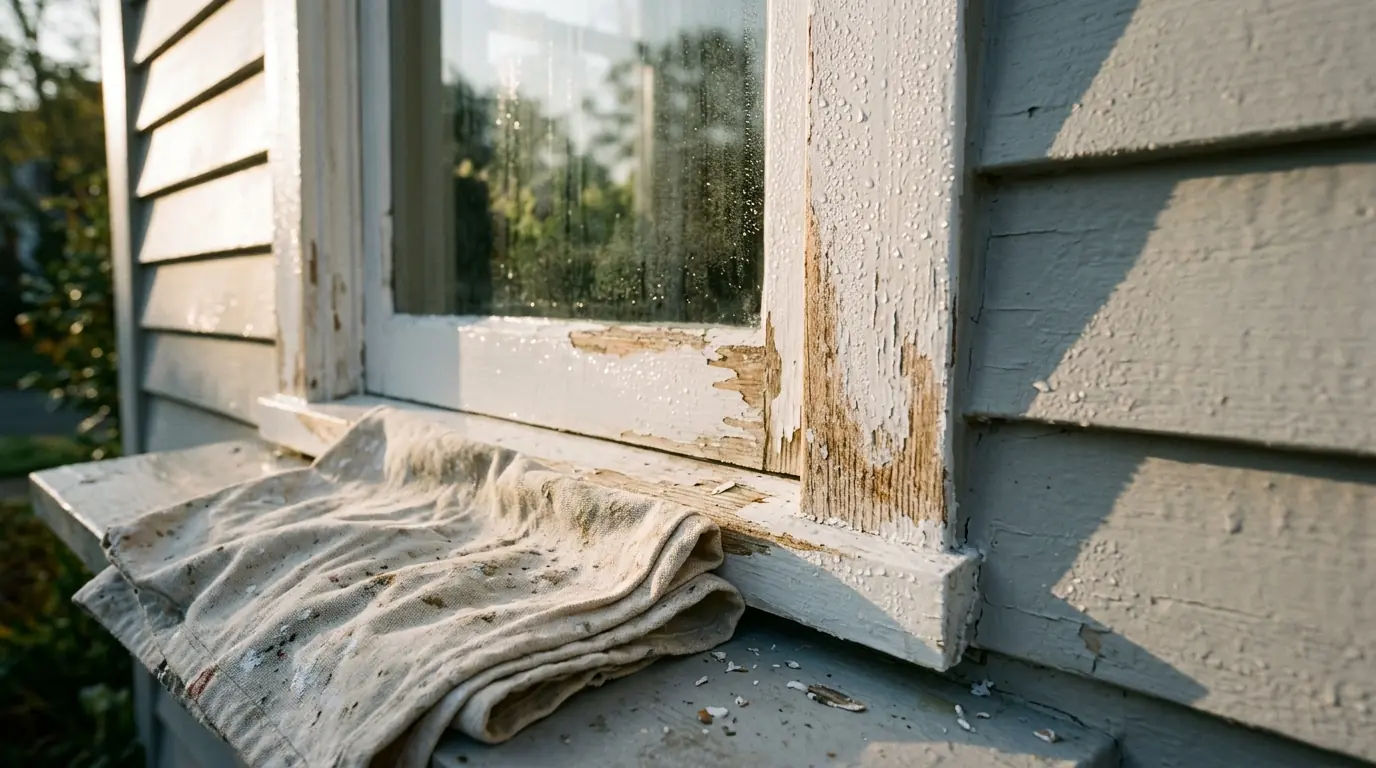
How dew and overnight lows shorten the working day
Temperature is only half of it. On clear, calm nights in spring and fall, siding and trim cool below the air temperature, and moisture condenses on them as dew. Paint applied to a wet surface does not bond well, and fresh paint that gets dew on it before it has set can show surfactant leaching, a sticky, tan or glossy streaking that runs down the siding.
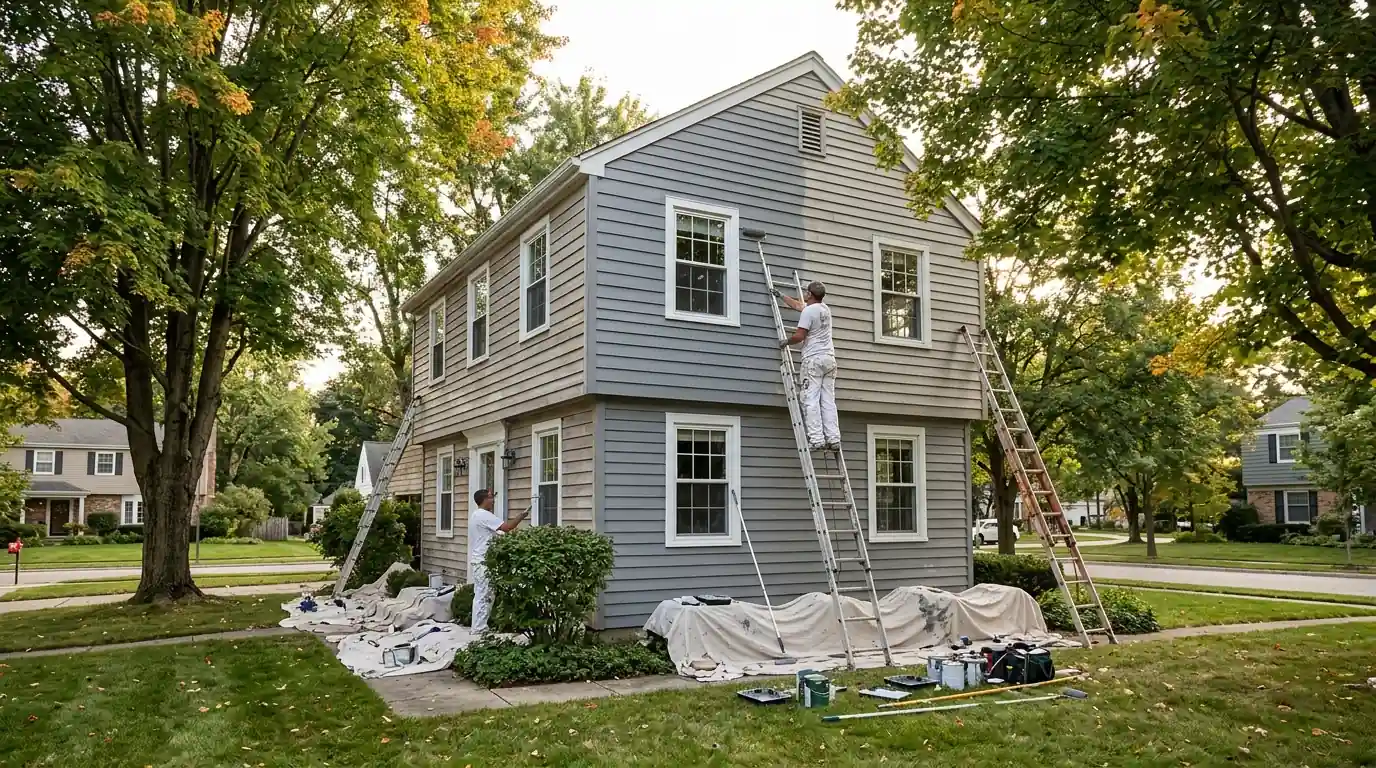
In practice that means we often wait in the morning until the dew has burned off the side we plan to paint, and we stop early enough in the afternoon for the paint to set before the evening dew returns. In May and late September that can leave a working window of roughly late morning to midafternoon on the shaded sides of a house.
Shade makes a big difference. Homes on wooded lots in Park Ridge, Prospect Heights and Glenview, and ravine houses on the North Shore, keep their dew longer and stay cooler on the north side. We plan the order of the walls around the sun so each side gets painted when it is dry and warm enough.
Is spring or fall the better time to repaint?
Both work, and each has a catch. Late May and June bring warm days and longer light, but they also bring spring rain and the odd cold snap. Wood that has soaked up a wet spring needs a few dry days before it takes primer well, so a rainy May can push the start of a job back.
September is often the steadiest month near O'Hare. The average high is 75.5F, the low stays in the upper 50s, humidity usually eases from midsummer, and the wood has had all summer to dry out. The tradeoff is time: the days get shorter, and by mid-October the average low of 45F starts to rule out late afternoon work on many products.
If we had to pick one window, it would be early June through the end of September, with September slightly ahead when the house has a lot of bare wood to prime. The real answer for your house depends on how much prep it needs and which way it faces.
What summer heat and humidity change on the job
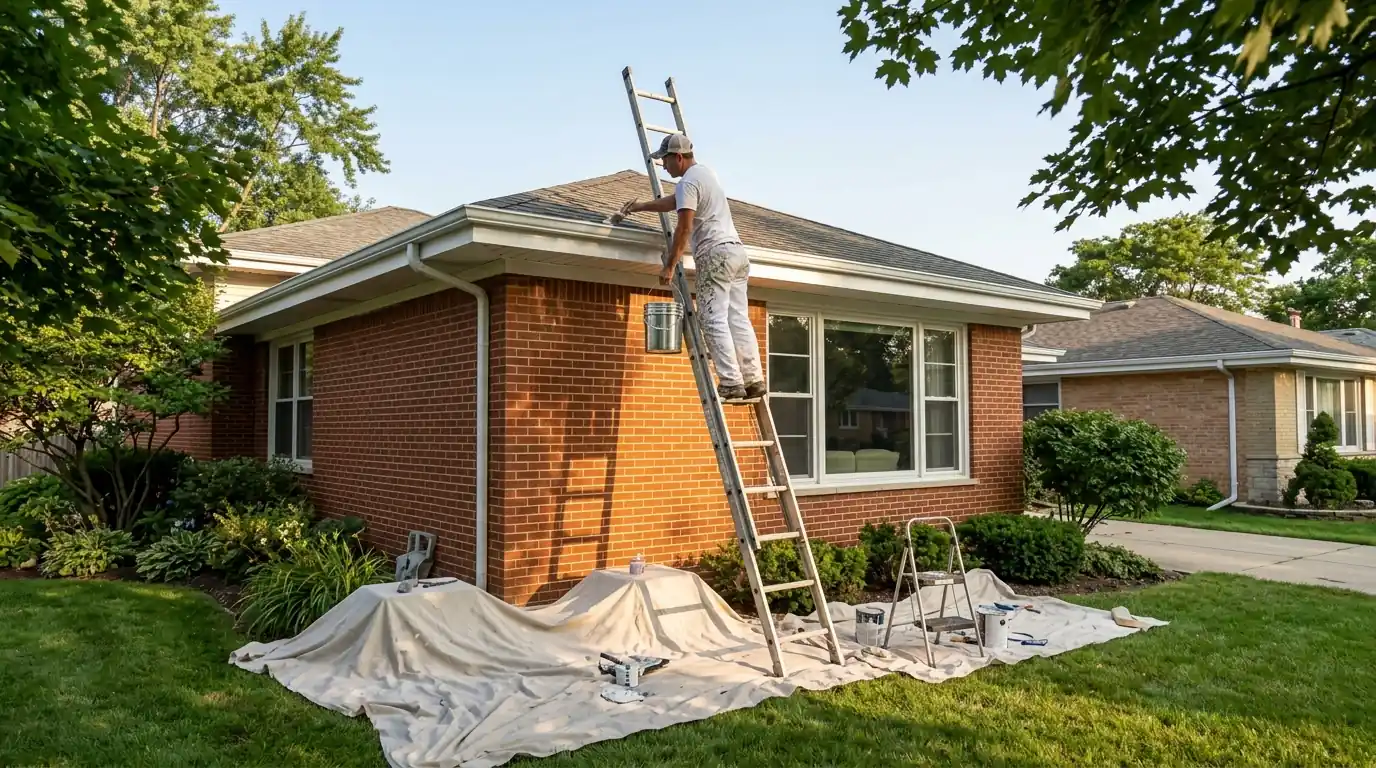
July and August are not off limits, but they need a plan. The average high at O'Hare is 84.5F in July, and dark siding in direct sun can get much hotter than the air. Paint applied to a hot surface dries too fast, leaves lap marks and can blister if moisture is trapped under a skin that formed too quickly.
So in midsummer we follow the shade. We start on the west side in the morning while it is still cool, then move to the east side in the afternoon after the sun has passed. Humid summer evenings and pop-up thunderstorms are the other watch item, since a heavy shower on paint that is an hour old can wash it right off the trim.
- Start on the shaded side and follow the shade around the house
- Avoid painting dark siding in full afternoon sun
- Watch the hourly forecast for storms before opening the paint
- Keep brushes and rollers wet to avoid lap marks on long runs
How to plan and book your exterior repaint
The best weeks book up first, so most homeowners call in late winter or early spring to hold a spot. That also leaves time to sort out anything that has to happen before paint: gutter repairs, rot repair on sills and porch parts, and color approval from a townhome association or, for some older homes in Oak Park, Evanston and Hinsdale, a check with the village or city on exterior changes.
Interior work fills the colder months. If your exterior has to wait until spring, winter is a good time to have the rooms done, and we can walk the outside at the same visit and price it for the season ahead. Call (312) 579-0481 any time; the phone is answered around the clock.
Questions about this topic
Can a Park Ridge house exterior be painted in April?
Sometimes, on a warm stretch. April at O'Hare averages a high of 59F but a low of 40F, so many nights fall below what a lot of exterior paints list as their minimum. We watch the forecast and only open the paint when several days and nights in a row stay warm enough for the product on the can.
How late in the fall can exterior painting go in the northwest suburbs?
Usually into early or mid October, depending on the product and the week. October at O'Hare averages a high of 62.7F and a low of 45F, and by November the average low is 34F. Late season work means shorter days, early stops and choosing a paint rated for cooler application.
What happens if dew or rain hits fresh exterior paint on a suburban home?
Light dew on paint that has not set can cause surfactant leaching, a sticky tan or glossy streaking that usually washes off once the paint cures. A heavy rain on very fresh paint can wash it off trim and leave thin spots that need another coat. We plan start and stop times around both.
Is it better to book an exterior repaint near O'Hare in spring or in fall?
Both work. Early June often has warm days but can follow a wet spring, while September tends to bring dry wood, moderate humidity and stable temperatures. We usually point homes with a lot of bare wood to prime toward late summer and September.