The short version
- Homes built before the late 1940s are usually plaster, postwar homes usually drywall
- Cracks are normal in plaster, but loose or flexing sections need reattaching first
- Skim coating saves a sound but heavily cracked plaster room
- Overlay and replacement change trim depth and need lead-safe care in older homes
How to tell plaster from drywall in your own house
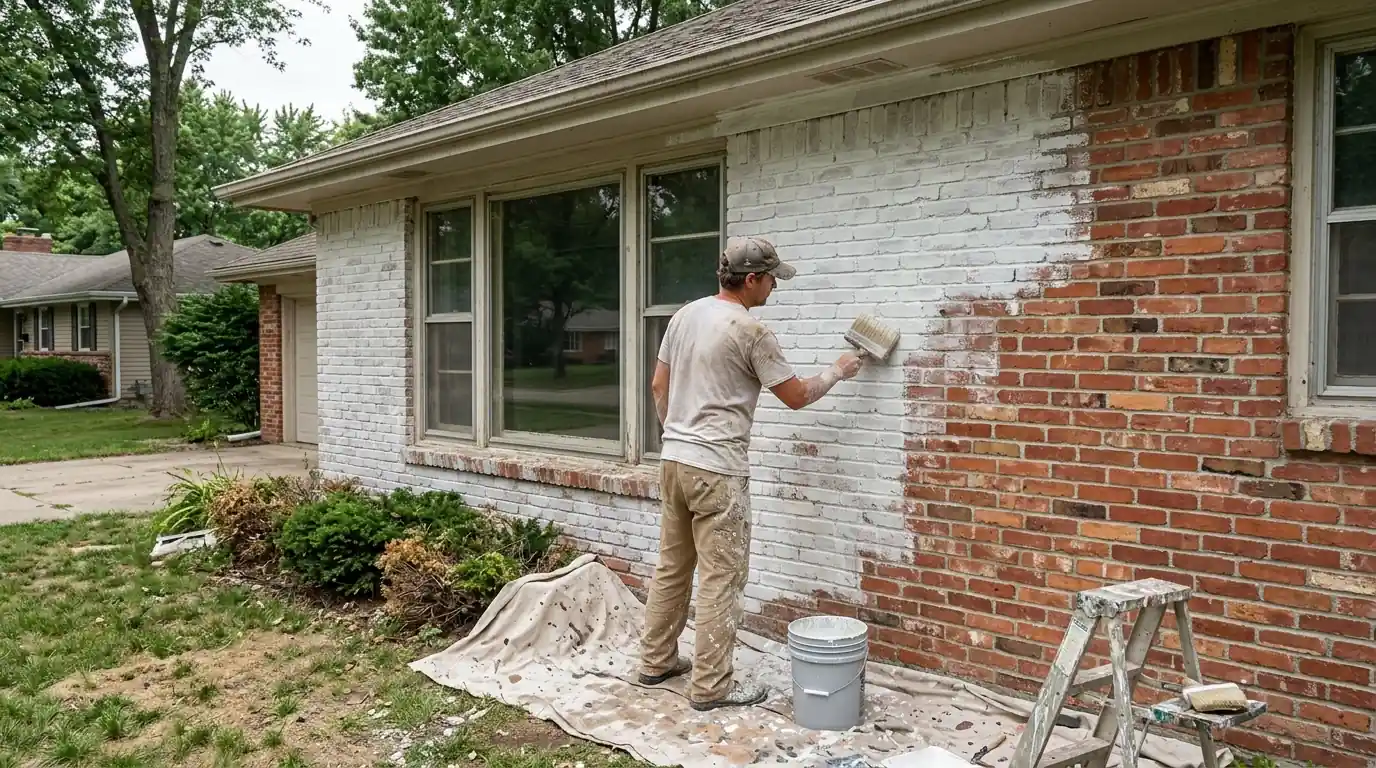
Start with age. Most houses built before the late 1940s were plastered, and drywall took over in the postwar years. Victorian, Tudor, Prairie and Colonial homes on the North Shore, foursquares and Prairie houses in Oak Park, and 1920s bungalows in Park Ridge were almost all plastered. Brick ranches from the 1950s and 1960s are mostly drywall, though some early ones used plaster over gypsum board.
Then use your hands. Plaster walls feel hard and cold and sound solid when you knock on them. Drywall sounds hollow between the studs and gives slightly when pressed. A pushpin goes into drywall easily but stops or crumbles in plaster. Look at an outlet with the cover plate off: plaster walls are usually thicker, often close to an inch with the lath, and you may see wood strips or metal mesh behind the edge.
The cracks also give it away. Drywall tends to show straight cracks along taped seams, nail pops in neat rows and corner tape that lifts. Plaster cracks wander, often running from the corners of doors and windows, and you may see spiderweb crazing on ceilings or bulges where the plaster has let go of the lath.
- Knock test: plaster sounds solid, drywall sounds hollow
- Pushpin test: drywall takes it, plaster resists
- Outlet edge: plaster and lath are thicker than half-inch board
- Crack shape: plaster wanders, drywall follows seams
Why plaster cracks and when it is still sound
Old plaster was troweled in coats over wood lath, and the first coat squeezed between the strips to form keys that hold the wall on. Over a century, houses settle, wood lath dries and shifts, freeze-thaw winters move the framing, and roof or plumbing leaks soften sections. Some of those keys break, and the plaster starts to crack or sag.
A crack alone does not mean the wall is failing. Hairline cracks that do not move, and plaster that stays firm when you press on both sides of the crack, are normal in a house of that age and easy to repair. The warning signs are plaster that flexes or crunches when pressed, a bulge you can see from an angle, or sections that sound dead and hollow next to sections that sound solid. Those areas have lost their keys and need to be reattached before any patching.
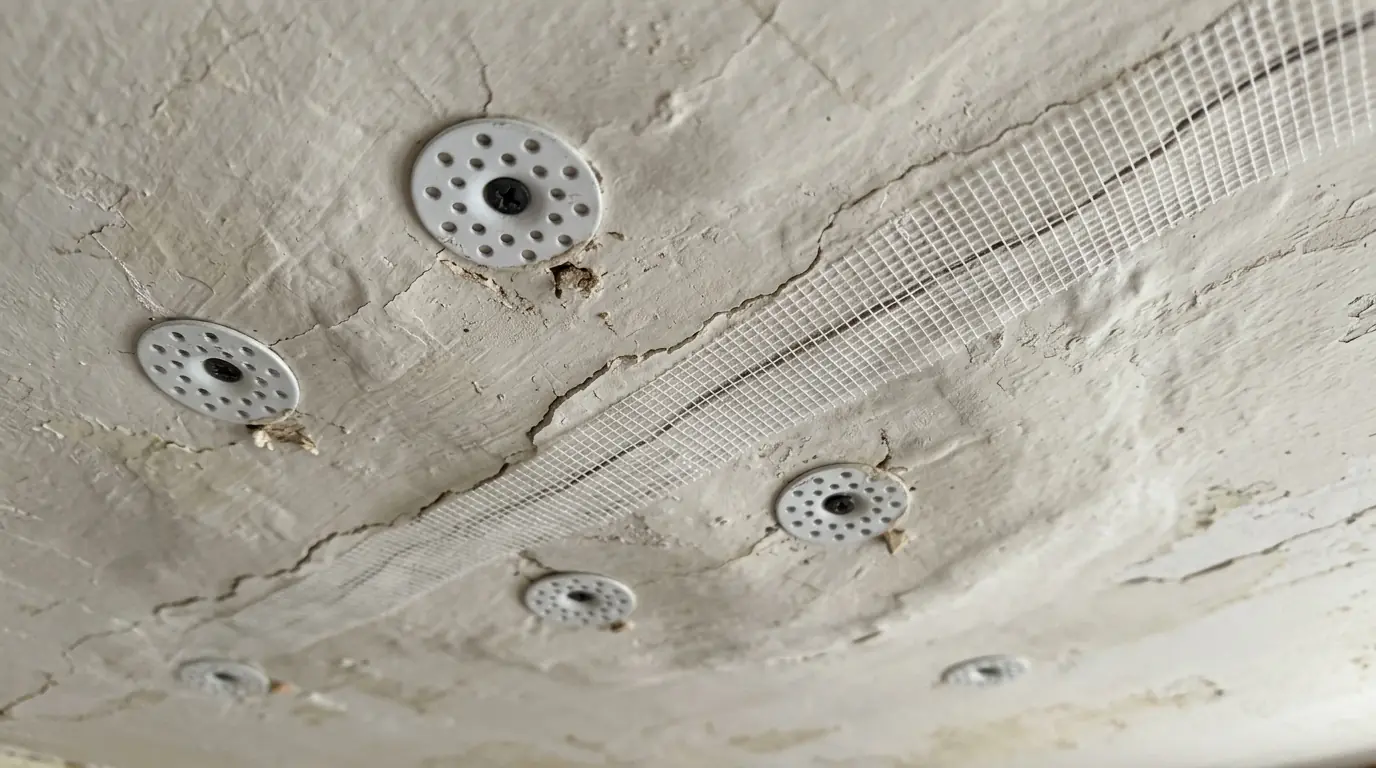
When we repair plaster in place
Most walls in older Evanston, Wilmette and Oak Park homes can be repaired. For cracks, we open the crack slightly, clean it, embed a fiberglass mesh tape in a setting compound and feather it out wide so it disappears under paint. For loose sections, we reattach the plaster to the lath with plaster washers and screws, sometimes with an adhesive injected behind it, then skim over the washers.
Holes and missing pieces get filled with setting compounds or base coat plaster built up in layers, then finished flush with the wall around them. Using materials that set hard and move like the original is what keeps a repair from cracking again along its edges. Plaster cracks or a small damaged area run $265 to $780, depending on size, height and how many cracks a room has.
Repair is worth the effort for more than looks. Plaster is dense, quiet between rooms, holds up to dings, and keeps the original depth of door and window casings. In a Winnetka Tudor or a Prairie house in Oak Park, it is part of what the house is.
When a skim coat or an overlay makes more sense
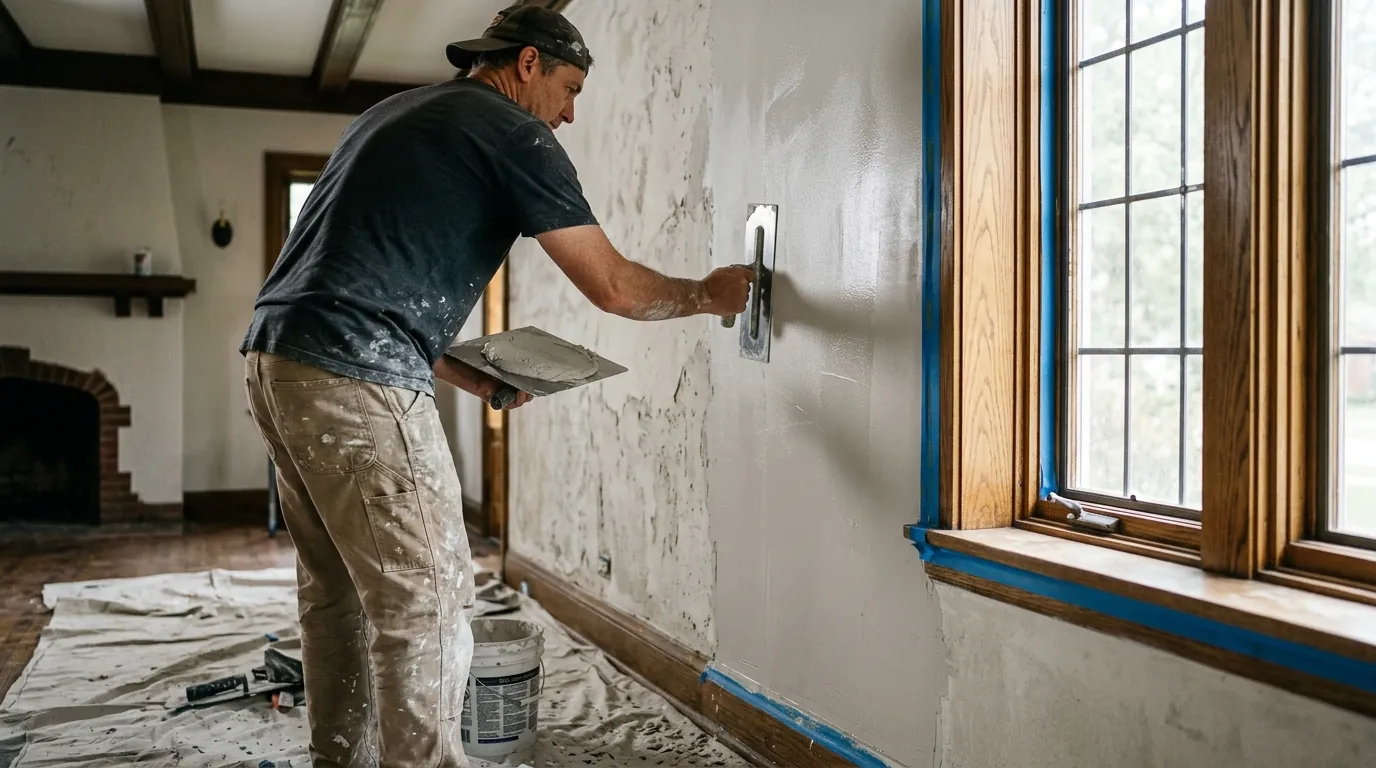
Some rooms have so many cracks, old patches and uneven areas that spot repair would leave a wall that looks like a map. If the plaster is still firmly attached, a full skim coat is often the answer. We reattach any loose areas, tape the cracks and then trowel a thin coat of compound or veneer plaster over the whole wall to make one smooth surface. A full room skim coat runs $1,380 to $3,460.
Overlay means fastening thin drywall, usually a quarter inch or three-eighths, over the old plaster. It is quicker in some rooms, but it adds thickness, so outlets, switches and the reveal at door and window casings all have to be adjusted. On homes with original oak or pine trim, that can mean pulling and resetting the woodwork, which adds cost and risk. We tend to use it on ceilings with widespread crazing, where trim is not involved.
When full replacement is the right call
Replacement is the last option, not the first. It makes sense where water has turned the plaster soft and crumbly, where large areas have fallen or are about to, or where walls are being opened anyway for wiring, plumbing or insulation. In those cases, tearing out the plaster and lath and hanging new drywall can be cleaner and cheaper than trying to save it.
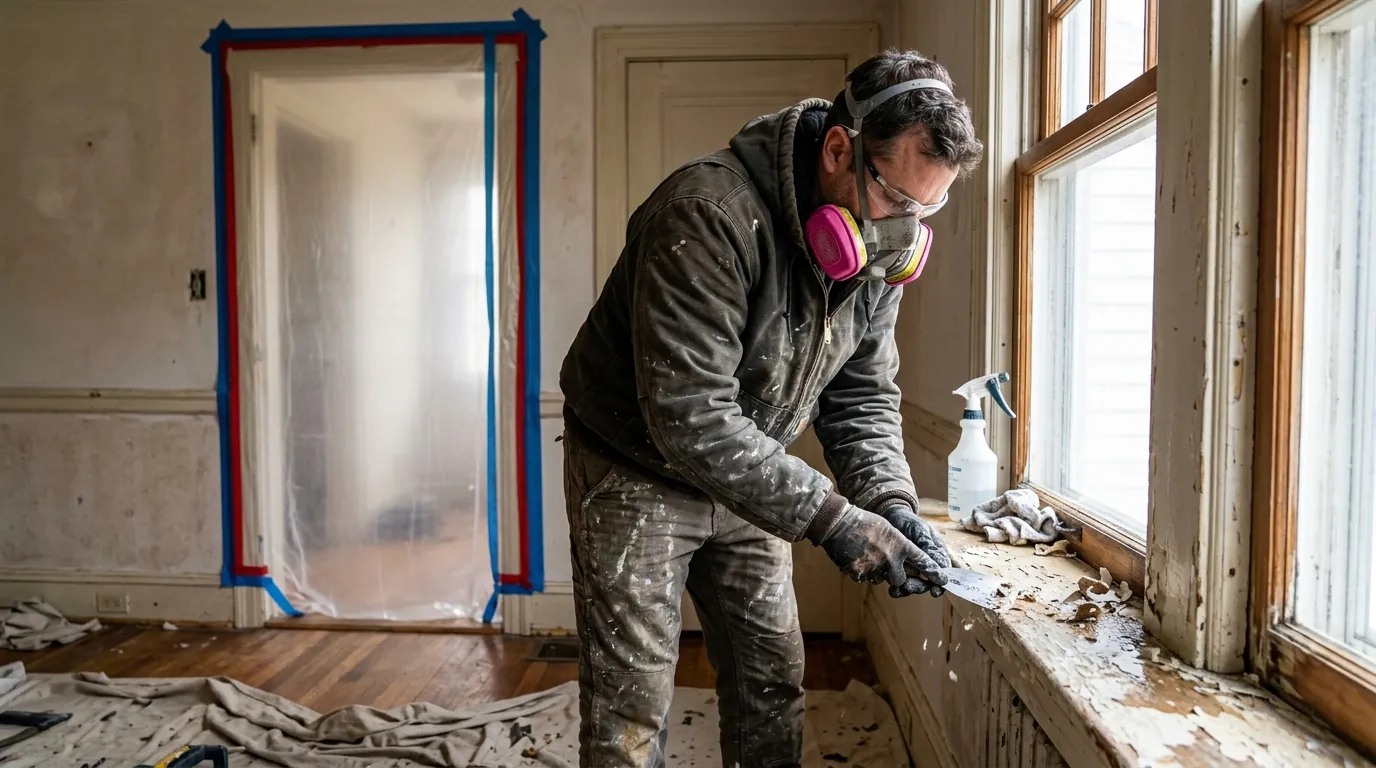
Demolishing old plaster makes heavy, fine dust, and in homes built before 1978 the paint on it may contain lead. That work needs containment and lead-safe cleanup. It is also usually a job for a remodeler or drywall hanger, with us coming in afterward to prime and paint the new surfaces.
Fixing drywall in postwar Park Ridge and suburban homes
In ranches, Georgians and split-levels from the 1950s on, the walls are usually drywall, and repairs are simpler. Nail pops get reset with a screw and spotted. Lifted tape at seams and corners gets cut out and retaped. Holes from doorknobs and wall anchors get a patch, compound and sanding. A small drywall patch runs $185 to $435.
Water damage from a roof leak, an upstairs bath or a basement flood is the bigger job. We cut out the soft section, replace it with new board, tape and finish it, then seal the area with a stain-blocking primer so the mark does not bleed through the new paint. A water-damaged section runs $460 to $1,240. Call (312) 579-0481 and we will look at the wall and tell you which approach fits.
Questions about this topic
How can I tell if the walls in my Evanston or Wilmette house are plaster or drywall?
Knock on the wall: plaster sounds solid and feels hard, drywall sounds hollow between studs. A pushpin slides into drywall but resists plaster. Most homes there built before the late 1940s have original plaster, though some rooms may have been redone in drywall later.
Is it worth repairing cracked plaster in an older Oak Park or Winnetka home instead of replacing it?
Usually yes. If the plaster is still firmly attached, cracks can be taped and finished, and loose sections can be reattached with plaster washers. Repair keeps the original trim depth and the solid feel of the walls, and it typically costs less than tearing out and rehanging.
What does a full skim coat on a cracked plaster room cost in Park Ridge or the North Shore?
A full room skim coat runs $1,380 to $3,460. Room size, ceiling height, how many loose sections need reattaching first and whether the ceiling is included all move the number. Smaller crack repairs run $265 to $780.
Why do the same plaster cracks keep coming back after they are painted over?
Usually because the crack was filled with a light spackle and painted, with nothing to bridge it. Plaster moves slightly with the seasons, and the filler cracks along the same line. Taping with fiberglass mesh and a setting compound, and reattaching any loose plaster nearby, stops most of those repeat cracks.