The short version
- Nearly every postwar suburban home was built before the 1978 cutoff
- RRP thresholds are 6 square feet per room inside and 20 square feet outside
- Lead-safe work means containment, wet methods and HEPA cleanup
- Lead-safe setup adds $145 to $385 per room inside
Why 1978 takes in most of the postwar suburbs
The federal government banned lead-based paint for residential use in 1978. Homes built before then may contain it somewhere, often in the older layers under newer paint. That cutoff is the reason lead comes up so often in our work around Park Ridge.
A large share of the housing in the northwest suburbs, the near west and eastern DuPage County went up between the late 1940s and the early 1970s. Ranches and Georgians in Niles and Morton Grove, Cape Cods and raised ranches in Des Plaines and Mount Prospect, split-levels in Arlington Heights, and bungalows in Berwyn, Villa Park and Elmhurst all fall before 1978. Older homes in Evanston, Wilmette, Oak Park and Glen Ellyn fall well before it.
That does not mean every pre-1978 home has lead paint, or that the paint on your walls today is a hazard. Intact paint under newer coats is not doing anything. The risk comes from dust and chips when old paint is scraped, sanded, cut or worn by friction, as on window sashes, door jambs and stair treads.
Where lead paint usually turns up in a ranch or Cape Cod
In homes from this era, the surfaces most likely to carry older oil-based paint are the ones painted most often and built to last: wood trim, doors, window sashes and sills, stair parts, porch floors and railings, and exterior siding and fascia. Kitchen and bathroom walls were also often finished in hard, glossy oil paint.
Friction and impact surfaces matter most. A window sash that rubs its track every time it opens, a door that rubs its jamb, or porch steps that get walked on every day can grind old paint into fine dust long before anyone starts a paint job.
- Window sashes, sills and wells
- Door edges, jambs and casings
- Baseboards and stair treads, risers and spindles
- Exterior trim, fascia, soffits and wood siding
- Porch floors, columns and railings
- Older layers on radiators and basement stair walls
What the EPA RRP Rule covers on a painting job
The EPA Renovation, Repair and Painting Rule applies to paid work that disturbs painted surfaces in pre-1978 homes, child care facilities and schools. The thresholds are more than 6 square feet of painted surface inside a room, or more than 20 square feet on the exterior. Window replacement is covered regardless of size.
Those thresholds are smaller than most people expect. Scraping the trim around a few windows, sanding a set of kitchen cabinets, or prepping a single wall of siding can pass them. In practice, nearly any real painting project on a pre-1978 home falls under the rule.
The rule sets out how the work is done: containment, restricted work practices, cleanup and a check at the end. It also requires that the homeowner receive the EPA pamphlet Renovate Right before work begins. We follow EPA lead-safe work practices on every pre-1978 job that disturbs painted surfaces.
What lead-safe work practices look like inside your house
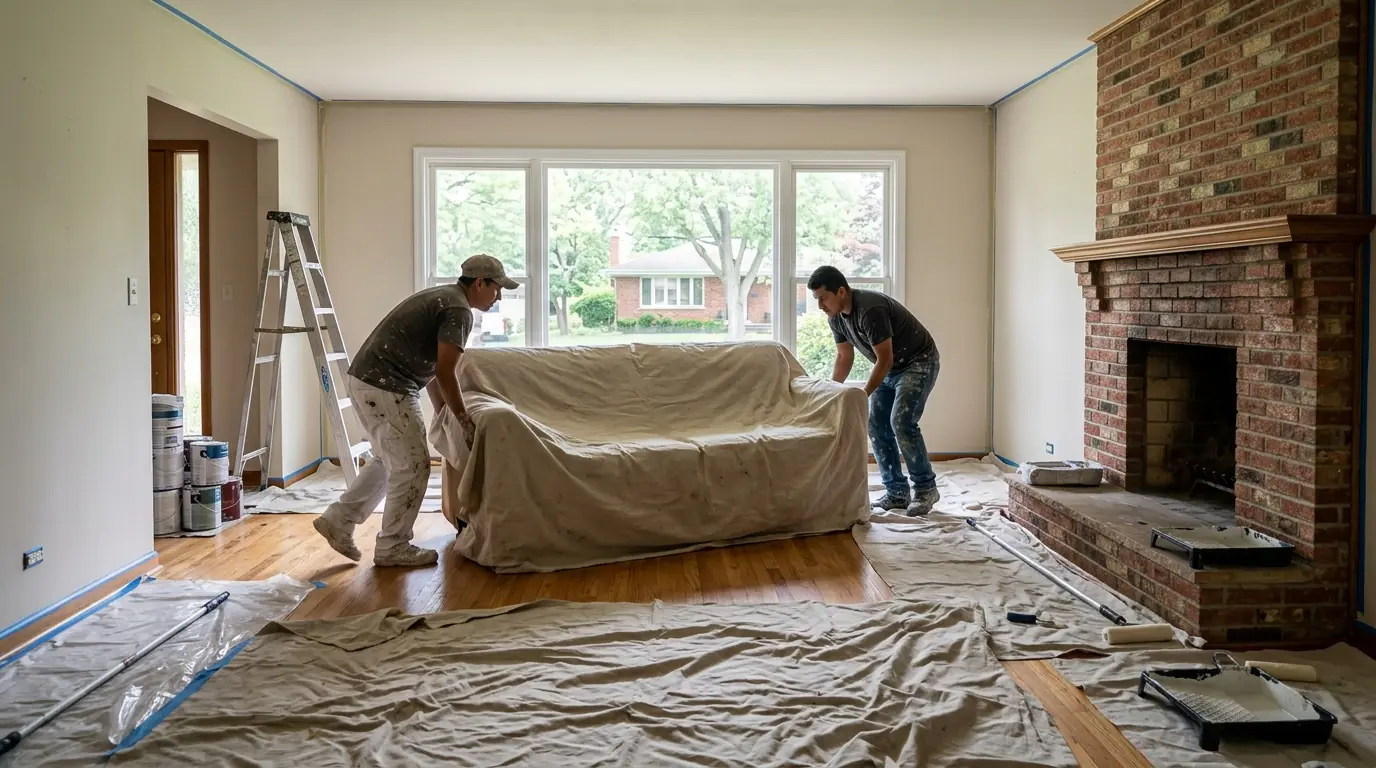
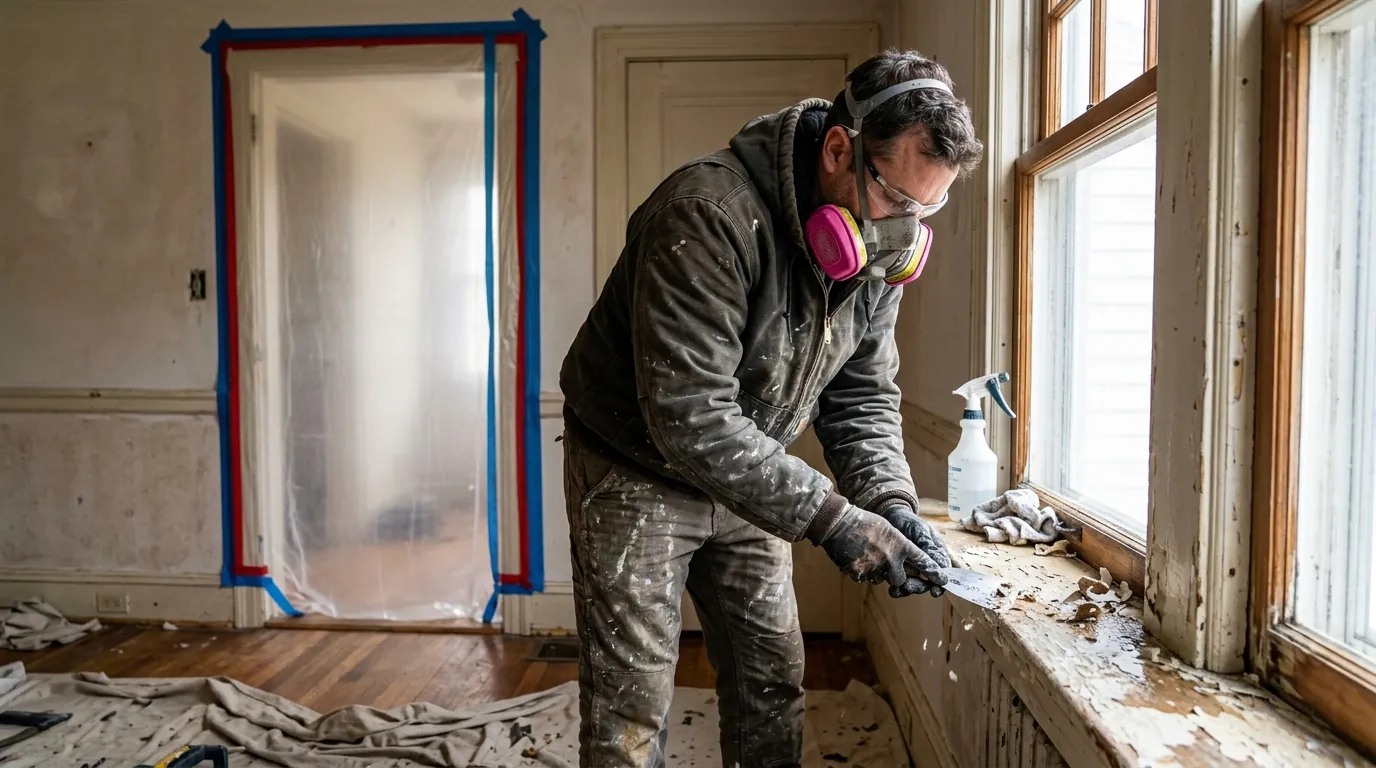
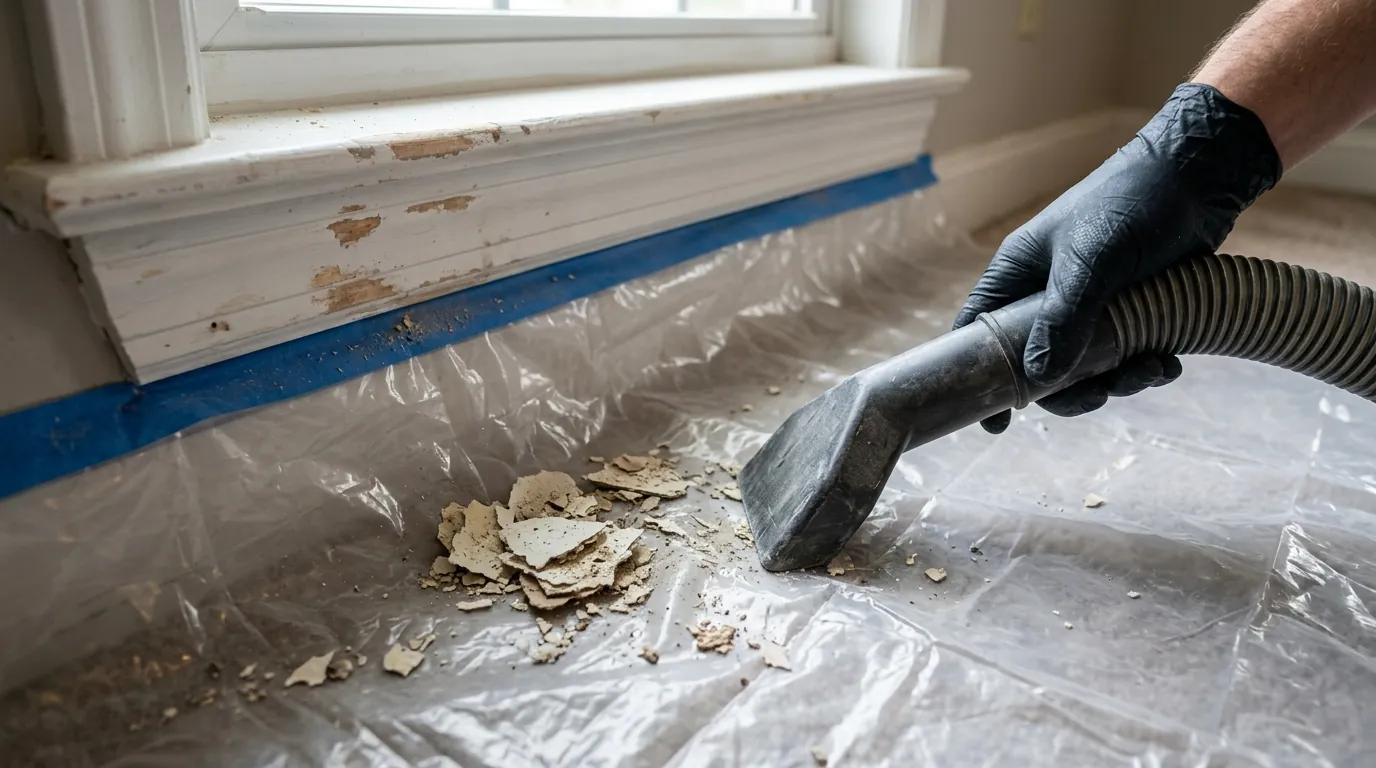
Inside, the day starts with containment. We close off the work area, cover the floor with plastic sheeting taped at the edges, cover or remove furniture, and seal vents in the room so dust does not travel through the ductwork. Doorways get plastic sheeting so people and pets stay out while we work.
Then the methods change. We mist surfaces before scraping and use wet sanding where we can, so paint comes off as damp flakes instead of airborne dust. Open-flame burning and dry power sanding without a HEPA shroud are off the table. Debris goes into heavy bags as we work rather than piling up.
At the end, we clean with HEPA vacuums and wet wiping, top to bottom, then run a cleaning check of the floors, sills and window troughs before the plastic comes down. The setup adds $145 to $385 per room depending on the size of the room and how much of it we are disturbing.
- Plastic sheeting on floors and in doorways
- Vents sealed and work areas closed off
- Wet scraping and wet sanding
- No open-flame burning or dry power sanding
- HEPA vacuuming and wet cleanup
- A cleaning check before the room is reopened
How exterior lead-safe prep changes the yard and the schedule
Outside, the containment goes on the ground. We lay plastic sheeting out from the foundation under the area being scraped, close nearby windows and doors, and move or cover outdoor furniture, toys and garden gear. On windy days we limit or pause dry work, since chips and dust can travel.
Each day ends with cleanup. Sheeting gets folded inward and bagged, and loose chips are picked up from the ground so they do not end up in garden beds or tracked indoors. On a full exterior, that adds time to every day of prep, which is one reason lead-safe exteriors take longer than people expect.
Some exterior steps are planned around the weather and the neighbors. Where a house sits close to the lot line, as many ranches and bungalows do, we extend the ground sheeting and pick calm days for the heaviest scraping near the next yard. Pressure washing on a pre-1978 exterior is done at low pressure with the runoff contained, not blasted across the lawn.
What to ask and what to plan for as a homeowner
Ask any painting company how they handle pre-1978 homes and listen for specifics: containment, wet methods, HEPA cleanup and a check at the end. You should also receive the Renovate Right pamphlet before work starts. If you have young children or someone pregnant at home, plan for them to be away from the work area during prep, and talk with your doctor or the local health department about testing if you have health questions.
You can also have the paint tested before the job. A lead inspection or a risk assessment by a qualified professional will tell you which surfaces contain lead. If no testing is done, we treat the home as if lead is present. Call (312) 579-0481 any time to talk through a project in an older home.
Questions about this topic
Does a 1960s split-level in Arlington Heights or Mount Prospect really count as a lead paint home?
It was built before 1978, so it may contain lead-based paint and falls under the EPA RRP Rule for paid work that disturbs painted surfaces. Many 1960s homes have older oil paint on trim, doors and windows even when the walls are newer latex. Unless testing shows otherwise, we follow lead-safe practices.
How small a painting job triggers lead-safe rules in a pre-1978 suburban house?
The EPA RRP Rule applies once paid work disturbs more than 6 square feet of painted surface inside a room or more than 20 square feet outside. That is about the trim around a couple of windows or a small section of siding, so most real paint jobs qualify.
Can my family stay home while lead-safe interior painting is underway?
Usually yes, as long as everyone stays out of the contained work area. Rooms being prepped are sealed off with plastic sheeting, and we clean and check them before they reopen. Families with young children or someone pregnant often plan to be away during the scraping and sanding days.