The short version
- Higher sheen cleans better but shows more wall flaws
- Flat on ceilings, eggshell on most walls, semi-gloss or satin on trim
- Old plaster walls usually look best in matte or eggshell
- Always test sheen with a large sample on the real wall
What does sheen actually change on a painted wall?
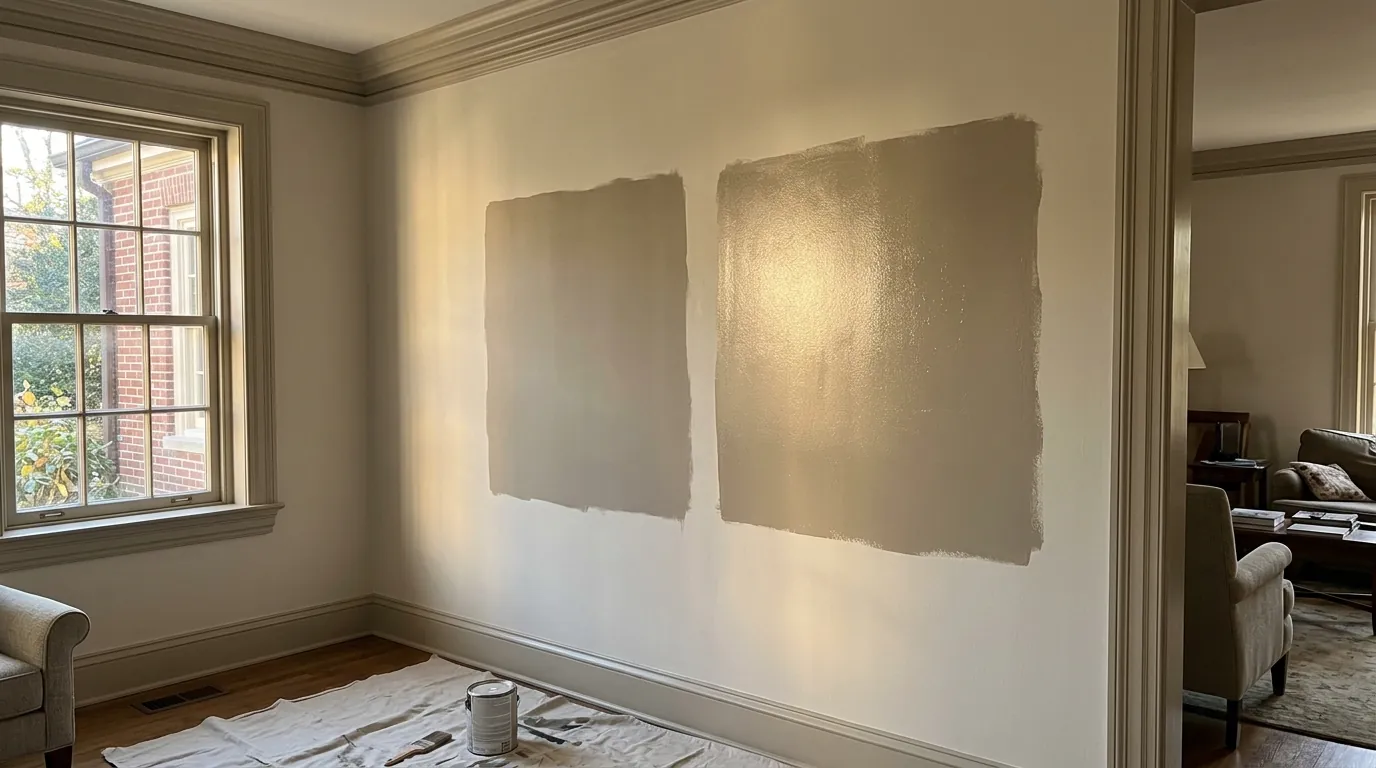
Sheen is how much light the dried paint reflects. Flat reflects almost none, gloss reflects a lot, and the names in between (matte, eggshell, satin, semi-gloss) sit along that scale. There is no industry standard for the names, so one maker's eggshell can look closer to another maker's satin. When it matters, we put two brands' samples side by side on the actual wall.
Higher sheen paints generally clean up better and resist scuffs, because the film is tighter and smoother. The tradeoff is that they show more. Every roller lap, drywall seam, patched nail hole and wavy spot in old plaster becomes easier to see as the sheen goes up, especially when low winter sun comes in sideways through a window.
So the choice is usually a balance between hiding the wall and cleaning the wall. Most rooms land in the middle of the scale, and the right answer depends on the surface underneath as much as on the room.
Flat and matte: ceilings, older plaster and quiet rooms
Flat is our default for ceilings in almost every house. Ceilings get looked at in raking light from windows and fixtures, and flat hides the small dips and tape lines that most ceilings have. It also does not get touched much, so washability matters less.
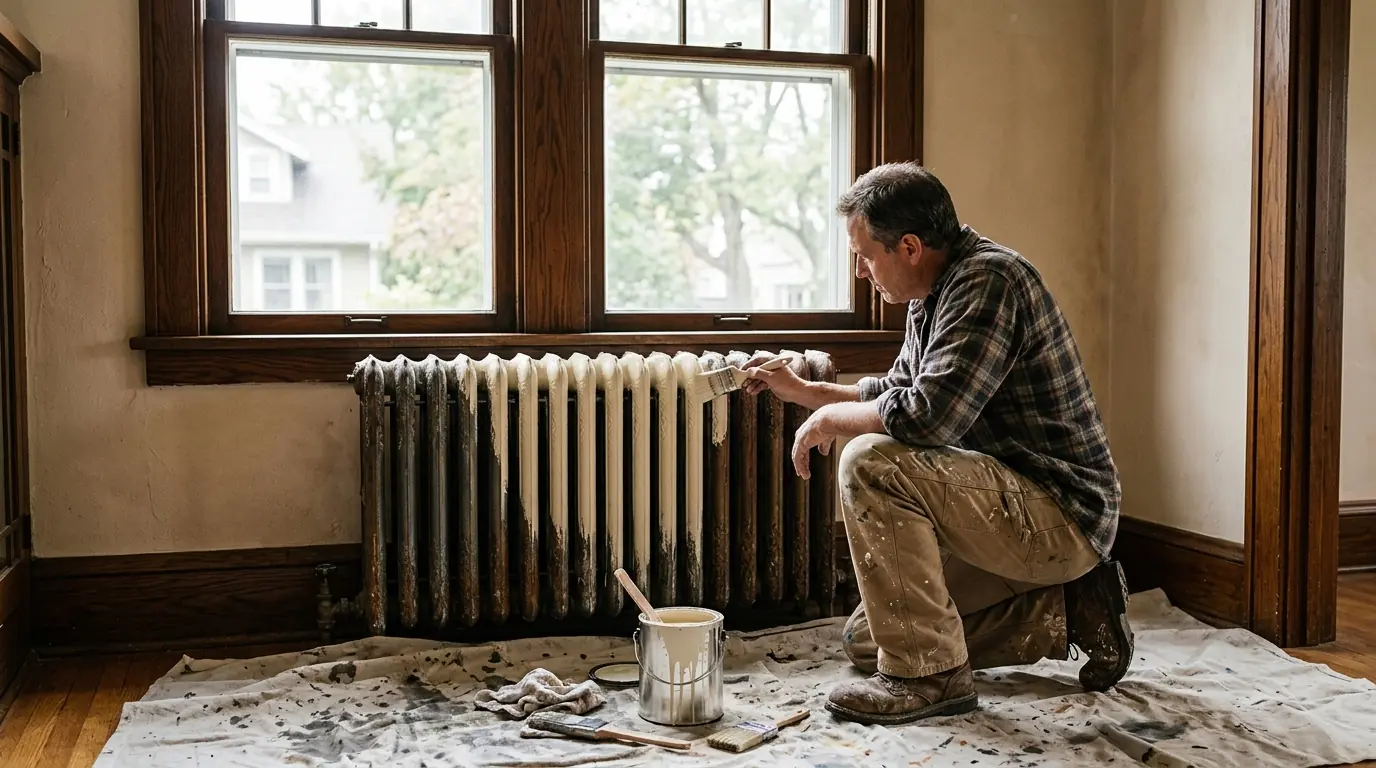
On walls, matte and the newer washable flats work well in living rooms, dining rooms and bedrooms where nobody is scrubbing much. They are a good fit for the plaster walls in 1920s bungalows in Berwyn and Villa Park and the older homes in Evanston, Wilmette and Glen Ellyn, where decades of patching leave the surface less than perfect. A low sheen lets a skim coated or repaired wall read as one even plane.
Basic contractor flat is a different product from a premium washable matte. The cheap version marks when you wipe it. If a room sees any wear, spend a little more for a matte labeled scrubbable or washable.
Eggshell and satin: hallways, family rooms and kids rooms
Eggshell is the most common wall sheen we use in suburban homes. It has a soft glow, wipes clean far better than flat and still hides a reasonable amount of surface wear. It works in hallways, family rooms, kids bedrooms and the main living areas of split-levels and raised ranches, where traffic runs past the same walls all day.
Satin sits a step higher. It is a good choice for mudrooms, back entries off the garage, laundry rooms and basements, where walls take bags, boots and the occasional bump from a laundry basket. On smooth newer drywall, such as in homes at The Glen in Glenview or 1990s subdivisions in Buffalo Grove and Palatine, satin looks clean. On rough or patched walls it can highlight every flaw.
If you are torn between the two on a wall with visible patches, choose eggshell. If the wall is smooth and the room is a high-traffic route, satin is worth it.
Kitchens and bathrooms need a different answer
Kitchens get grease, steam and fingerprints, so we usually go with satin on kitchen walls, or a scrubbable matte where the walls are older plaster and the owner prefers a flat look. The area behind the range and around the trash can is where a higher sheen pays for itself.
Bathrooms are about moisture more than scrubbing. A paint formulated for baths, often in satin or a mildew-resistant matte, holds up better to shower steam than a standard wall paint in any sheen. A working exhaust fan matters more than either, and peeling bathroom ceilings are almost always a ventilation story first.
Cabinets are their own category. We use a hard-curing cabinet enamel, usually in satin or semi-gloss, because cabinet doors are handled hundreds of times a week and need a finish that resists blocking and chipping.
Semi-gloss and gloss: trim, doors and the oak question
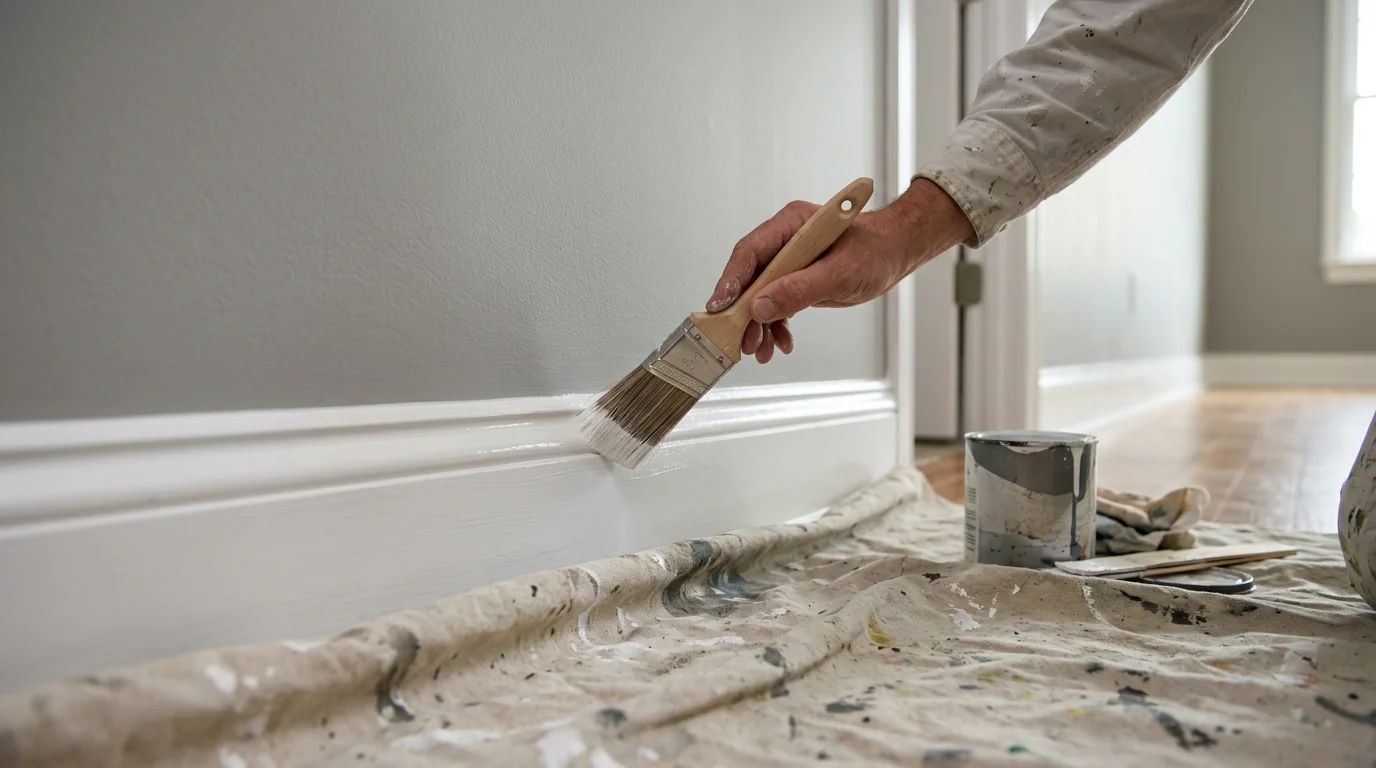
Semi-gloss is the traditional trim sheen for baseboards, door and window casings, crown molding and interior doors. It stands up to vacuum cleaners and shoes, and it gives painted trim a crisp line against an eggshell or matte wall. Satin trim is also popular now for a softer look, especially in Colonials and Georgians with lots of painted millwork.
Full gloss is the most durable and the least forgiving. We use it on front doors, railings, some cabinet styles and on trim where the owner wants a high polish look. It needs very careful sanding between coats, because it shows everything.
Many bungalows and older North Shore homes still have stained oak or pine trim. Painting it is a one-way decision that is hard to reverse, so we often suggest cleaning and recoating the existing finish with clear varnish instead. If it is going to be painted, a bonding primer and a semi-gloss or satin enamel give the best result.
A room-by-room starting point
These are the defaults we start from on most suburban repaints. A specific house can change them, especially where the wall surface is rough or the light is harsh.
When you are choosing, paint a large sample of the sheen you are leaning toward on the actual wall and look at it in the morning and in the evening. Small chips on a fan deck never show how a sheen catches the light on your plaster or your drywall.
- Ceilings in every room: flat
- Living, dining and bedrooms: matte or eggshell
- Hallways, family rooms and kids rooms: eggshell
- Kitchens, mudrooms, laundry and basements: satin, or a scrubbable matte on old plaster
- Bathrooms: a bath-formulated satin or mildew-resistant matte
- Trim, interior doors and cabinets: semi-gloss or satin enamel
How sheen affects the cost of a paint job
The sheen itself rarely changes the price much, since most product lines cost about the same across sheens. What changes the price is the prep a higher sheen demands. Satin or semi-gloss on an uneven wall can mean extra patching, sanding and sometimes a skim coat before the finish coat goes on.
For reference, two coats on a typical room's walls run $465 to $890, ceilings run $245 to $520 per room and trim runs $1.85 to $4.40 per linear foot. The number moves with room size, ceiling height, wall condition, how many color and sheen changes there are, and how much furniture has to be moved. A color consultation session runs $165 to $345 if you want help testing sheens and colors on your walls. Call (312) 579-0481 to set up a walk-through.
Questions about this topic
Is satin too shiny for the living room walls in a split-level?
On smooth drywall, satin can look fine in a living room, though most owners find eggshell softer. The bigger issue is wall condition: satin shows patches and roller laps more clearly. If the walls have been repaired over the years, eggshell is the safer choice.
Which sheen hides imperfections best on a ceiling with old tape seams?
Flat. It reflects the least light, so seams and small dips in a ceiling are hardest to see. If the seams are cracked or bulging, they still need to be repaired before painting, because no sheen will hide a raised ridge.
Can we switch trim from semi-gloss to satin when repainting?
Yes. We clean and scuff sand the existing semi-gloss so the new coat bonds, then apply the satin. It usually takes two coats for an even look, and trim prices run about the same either way.
Does a bathroom need a special paint sheen or a special paint product?
Product matters more than sheen. A paint made for bathrooms, with mildew resistance built in, holds up better to steam than an ordinary wall paint in a higher sheen. Satin is common, though bath-rated mattes also work well when the fan vents properly.