The short version
- Pack small, fragile and personal items yourself
- We move and cover the heavy furniture and floors
- Keep pets and kids out of the work rooms
- Check townhome and condo association rules before the start date
What should you pack up before the first day?
Focus on the small, fragile and personal things. We move furniture, but we would rather not handle your grandmother's china, a shelf of framed photos or a desk drawer full of paperwork. Packing those before we arrive is the single most helpful thing you can do.
Take down anything you care about from the walls being painted, including mirrors, artwork and decorative shelves. Leave the nails and anchors in place if you want things rehung in the same spot, and tell us. If you want different hanging spots, we will fill the old holes as part of prep.
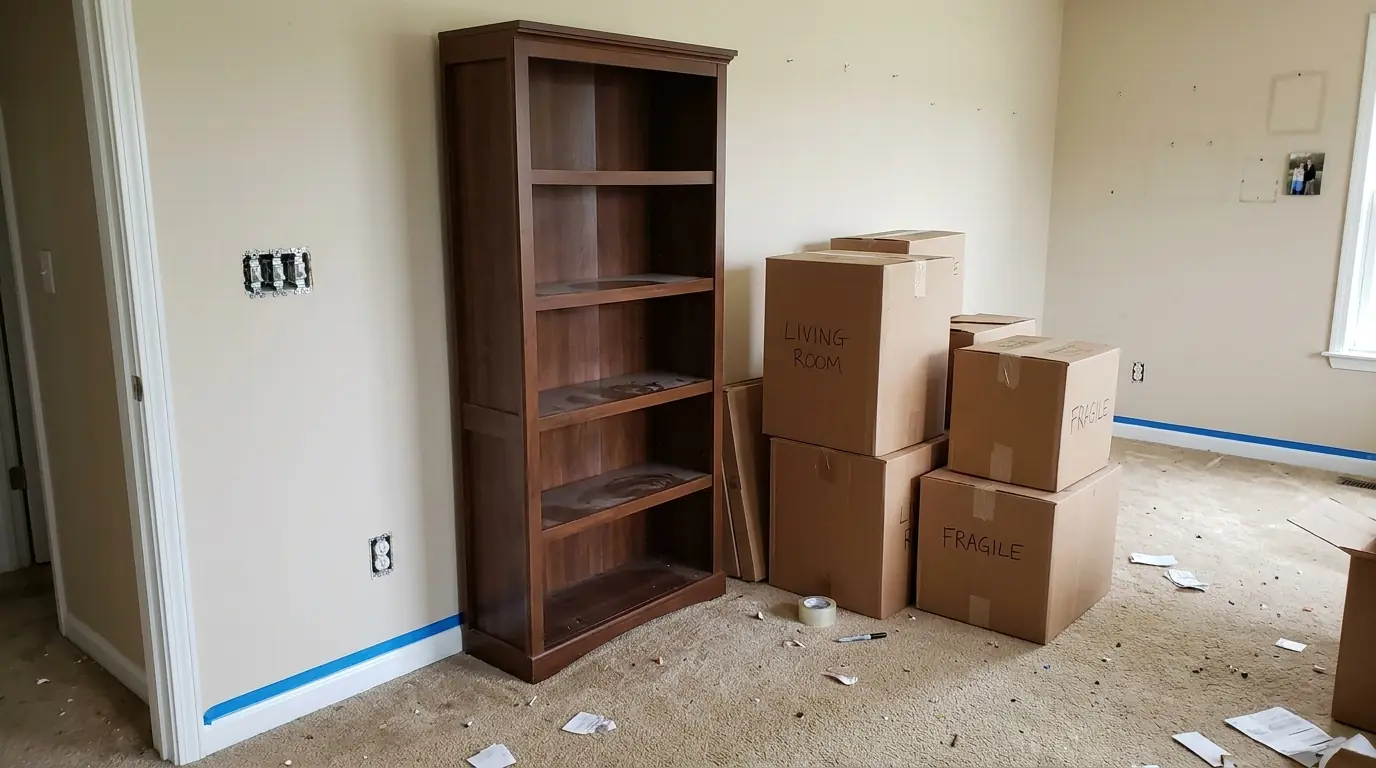
Clear off dressers, bookcases, nightstands and kitchen counters in the rooms on the schedule. Empty shelves make big pieces lighter and safer to slide toward the center of the room.
- Breakables, glassware and collectibles from shelves and cabinet tops
- Artwork, mirrors, clocks and family photos from the walls
- Lamps, electronics, and anything plugged into a wall outlet
- Clothes and items stored on closet floors, if closets are being painted
- Valuables, medications and important papers, kept somewhere off the work route
What our painters move and protect themselves
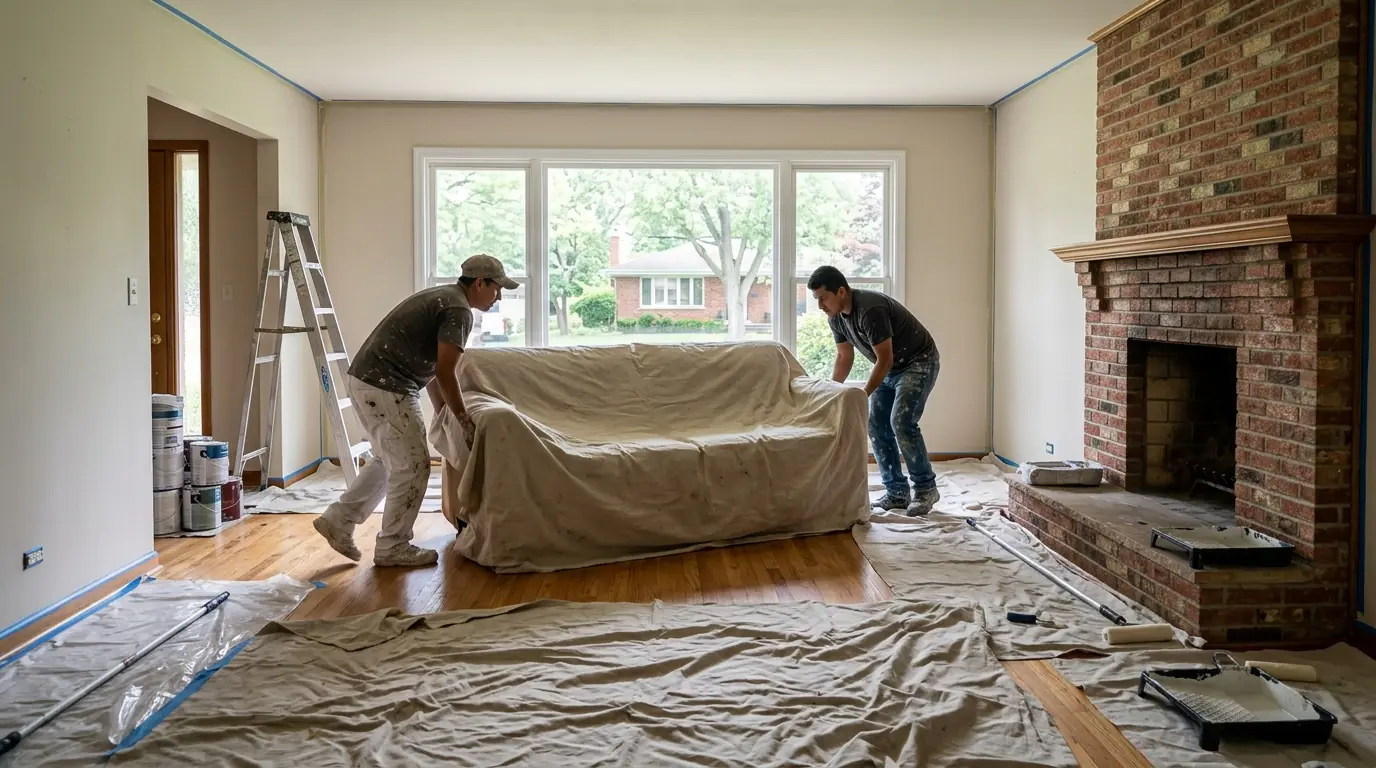
We handle the heavy, awkward work. Sofas, beds, dressers, tables and bookcases get moved to the center of the room or into a neighboring room, then covered with plastic. Floors get drop cloths, and we lay runners along the path from the door to the work area.
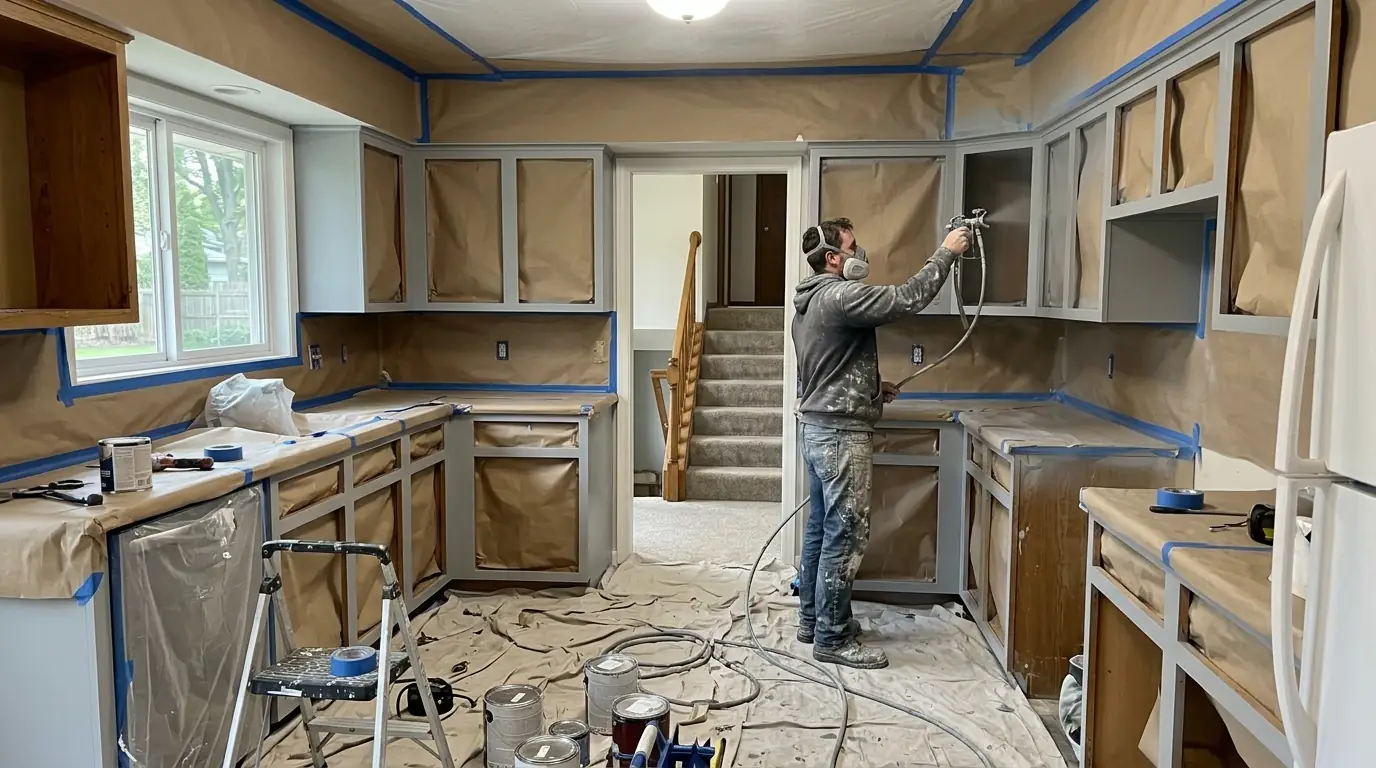
We remove switch plates and outlet covers, take down window treatment hardware where needed and tape off what stays in place. Interior doors that are being painted come off their hinges and are laid out in a work area, often a garage or basement, so we can do all six edges. Everything goes back where it came from at the end, and we walk the rooms with you before we leave.
A few things we prefer you or a professional mover handle: very large televisions mounted on the wall, pianos, aquariums, safes and anything that needs disassembly to move. Tell us about them at the walk-through and we will plan around them.
Planning around pets, kids and working from home
Paint smell, open doors and unfamiliar people coming and going are stressful for most pets. Dogs and cats are best kept in a room we are not working in, with the door closed, or out of the house for the main painting days. Birds are sensitive to fumes, so move cages well away from the work area. Keep litter boxes and food bowls out of the rooms being painted, since wet paint and pet hair do not mix.
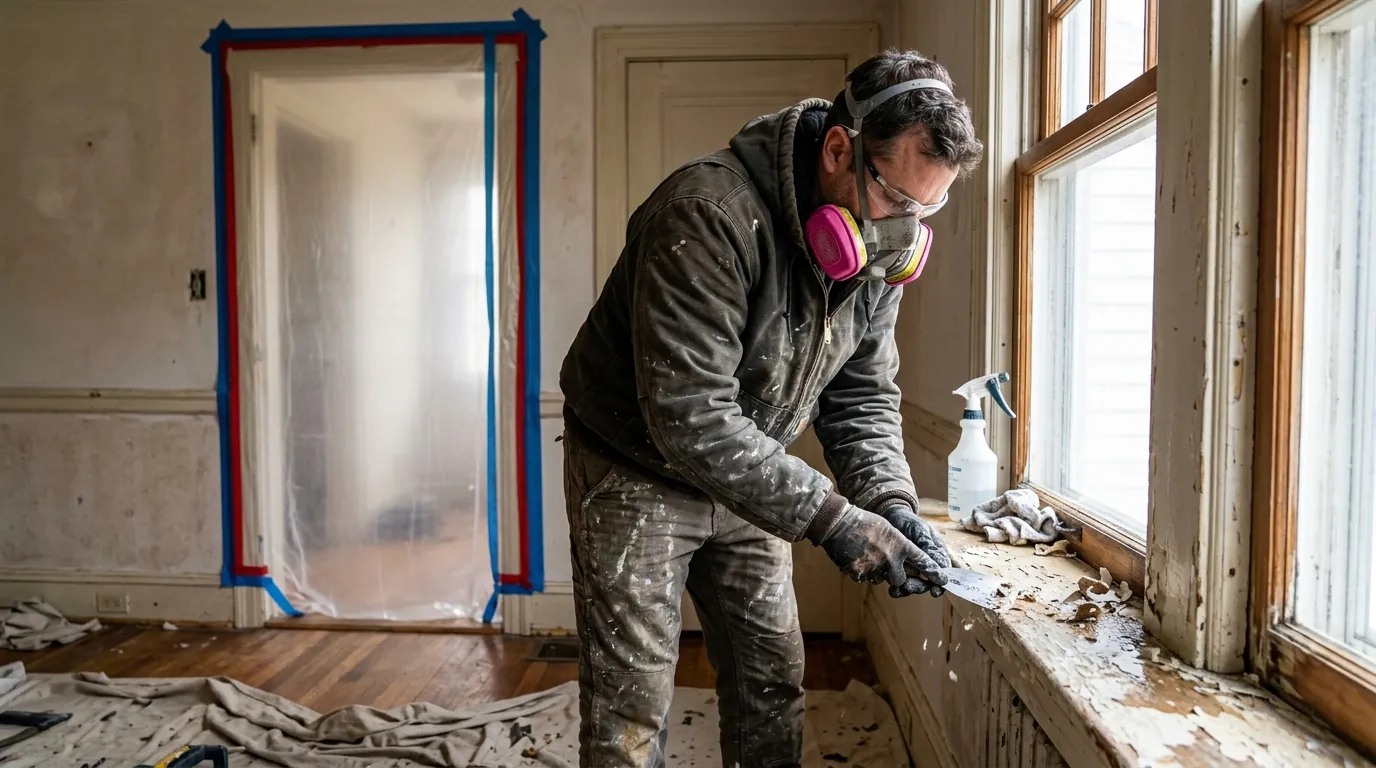
Children should stay out of the work rooms while ladders, open cans and wet trim are present. We leave every room in a usable state at the end of the day, but some surfaces stay tacky for several hours. On pre-1978 homes where we are disturbing old paint, we follow EPA lead-safe work practices, and children and pregnant family members should stay out of contained rooms until the cleaning check is done.
Most of the paints we use are low odor, and a lot of our customers work from home during the job. Tell us which room is your office and when your calls are, and we will schedule that room last or around your day.
Townhome and condo association rules to check first
If you live in a townhome or condo in Des Plaines, Wheeling, Palatine, Buffalo Grove or any of the other suburbs with large associations, check the rules before the start date. Many associations want to know about contractors in advance, and some ask for the company name and the dates of the work.
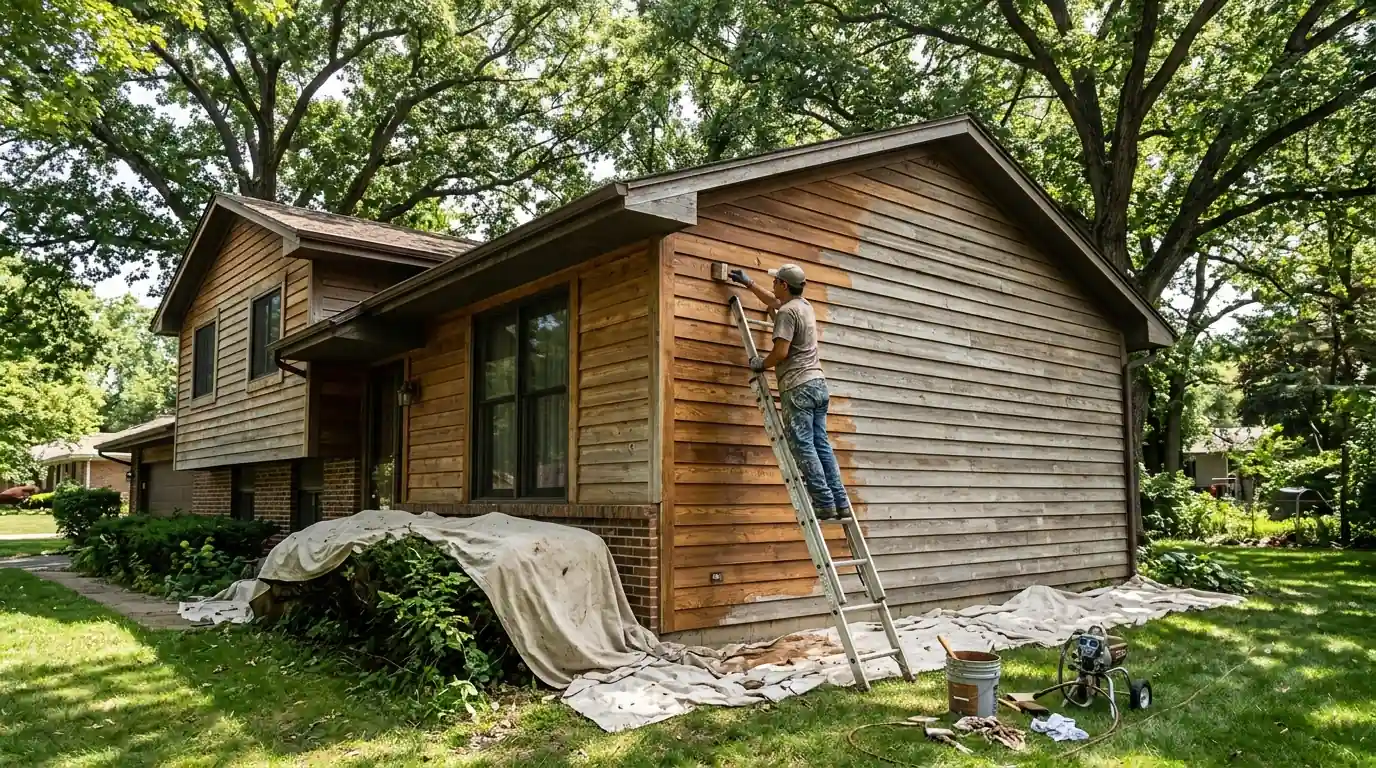
Common requirements include parking for work vans in guest spots or on the street, set working hours, use of a specific entrance or elevator, padding in the elevator and a note to neighbors about paint odor in shared hallways. Interior colors are your call in most associations. Exterior colors, front doors and garage doors usually are not, so check your association's approved colors before you plan any outside work.
Ask the property manager for anything in writing and share it with us. It is easier to plan the schedule and staging around the rules than to work around them halfway through the job.
The day before and the morning of
The day before, walk through the rooms and pick a spot for anything you want kept out of our way. Make sure we have a clear path from the driveway or parking spot to the door. In winter, a shoveled and salted walk helps, since we will be carrying ladders, drop cloths and paint in and out.
On the first morning, we walk the rooms with you to confirm colors, sheens, which walls and trim are included and anything that needs repair first. Have your color selections ready by name and number, or have the samples on the wall. If any colors are still undecided, we can start with the rooms that are settled.
Let us know about anything unusual: a sticky door, a cracked window, a light fixture that flickers, a spot where water came through the ceiling last spring. We would rather hear about it before we start than find it with a roller.
What happens at the end of each day and at the finish
Each evening we clean brushes and rollers off site or in a utility sink you approve, close cans, fold drop cloths out of the walkway and push furniture back enough that you can use the room. Bedrooms are put back together enough to sleep in.
At the end of the job we reinstall plates, rehang doors and put furniture back in place. We do a final walk-through with you and touch up anything you point out. Labeled leftover paint stays with you for future touch-ups.
For reference, two coats on a typical room's walls run $465 to $890 and ceilings $245 to $520 per room. Moving a lot of furniture, extra patching and lead-safe setup on pre-1978 homes ($145 to $385 per room) can raise the total. Call (312) 579-0481 at any hour to set up a walk-through.
Questions about this topic
Do I have to empty the rooms completely before interior painters arrive?
No. Clear off surfaces and pack breakables and wall items, and we move the furniture to the center of the room and cover it. Very large or delicate items, like pianos or wall-mounted televisions, should be discussed at the walk-through.
Can I stay home with my dog while you paint the living room?
Yes, as long as the dog is kept in a closed room we are not working in. Doors open and close often during the day, so a crate or a closed bedroom is safer than letting the dog roam. Some owners prefer a day at a friend's house or doggy daycare for the busiest days.
What does a townhome association usually need before interior painting starts?
Many associations want the dates of the work, the company name and where the work van will park. Some also set working hours and ask that shared hallways or elevators be protected. Ask your property manager for the rules in writing so we can plan around them.