The short version
- Painting a typical kitchen runs $3,850 to $7,480
- Refacing usually costs more than painting and less than replacement
- Paint changes color and finish, not door shape or layout
- Solid boxes and a working layout make painting the best value
Three options that solve different problems
Painting keeps your existing doors, drawer fronts and cabinet boxes, and changes their color and finish. The layout stays the same, and so do the door styles. It works best when the cabinets are solid wood or good quality plywood with doors you like the shape of.
Refacing keeps the cabinet boxes in place but replaces the doors and drawer fronts and covers the exposed face frames and end panels with new veneer or a matching material. You get a new door style and finish without tearing out the boxes or the countertop. It is done by cabinet refacing companies or carpenters, not painters.
Replacing means tearing out the cabinets and installing new ones. It is the only option that lets you change the layout, add an island, move the sink or range, or fix boxes that are damaged. It usually brings new countertops, and often new flooring, backsplash and plumbing or electrical work along with it.
What cabinet painting costs, and what moves the number
For a typical suburban kitchen, painting the cabinets runs $3,850 to $7,480. That covers removing doors and hardware, degreasing, sanding, priming and spraying the doors and drawer fronts, brushing or spraying the boxes and face frames, and reinstalling everything.
The price moves with a few things. The number of doors and drawers matters most, since each one gets prepped and coated on both sides. Cabinet material matters too: oak needs grain filling if you want a smooth finish, and laminate or thermofoil needs a bonding primer and sometimes cannot be painted well at all. Glazing, two-tone colors, the inside of glass-front cabinets and a lot of grease buildup also add time.
Hardware is separate. If you are changing knobs and pulls, buy them before we start so we can fill old holes and drill new ones as part of the job.
- Number of doors, drawer fronts and end panels
- Wood type, especially open-grain oak that needs filling
- Laminate, thermofoil or previously painted surfaces
- Two-tone colors, glazing or interior cabinet painting
- Grease, water damage or loose veneer that needs repair first
How refacing and replacing compare on cost and time
We do not do refacing or cabinet installation, so we do not quote those numbers. As a general rule, refacing usually costs more than painting, because new doors, drawer fronts and veneer are bought and installed, and less than full replacement, because the boxes and countertops stay. Replacement is typically the most expensive of the three, since it brings new cabinets, installation and usually new countertops and other trades.
Time follows the same pattern. Painting a kitchen usually takes about a week from start to finish, with the kitchen usable each evening for basic cooking. Refacing can take a similar or longer time, depending on how long new doors take to be made. Replacement takes the longest, often several weeks or more once countertop templating and fabrication are part of the schedule.
Get quotes from the trades that do each kind of work, and compare them against the painting range above for your kitchen. That gives you real numbers instead of rules of thumb.
Which kitchens are good candidates for painting?
The best candidates have solid boxes, doors that are not warped, and a layout that works. Many 1960s to 1990s kitchens in Mount Prospect, Arlington Heights, Palatine and Buffalo Grove have oak cabinets that fit this description: well built, dated in color and a good shape for paint.
Painting is less suited to kitchens with laminate that is peeling, thermofoil that is bubbling near the range or dishwasher, boxes swollen from water damage under the sink, or doors with a shape you do not like. Paint changes color and finish, not form. If you dislike the door style, refacing is the more direct fix.
If the cabinets are fine but the layout is not, paint will not solve that. A kitchen that needs a new island, more counter space or a moved sink is a replacement project.
Newer kitchens can be good candidates too. Builder-grade maple or painted MDF cabinets in 2000s homes at The Glen in Glenview or in west Hoffman Estates often have sound boxes and simple Shaker doors that take a new color well. The main thing we check on those is whether the existing factory finish is a coating we can bond to, which a scuff sand and a small adhesion test on the back of a door will tell us.
How we paint cabinets so the finish holds up
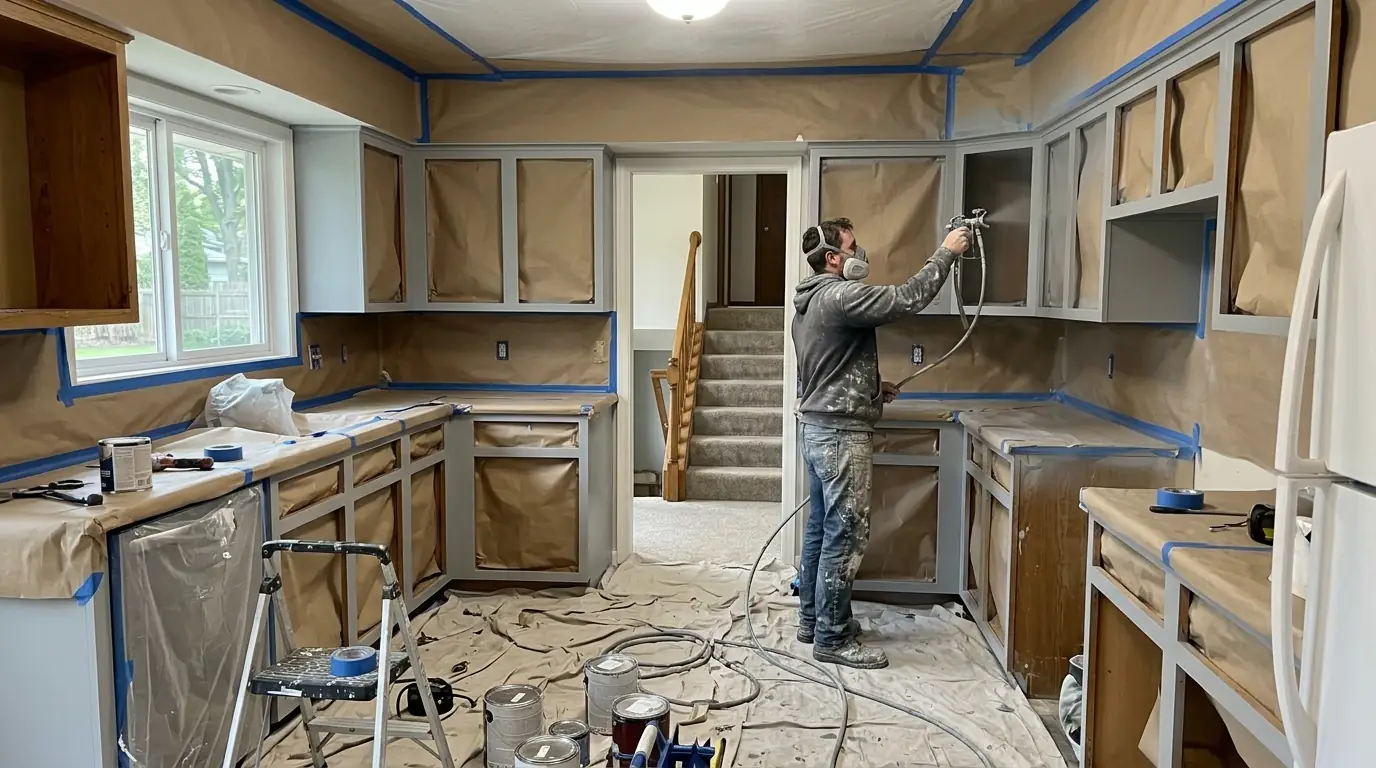
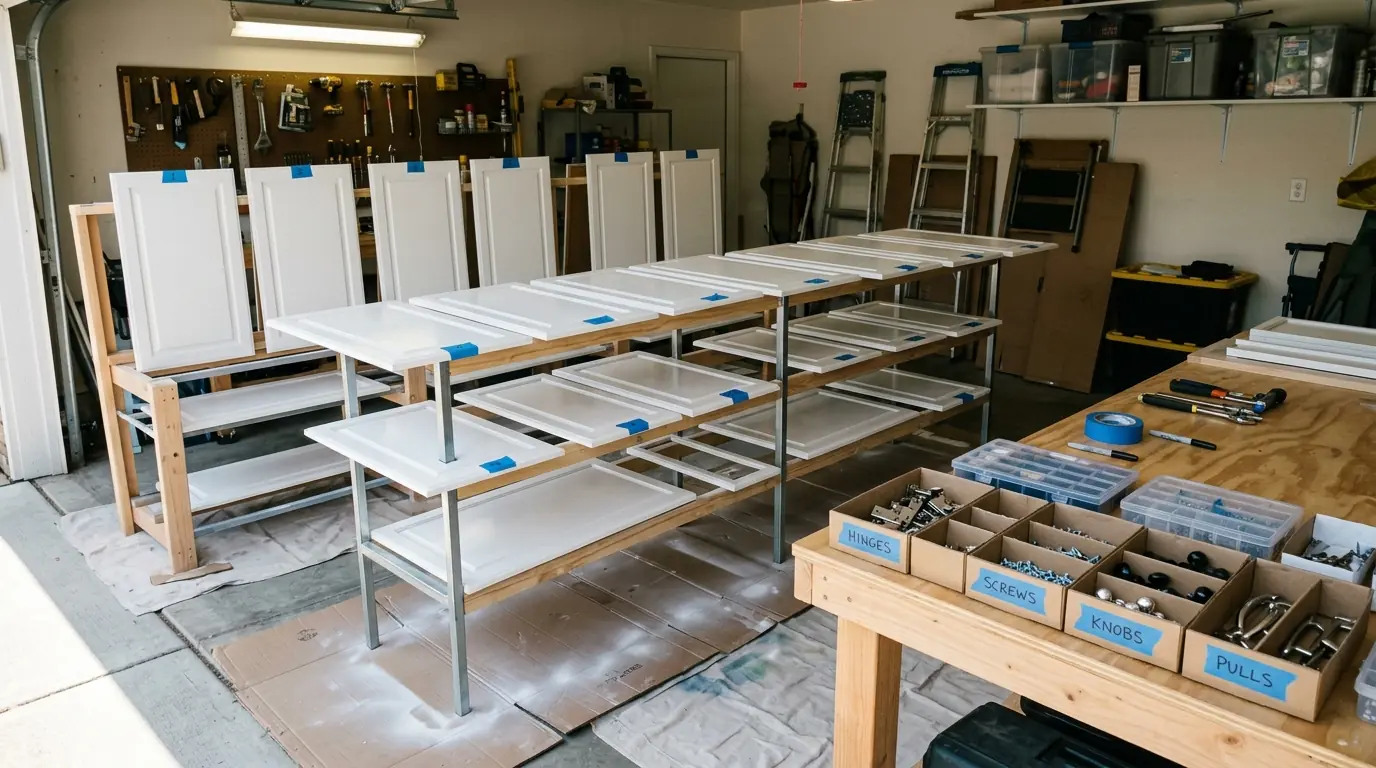
Cabinet doors are handled more than almost any other painted surface in a house, so the prep and the product matter more than usual. We number every door and drawer front, remove them, take off the hardware and move them to a staging area, often your garage or basement.
Every surface gets degreased with a cleaner made for kitchen grease, then sanded, primed with a bonding primer and coated with a hard-curing cabinet enamel. We spray doors and drawer fronts for a smooth finish and coat the boxes and frames in place, with the counters, floors and appliances covered. Cure time matters: the finish is dry to the touch quickly, but it gets harder over the next few weeks, so go easy on the doors for the first stretch.
On kitchens in pre-1978 homes, any original painted surfaces we disturb are handled with EPA lead-safe work practices, which adds $145 to $385 for setup.
A quick way to decide between the three
Ask three questions. Are the cabinet boxes solid and dry? Do you like the door shape? Does the layout work for how you cook? If the answer to all three is yes, painting is usually the best value. If the boxes and layout are fine but you want a new door style, look at refacing. If the layout or the boxes are the problem, plan for replacement.
It also helps to think about how long you plan to stay. If you are selling in the next year or two, painting is usually the fastest way to make a dated kitchen look current without a large outlay. If you plan to stay for many years and the kitchen does not work for your family, the higher cost of replacement can be spread across that time. Many owners paint now and plan a full remodel later, which is a reasonable path when the boxes are sound.
We can look at your kitchen and tell you honestly whether paint will give you the result you want, and give you a painting price range for comparison. Call (312) 579-0481 at any hour to set up a walk-through.
Questions about this topic
Can oak kitchen cabinets be painted without the grain showing through?
Yes, but it takes an extra step. Oak has open pores that show through paint, so we apply a grain filler before primer when a smooth finish is wanted. Some owners like a little texture, in which case we skip the filler.
Will painted kitchen cabinets chip faster than new factory finished ones?
A good cabinet enamel over proper prep holds up well in daily use, though factory finishes cured under controlled conditions are usually harder. The first few weeks matter most while the paint cures. Touch-up paint left with you makes small chips easy to fix later.
How long is the kitchen out of use while the cabinets are painted?
Most kitchens take about a week. The counters and appliances stay covered while we work, but we leave the kitchen usable for basic cooking in the evenings. Doors go back on at the end, once they have dried enough to handle.